
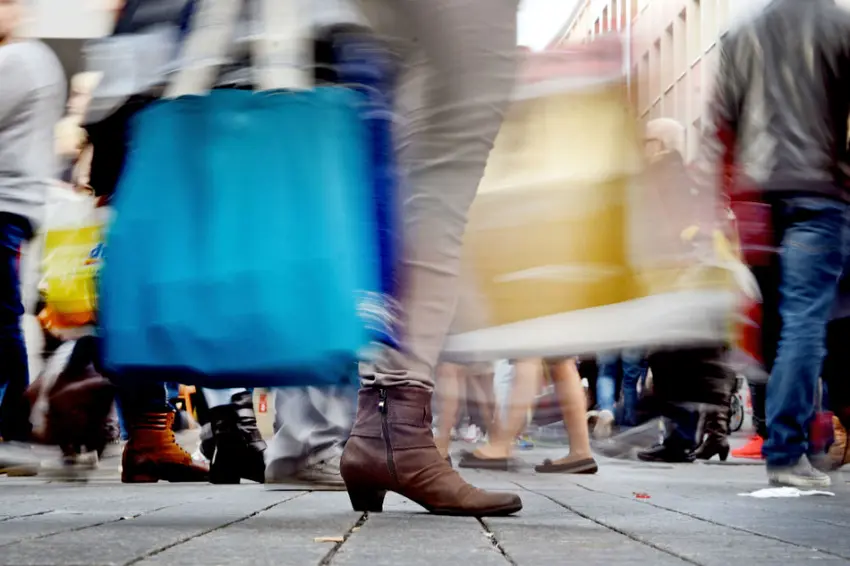
In 2017, people in Germany spent around €1.64 trillion on private consumption - 3.6 percent more than in the previous year and thus the biggest increase since 1994.
This was driven by low interest rates, strong economic development and favourable prospects in the job market, according to Destatis.
The figure takes into account year-on-year increases in prices. Excluding these increases, consumer spending grew by 1.9 percent.
Germans bought things like cars and other durable goods. They also spent money on food and beverage as well as tobacco.
Growth in the purchase of shoes and clothing (5.9 percent) was particularly strong, showing a record increase in over 25 years.
Meanwhile expenses for hotels and restaurants also climbed (4.9 percent). And despite the housing shortage in many German cities, expenses toward apartments also saw an increase (2.7 percent) - although this was below-average.
SEE ALSO: ‘In Berlin’s housing market people are getting mad, getting scared’
Private consumption is seen as an important pillar in terms of upholding Germany’s economic boom for the long-term. But Germans were not spending all of their disposable income last year; statisticians estimate this figure was about €1.88 trillion.
The German mood for consumer spending has already been slightly subdued in March 2018, according to market research company GfK.
The GfK attributes this mainly to America’s protectionist trade policy and the slow formation of a new government in Berlin.
Earlier this month US President Donald Trump announced the US would slap levies on steel and aluminium imports on global trading partners, including Germany. The country’s economy minister afterward criticized him for “offending” allies and limiting free trade.
On Wednesday Chancellor Angela Merkel was narrowly elected by the Bundestag to a fourth term, ending almost six months of waiting. Now at last the formation of a new German government means that MPs can get to work with big issues, such as reforming Europe and digitalization.
Comments