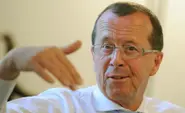
The United Nations' top envoy in Iraq, German diplomat Martin Kobler, does not expect civil war to break out in the country, he was quoted as saying on Monday.
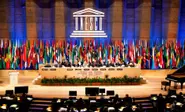
Germany joined the United States and Israel on Monday in protesting Palestine’s acceptance as full member of the United Nations cultural organization UNESCO, sparking a foreign policy rift within the European Union.
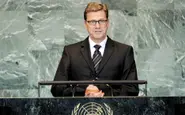
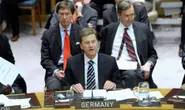
Foreign Minister Guido Westerwelle reiterated Germany's opposition to the Palestinian statehood bid in a speech to the United Nations on Monday, and called on both sides to follow the Quartet timetable.
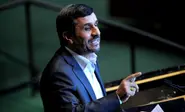
Germany and its US and European allies stormed out of the United Nations’ General Assembly Thursday when Iran's President Mahmoud Ahmadinejad launched an attack on Western nations and cast doubt on the Holocaust.
The United Nations Security Council has declared that global warming is a threat to world peace and stability, in what has been greeted as a diplomatic triumph by the current council chair Germany.
New talks on global warming ended in Bonn on Friday with the UN's climate chief calling on world leaders to help resolve the fate of the Kyoto Protocol ahead of a key meeting six months down the road.
Amid criticism that Germany has been shirking its global responsibilities, Dr. Jackson Janes from the American Institute for Contemporary German Studies analyzes the importance of Chancellor Merkel’s high-profile visit to Washington this week.
A narrow majority of Germans back sending troops to Libya as part of an EU humanitarian mission, but reject accepting refugees from the North African country, according to a poll released on Friday.
Has Germany’s decision to abstain from the UN resolution on Libya seriously damaged transatlantic ties and NATO? Dr. Jackson Janes, director of the American Institute for Contemporary German Studies, sifts through the foreign policy wreckage.
A majority of Germans support their government's decision not to take part in the military action against Libyan leader Muammar Qaddafi, a survey revealed Saturday.
German warships will not participate in a NATO operation in the Mediterranean to enforce a UN-mandated arms embargo on Libya. But Berlin said Wednesday it will increase its Afghanistan deployment to free up NATO forces.
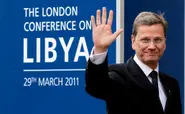
German Foreign Minister Guido Westerwelle on Monday said Arab League criticism of alliance action in Libya showed that Germany had "good reasons" to fear military intervention.
The German government’s decision not to participate in military action against Libya’s Muammar Qaddafi – primarily for domestic political reasons – is deeply irresponsible, argues Markus Horeld from ZEIT ONLINE.
Did Germany abandon its closest allies by abstaining from a UN resolution to impose a no-fly zone over Libya? The Local discussed the potential implications with Dr. Henning Riecke of the German Council on Foreign Relations (DGAP).
German Chancellor Angela Merkel said Friday that reports Libya is reacting to a United Nations resolution were "encouraging" after Tripoli declared a ceasefire in its battle against rebels. But Berlin denied it had isolated itself diplomatically.
Germany was joined by Brazil, India and Japan on Friday in announcing that they would press for concrete action this year to open up the UN Security Council to new members.
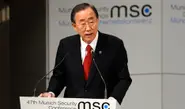
An orderly transition in Egypt is essential to the peace process between Israelis and Palestinians, UN chief Ban Ki-moon said Sunday, a day after attending a Middle East Quartet meeting in Munich.
Germany may have successfully claimed a seat on the UN Security Council, but newspapers in The Local’s media roundup on Wednesday have few illusions about Berlin’s importance on the world stage.
Foreign Minister Guido Westerwelle said on Thursday that Berlin would make global disarmament and nuclear non-proliferation priorities should Germany gain a seat on the UN Security Council.