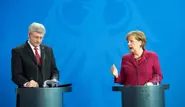
Chancellor Angela Merkel said on Thursday that despite the Ukraine crisis, a "close partnership" with Russia should continue "in the medium and long term".
Germany this week launches another attempt to mediate in the Ukraine crisis, pushing for dialogue between the pro-Western government and pro-Russian groups to resolve the festering and violent conflict.
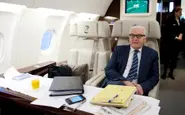
Germany's foreign minister will travel to crisis-hit Ukraine on Tuesday to support OSCE efforts to mediate a "national dialogue" between the government and pro-Russian groups, his ministry said.
UPDATE: Foreign Minister Frank-Walter Steinmeier welcomed Vladimir Putin's "constructive tone" on Ukraine on Thursday, after the Russian president told rebels in the east of the country to halt plans for an independence vote.
German hostages captured in Ukraine returned home over the weekend, but their release has sparked a row within the country’s coalition government about what they were doing in the crisis-hit country.
A politician from Chancellor Angela Merkel’s Christian Democratic Union (CDU) has defended attending a party in St Petersburg with President Vladimir Putin in the middle of the stand-off over Ukraine.
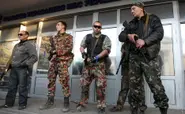
UPDATE: Hopes have been dashed that eight observers, including four Germans, from the Organization for Security and Co-operation in Europe (OSCE) who were captured by pro-Russian militia in Ukraine on Friday will shortly be freed.
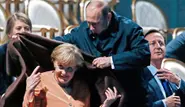
The Ukraine crisis may be rattling German consumers, according to a poll on Tuesday, but that did not stop the country's former Chancellor Gerhard Schröder hugging his old friend Russian President Vladimir Putin on Monday night.
UPDATE: Germany has "strongly condemned" the capturing of international observers by pro-Russian separatists in eastern Ukraine on Sunday, including four Germans.
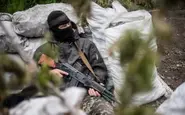
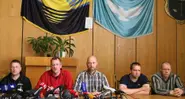
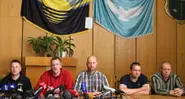
Pro-Russian rebels holding a group of international OSCE observers, including four Germans, in eastern Ukraine on Saturday accused them of being "NATO spies" and vowed to continue detaining them.
Germany has stopped selling arms to Russia due to the current “political situation”, according to reports on Thursday. The sale of military equipment to Russia by German firms has been criticized by the country’s Nato allies.
Germany arms sales to Russia have come under fire following the crisis in Ukraine. In 2012 Germany sold €40 million worth of rifles, pistols and armoured vehicles to the country.
Foreign Minister Frank-Walter Steinmeier said on Wednesday that scheduled four-way talks on the Ukraine crisis must not fail, warning of "the threat of more dead and injured".
Germany warned of war in Europe on Monday, with vice chancellor Sigmar Gabriel stating the continent was being "dragged" into a "smouldering conflict" with Russia over Ukraine.
Half of Germans do not want Nato forces to increase their military presence on Russia’s borders and a majority is against a military escalation of the conflict, a poll on Wednesday showed.
The Russian foreign ministry on Thursday complained to Germany's ambassador after its finance minister reportedly drew parallels between Moscow's annexation of Crimea and Hitler's actions in 1938.
One in ten German exporters sell goods to Russia, while trade between the two countries was worth €76.5 billion in 2013. But how important a trading partner is Russia for Germany compared to other countries?
Germany is ready to provide military assistance to the three Baltic nations, all former Soviet republics, as part of NATO efforts to counter fears over Moscow's swift absorption of Crimea, Der Spiegel reported.
Chancellor Angela Merkel said on Thursday that she hoped the threat of further sanctions would be enough to keep Russia in check in the Ukraine crisis. But she added Europe was prepared to act if necessary.
Vladimir Putin’s move on Crimea has proven to be a moment of truth for German foreign policy, putting its pledge to play a more active role in international affairs to the test, argues Josef Janning from the European Council on Foreign Relations.