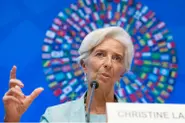
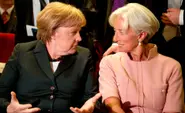
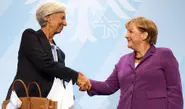
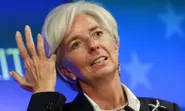
IMF chief Christine Lagarde has joined calls on Germany to invest in future economic growth even at the cost of relaxing its cherished budgetary discipline, raising hackles in Europe's powerhouse.
Germany must act to reduce the massive trade surplus that has stoked friction with European neighbours and the United States, the International Monetary Fund warned on Monday.
German leaders spent much of the first half of 2015 wrangling Europe into a deal that would – they hoped – allow Greece to pay off its debts by restructuring its economy and making deep cuts to public spending.
The finance ministers of Germany and France said late Saturday they were optimistic of a deal soon to move Greece’s bailout ahead, reiterating that the IMF needs to be involved.
Chancellor Angela Merkel insists the International Monetary Fund must participate in Greece's new bailout, but doubts about IMF involvement are complicating her bid to sell MPs the deal ahead of Wednesday's key parliamentary vote.
As more and more countries send positive signals about a possible deal with Greece for a fresh tranche of bailout cash, the resistance of Finance Minister Wolfgang Schäuble is leaving Germany more and more isolated in Europe.
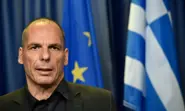
Greek Finance Minister Yanis Varoufakis accused Athens' creditors of "terrorism" in an interview published on Saturday, a day before Greeks vote in a high-stakes referendum on their bailout.
There has been "serious progress" in talks over Greece's debt crisis but much still needs to be achieved, the EU's commissioner for Economic and Monetary Affairs said on Tuesday.
The French, German, Russian and Ukranian foreign ministers expressed "grave concern" Tuesday at a meeting in Berlin about violations of a shaky ceasefire in separatist-held east Ukraine.
Greek Finance Minister Yanis Varoufakis called on German and Greek leaders to calm their rhetoric over his country's bailout programme in an op-ed published in Germany on Monday.
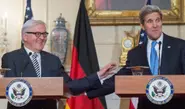
On a trip to Washington to meet his American counterpart John Kerry, Foreign Minister Frank-Walter Steinmeier warned that the West remained determined to bring about peace in Ukraine.
German Chancellor Angela Merkel said on Friday she wanted Greece to "remain part of our story", ahead of elections this weekend which could sweep the anti-austerity Syriza party to power and determine whether the country stays in the eurozone.
The International Monetary Fund lowered Monday its forecast for German growth this year to just 0.3 percent, but predicted that Europe's biggest economy will experience a recovery in the second half of 2013.
The International Monetary Fund's chief economist believes Germany's budgetary policy is "appropriate" while criticizing the fiscal habits of the United States.
Chancellor Angela Merkel said Wednesday a deal to release funds for Greece could be clinched next week, as her election rival launched a blistering attack on her policies to stem the eurozone crisis.
Germany's finance minister said Friday there is "no alternative" to cutting debt in European countries, the day after the IMF chief called for Greece to be given more time to pare its deficit.
The International Monetary Fund wants to assemble a pool of German pensioners with finance expertise to help Greece establish a functioning financial system, it was reported on Saturday.
The conditions are in place for the German economy, Europe's biggest, to recover this year - and lead the eurozone back to growth - unless the crisis intensifies further, the IMF said on Tuesday.
IMF head Christine Lagarde set out Monday a raft of proposals to fight the eurozone crisis likely to irk German Chancellor Angel Merkel, including a bigger rescue fund, lower ECB rates and joint eurobonds.
Germany's government has worked out contingency plans in the event that Greece has to quit the eurozone, according to a report published in <i>Der Spiegel</i> magazine.
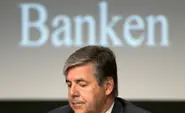
The CEO of Germany's leading bank, Deutsche Bank's Josef Ackermann, on Monday attacked the head of the IMF for suggesting banks should boost their capital to offset dangers relating to the eurozone debt crisis.
The head of the International Monetary Fund, Christine Lagarde, called on the German government to be proactive in steeling itself against weak growth prospects, pointing to the discouraging economic situation at the global level.
The International Monetary Fund on Tuesday forecast 3.2 percent growth for Germany this year but said it was failing to act as an economic locomotive for Europe because of low domestic demand.
Germany's new central bank president Jens Weidmann warned debt-laden Greece that international creditors will pull out aid if it fails to pursue painful cuts to tackle its huge deficit as promised.
Chancellor Angela Merkel called on the rest of the world to carry out atomic reactor “stress tests” and demanded the G8 take a leading role in nuclear security on Thursday, ahead of a meeting of the group of leading nations.