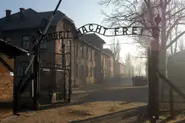
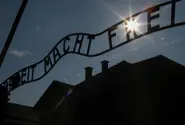
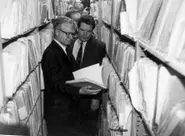
Documents from the post-war Auschwitz trial have been classed part of the UNESCO "Memory of the World Register", underlining their significance as "common heritage of humanity", Germany's foreign minister said Wednesday.
In the early days of the Bundesrepublik, a party arose that took on one of Hitler’s favourite generals as its figurehead. It briefly appeared to pose a threat to the fragile new democracy.
While many people might know of Münster as a wealthy uni town or the country's bike capital, few know that it belongs to a strange, violent period in history when radicals tried to set up a theocracy. And iron cages which still hang from a church in the centre of town are a reminder of this.
What happened to the 1.3 million Germans who went missing after the Second World War remains a mystery. But some of the loved ones of these missing persons haven't given up hope in finding some answers.
German prosecutors brought charges
Monday against a 94-year-old former Auschwitz guard, accusing him of abetting murder in the latest 11th-hour attempt to use the criminal justice system to
address the Holocaust.
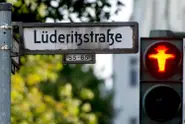
Berlin is poised to strip the names of streets linked to atrocities committed during its occupation of Namibia and dedicate them to liberation fighters, part of a late reckoning with Germany's brutal colonial history.
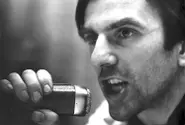
On April 11th 1968, a right-wing fanatic shot Rudi Dutschke three times from point blank range. The assassination attempt on the leader of the student movement sparked revolt on Germany’s streets.
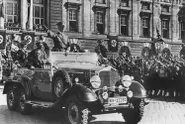
It is almost exactly 80 years since Hitler’s Wehrmacht marched into Austria. But while the dictator was after Austrian gold, he didn’t immediately intend to annex the country of his birth, a historian in Vienna claims.
In June 1886 Bismarck was still German Chancellor and Daimler and Benz were fiddling around with their first attempts at motorized engines. That same year a bottle was thrown into the ocean and remained lost - until now.
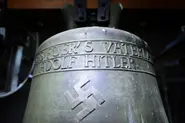
A German village has decided to keep a contentious Nazi-era church bell that bears a swastika and the words "All for the Fatherland - Adolf Hitler", arguing it serves as a reminder of the country's dark past.
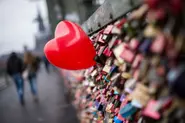
The annual day of love on February 14th isn't as big in Germany as it is in countries like the US. But since the 1950s Valentine's Day has grown increasingly popular across the country.
The Berlin Wall was supposed to have been largely demolished, save for a couple of sections in the city centre. But a local historian revealed on Monday that the communist barrier can still be found if one looks hard enough.
Even today, nobody knows what happened to around 1.3 million Germans who went missing during the Second World War. The head of the organization that tries to find them admitted recently that their fates will never be cleared up.
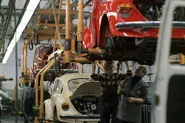
Four decades ago on Friday the last Volkswagen Beetle was assembled in north Germany. But far from being forgotten, its status as a cult car continues today.
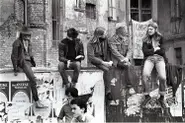
It is now common to look back on West Berlin in the last years of the Cold War as a place of complete freedom. But finding a room to rent was just one of the problems you faced in the island-city, writes Paul Hockenos.
Monday marks the 99th anniversary of the extra-judicial killing of the two most prominent German communists of the early twentieth century. But a memorial which took place on Sunday illustrates just how complicated their legacy is.
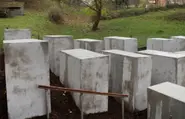
A group of activists on Wednesday unveiled a replica of Berlin's Holocaust Memorial secretly erected outside the home of a far-right AfD politician who has urged Germany to stop atoning for Nazi guilt.
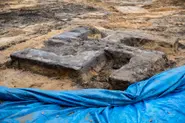
At four-by-four metres in size, the swastika had remained hidden underground for decades. That is, until a construction worker discovered it on Friday.
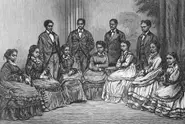
Black musicians in Germany are normally only associated with jazz. In fact, black classical musicians have been influencing German high culture since the days of Beethoven.
The question of whether Germany owes Poland war reparations - an issue recently revived by Warsaw - is a complex entanglement of historical, ethical, diplomatic and economic factors. Here are
the key elements.
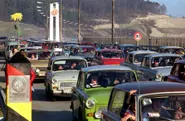
The first ‘Trabi’ was produced in the east German city of Zwickau on November 7th, 1957. Six decades years later, the iconic car has a loyal fan base worldwide that’s still going strong.