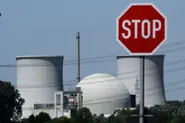
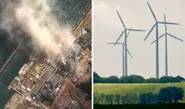
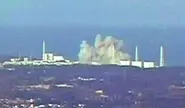
Germany's Constitutional Court on Tuesday ruled that energy companies have a right to compensation after the government ordered the shutdown of all the country's nuclear power plants in the wake of the 2011 Fukushima disaster.
Three energy giants Tuesday went to Germany's top court to challenge the decision by Chancellor Angela Merkel's government to phase out nuclear power after the Fukushima disaster five years ago.
Lauded by some as an example to the rest of the world, but heavily criticized by others, Germany's historic "energy transition" - an ambitious plan to switch from carbon fuels to clean energy by the middle of this century - still faces major challenges.
Two years after the Fukushima nuclear disaster in Japan, major German banks are funding atomic power projects despite having promised not to do so, a new study claims.
Two years after the Fukushima nuclear catastrophe, nuclear energy usage is growing – except in Germany and in Japan, where the meltdown took place, a story on Saturday in <i>Die Welt</i> said.
Germany stands ready to help Japan with the "demanding" goal of phasing out nuclear energy by drawing on its own nuclear exit progress, a government spokesman said on Friday.
As Chancellor Angela Merkel touts Germany’s planned exit from nuclear power, a new study has dismissed fears that electricity prices and greenhouse gas emissions will rise.
Chancellor Angela Merkel said Germany could serve as a global trailblazer with its decision Monday to phase out nuclear power by 2022 but France, Europe's biggest producer, said it will not follow suit.
Germany's energy ethics commission is to recommend a complete phaseout of nuclear power by 2021. The independent body’s report is due to be submitted to Chancellor Angela Merkel this weekend.
Germany’s seven oldest atomic reactors are likely to be switched off permanently after federal Environment Minister Norbert Röttgen struck an agreement with state counterparts on a final shutdown.
German electricity will be largely nuclear-free from this weekend, when a power plant is taken off-line for maintenance leaving just four of the country's 17 nuclear generators operating.
Germany's 17 nuclear power plants are generally considered safe, though four older reactors may close because they are exceptionally vulnerable to plane crashes, Environment Minister Norbert Röttgen said on Tuesday.
Air currents are expected to bring radioactive particles from Japan to Central Europe on Wednesday, though radiation levels will be negligible, the Federal Office for Radiation Protection (BfS) said Wednesday.