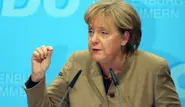
European heavyweights pressured German Chancellor Angela Merkel on Monday to back down over Greece, which accused Berlin of profiteering amid a euro currency slump.
German Chancellor Angela Merkel has told Greece's Prime Minister Georges Papandreou that the European Union would do "everything necessary" to preserve eurozone stability, her office said. But a new poll showed Germans oppose a Greek bailout.
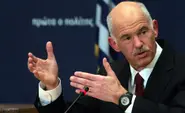
Greek Prime Minister George Papandreou implicitly criticised Germany on Saturday for allegedly opposing efforts to help his country out of its fiscal crisis, warning Berlin risked destabilising the European Union.
Greek Prime Minister Georgios Papandreou said the issue of German reparations for World War II was still “open,” potentially putting Athens on a collision course with Berlin as it contends with a crippling debt crisis.
The global financial crisis pushed Germany's public debt up 7.1 percent in 2009 to €1.7 trillion ($2.3 trillion), official data showed Thursday, the second sharpest rise since World War II.
The economic and fiscal crisis engulfing Greece will not prevent hordes of German holidaymakers flocking there this year, the head of Germany's tourism board predicted Tuesday.
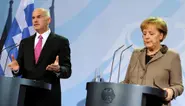
Tabloid <i>Bild</i> newspaper has written an open letter to Greek Prime Minister George Papandreou, telling him he was visiting a country where, unlike his own, people "get up early and work." Merkel condemned "negative emotions" as "unhelpful."
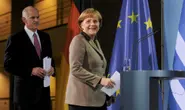
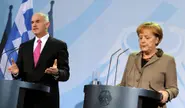
German Chancellor Angela Merkel said Friday that Greece does not need financial aid at present and that the stability of the eurozone was "assured," after talks with Prime Minister George Papandreou.
German Economy Minister Rainer Brüderle on Friday said Berlin will "not give one cent" to help Greece out of its debt crisis, as Chancellor Angela Merkel prepared to meet Greek Prime Minister George Papandreou.
Greece should sell some of its uninhabited islands to raise cash to avoid bankruptcy, two German parliamentarians from Chancellor Angela Merkel's centre-right coalition suggested on Thursday.
Chancellor Angela Merkel on Sunday evening dismissed talk of a German rescue plan to help Greece weather its massive debt crisis, as Athens braces for a tough EU audit on its ailing public finances.
Germany sought Friday to play down growing tensions with Greece over the debt crisis and war reparations ahead of a crunch meeting next week between the leaders of both countries.
In further signs of the finance world’s shattered confidence in Greece, major German banks plan to stop buying government-backed investments in the ailing country, business daily <i>Financial Times Deutschland</i> reported Friday.
The German government on Wednesday dismissed a claim by the mayor of Athens that it still owed Greece billions of euros in reparations for World War II damage amid a mounting row with Berlin over the country's debt crisis.
The European Union will have to mull stricter penalties against member states over budget deficits, Germany said on Monday, in the wake of the Greece crisis that has knocked confidence in the euro.
German Chancellor Angela Merkel has taken an impassioned swipe at banks, saying it would be a "scandal" if it were proved they had helped Greece massage its statistics, prompting a major crisis.
German Chancellor Angela Merkel declared on Thursday that the European Union would not "leave Greece on its own" with its deficit crisis ahead of an EU summit in Brussels.
Germany, the eurozone's biggest economy, is examining how to build a "firewall" to prevent the Greek debt crisis tearing through the countries that use the euro, media reports said on Wednesday.
Germany said on Friday that it sees no reason for "unease" over Greece's fiscal woes and that it is confident that Athens will live up to its promises to rein in its yawning budget deficit.
German Chancellor Angela Merkel believes the euro faces a "very difficult phase" with Greece's budget crisis putting the eurozone under "huge, huge pressures," according to comments published Thursday.
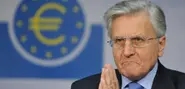
European Central Bank President Jean-Claude Trichet urged the 16 countries using the euro to slash their deficits "in 2011 at the latest," in an interview published Sunday in German tabloid <i>Bild am Sonntag</i>.
A decade after its introduction, three-quarters of Germans have confidence in the stability of the common European currency, the euro, a survey by the polling firm Forsa has found.
Stocks and the euro were battered on Friday, as Germany’s leading stock index the DAX hit a three-year low in early trading and the single currency dipped to the lowest point this year against the US dollar.
German investors do not expect a recession in Europe's biggest economy, a key indicator suggested Tuesday, as cheaper oil and a weakening euro take some of the pressure off firms and consumers.
German prices at the factory gate, an early indicator of inflation, rose at their fastest rate in 27 years in July, data showed Tuesday in another worrying sign for Europe's biggest economy.