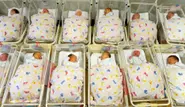
The number of babies born in Germany has decreased for the first time in the last three years, with new statistics showing the birth rate is falling in 14 of the 16 federal states.
The Federal Statistics Office reported on Friday that more than 700,000 new babies were born in Germany last year - the highest number in a decade that saw the country's birth rate drop to one of the lowest worldwide.
Second generation immigrants in Germany are having fewer babies than their parents, a new study has revealed, denting the widely-held belief that migrant communities could be the nation’s fertility engines.
Family Minister Ursula von der Leyen has confirmed that Germans are having more children, saying that the tough economic situation is prompting growing numbers to seek security within the family.
German grandparents will now be able to apply for leave from work to care for their newborn grandchildren, according to a new law ratified by parliament late on Thursday evening.
Germany currently has the largest population in Europe, but by 2060 the head count in both France and Britain will have exceeded this number, according to a new study by the EU's statistical office, Eurostat.
Germany's formerly communist east is one Europe's most troubled regions when it comes to demographic and economic issues, according to a new study released this week by the Berlin Institute for Population and Development.