
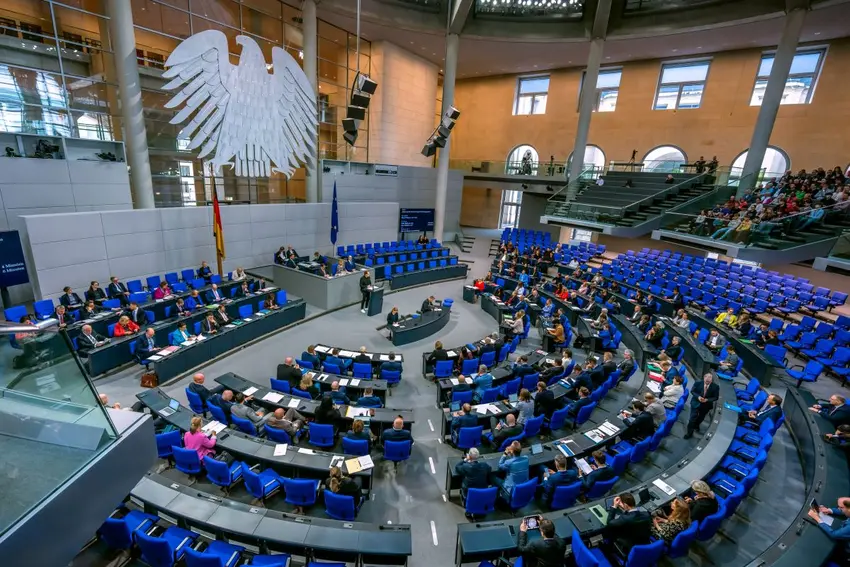
As Germany debates whether to cancel a planned pay rise for members of the Bundestag, or members of parliament (MPs) as they would be known in English, attention has once again turned to how much lawmakers actually earn – and how their pay is structured.
Across party lines, politicians are signalling support for freezing salaries this year, arguing that they should share the financial pressures faced by citizens.
On paper, the salary for an MP here is high – at just under €12,000 a month before tax, with additional allowances and support.
This puts German lawmakers among the country's top-earners. But it should also be said that some of that funding is earmarked for work-related costs rather than personal income, and the job itself comes with long hours, public scrutiny and growing security risks.
Why members of the Bundestag may not get a pay rise this year
The current debate centres on a planned increase of around €500 per month for the 630 members of Germany's Bundestag. This would have taken their salaries to roughly €12,330 from July.
This rise is not negotiated each year but automatically linked to national wage trends under a system introduced in 2014.
But a recent YouGov survey for the German Press Agency found that 85 percent of respondents think MPs should forego a raise this year, given the current economic situation.
Only seven percent supported the increase, while eight percent were undecided.
READ ALSO: COMPARE - How does your salary stack up against Germany's top earners?
Partly as a result, leading politicians from several major parties – including the conservative Christian Union (CDU/CSU) parties, the centre-left Social Democrats (SPD), the Greens and the Left Party – all now support suspending the increase.
SPD politician Johannes Fechner told the German Press Agency that granting MPs a pay rise while many people face financial strain “would send the wrong signal”.
Similarly, CDU parliamentary group leader Jens Spahn, who had initially argued in favour of the rise, now says that citizens making sacrifices would expect the same from their representatives.
What do MPs actually earn?
At the heart of MPs’ compensation is a basic salary – officially known as Abgeordnetenentschädigung or Diäten – which currently stands at around €11,833 per month before tax.
The level of pay is based in part on the salary of senior federal judges and is intended to reflect the responsibility of the role.
This income is fully taxable. MPs must cover costs such as health and long-term care insurance, but unlike many employees they don’t have to pay into Germany's statutory unemployment insurance scheme.
In practical terms, this means that many MPs are estimated to take home roughly €8,000 per month, depending on their personal circumstances.
READ ALSO: Will Germany scrap the eight-hour working day?
While MPs don’t receive extra payments such as holiday bonuses or Christmas pay, the actual amount they receive can be significantly higher if they hold roles such as a committee chair, vice president or speaker of the Bundestag.
Additional allowances
In addition to their salary, MPs in Germany also receive a tax-free monthly allowance of around €5,400 to cover work-related costs.
This money is not intended as personal income but should instead be used to fund a constituency office, travel within the electoral district and accommodation in Berlin during parliamentary sessions.
Alongside this, the Bundestag provides separate budgets that MPs cannot use privately:
- Up to €25,874 per month for staff, paid directly by parliament
- Up to €12,000 per year for office equipment, reimbursed against receipts
MPs also receive certain work-related benefits, including free, unlimited first-class train travel within Germany and reimbursement for official domestic flights.
READ ALSO: When does your employer need to pay you for travel time in Germany?
A well-paid job – but not an easy one
While the figures involved may seem high, MPs argue that the role comes with significant demands.
For example, Johannes Fechner described a workload of around 90 hours per week, alongside long periods spent away from family – reportedly up to 21 weeks a year on parliamentary business in Berlin.
There are also growing concerns about safety.
In 2025, police recorded 5,140 offences against politicians and party representatives, a sharp increase on previous years.
Most of these incidents involved verbal abuse, such as insults or defamation, although 193 cases were classified as violent crimes.
The rise has been linked in part to heightened political tensions during recent election campaigns.
Comments