
Wednesday's top story: Police launch major crackdown on neo‑Nazi youth groups across Germany
German police have carried out a large‑scale operation against suspected neo‑Nazi groups, with searches launched early on Wednesday in eight cities across the state of North Rhine‑Westphalia (NRW).
Security sources said the raids targeted ten suspects believed to be linked to the right‑wing extremist group Jung und Stark.
According to reports, the operation is part of a broader nationwide investigation into the growing number of far‑right youth organisations.
READ ALSO: German far right founds new youth wing in face of protests
Der Spiegel said the police action extended beyond North Rhine‑Westphalia to around 50 locations in twelve federal states, including Saxony and Berlin. Details of the raids were not immediately disclosed.
All ten suspects are German citizens, and the youngest is reportedly just 16 years old.
The Federal Criminal Police Office (BKA) has warned of a sharp rise in new youth‑led neo‑Nazi groups since mid‑2024. Authorities say these groups have been linked to increasing numbers of criminal offences, including attacks on LGBTQ+ events such as Christopher Street Day parades.
Police say further operations against similar groups are expected in the coming weeks.
German car-ramming suspect was treated in psychiatric hospital
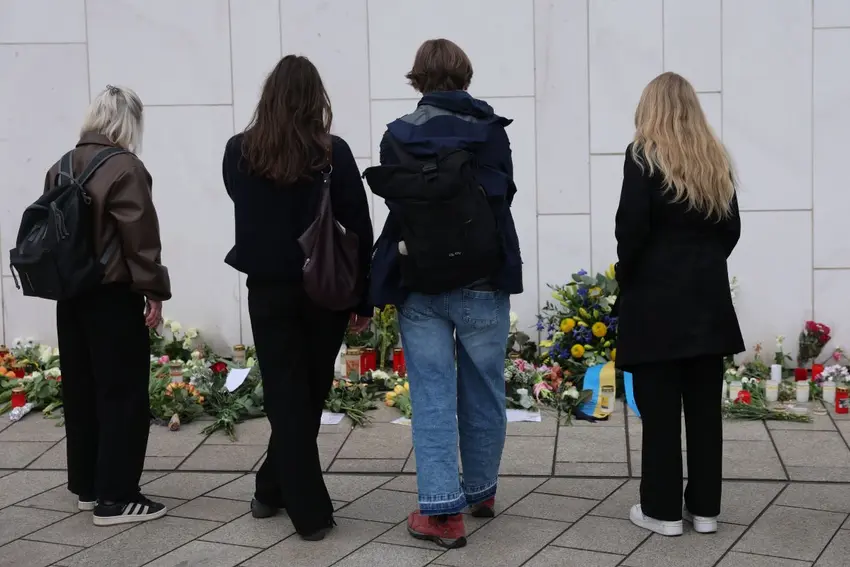
A man suspected of ploughing a car into a crowd in the German city of Leipzig, killing two people, recently underwent treatment at a psychiatric hospital, the authorities said Tuesday.
The German national allegedly drove the vehicle at high speed down a main street in the historic centre of the eastern city, leaving two people dead and several others wounded.
The 33-year-old suspect was subseqently arrested and officials have said they do not believe he had any political or religious motive for the act.
But he was treated in a specialist psychiatric hospital from April 17th to 29th, "due to his mental condition and with his consent", police and prosecutors said in a statement.
Authorities declined to give further details about his condition, citing patient confidentiality.
A 63-year-old woman and a 77-year-old man, both German citizens, were killed in the car-ramming.
Six other people aged between 21 and 87 were injured, two of them seriously, police said.
A public memorial service was held in the Nikolai Church (Nikolaikirche) in central Leipzig on Tuesday evening.
READ ALSO: What we know so far about suspected car-ramming attack in Leipzig
New ICE L train makes debut on Sylt route
Germany’s newest generation of high‑speed trains has officially arrived on the North Sea island of Sylt, as Deutsche Bahn’s ICE L made its first passenger runs between Hamburg and Westerland.
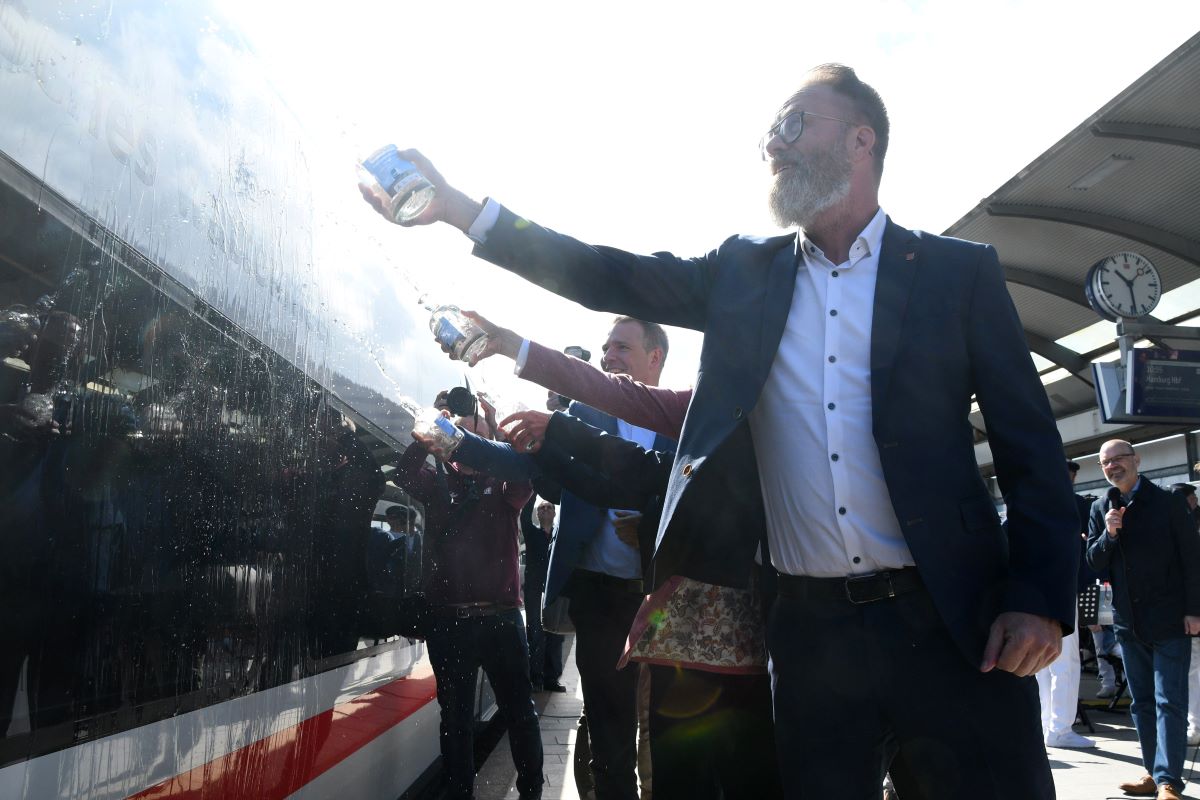
The occasion was marked by the ceremonial naming of the train on Sylt, the first christening of an ICE train from the latest generation.
Built by Spanish manufacturer Talgo, the ICE L visually resembles Deutsche Bahn’s long‑distance Intercity trains but introduces several upgrades.
The name – Schleswig‑Holstein Wadden Sea National Park – was chosen to reflect both the region it serves and the environmental significance of the UNESCO‑protected coastal landscape. The train was christened with seawater.
READ ALSO: Deutsche Bahn to offer discounted last-minute tickets for long-distance trains
According to Deutsche Bahn, this marks the first time ICE services have crossed the railway embankment to Sylt, replacing the Intercity trains that previously operated on the popular holiday route.
The “L” in ICE L stands for “low floor”, indicating step‑free access throughout much of the train. Other features include more space for families and improved mobile‑phone reception.
From mid‑June, the ICE L is scheduled to operate direct services between Sylt and Berlin, followed by further connections from Frankfurt and Cologne later in the summer.
Germany appears unable to spend much of its new debt
Last year German leaders pulled off some pretty bold moves to enable the country to take on huge amounts of new debt, intended to fund massive infrastructure projects and help shake the country out of economic recession.
But today, even as the government wrings its hands over the next annual budget to come with more debt to be incurred, it seems to be unable to spend much of the 500-billion-euro special fund it created more than 12 months ago.
According to a recent report by the Wall Street Journal, most of the special fund for infrastructure projects remains unspent.
The Journal cites city mayors fed up with the fact that they can't access millions of euros that were promised for municipal projects and economics experts who shake their heads at paper-based processes and legal requirements that have ground real spending on infrastructure projects to a halt, even as the country's debt has ballooned.
Recent analysis by the Cologne Institute for Economic Research (IW) identified another obstacle, namely that Germany lacks enough skilled workers to get many of it's larger infrastructure projects off the ground.
READ ALSO: Germany's massive infrastructure plans demand more foreign workers
Lufthansa warns of mounting risks from Middle East war
Germany’s Lufthansa warned on Wednesday that the escalating war in the Middle East is increasing risks to its financial performance, even as Europe’s largest airline group maintained its forecast for the year.
In a statement released with its first‑quarter figures, the group said the “risk–opportunity profile has shifted towards risks”, citing the effective closure of the Strait of Hormuz by Iran since late February.
While Lufthansa said no immediate shortages of kerosene are expected at its hubs, it cautioned that reduced fuel availability later in the year could become a further risk factor.
READ ALSO: Lufthansa cuts 20,000 flights as fuel crisis bites in Germany
The airline is partly shielded from the surge because it has hedged around 80 percent of its fuel needs for 2026. Even so, it expects additional fuel costs of €1.7 billion this year.
Lufthansa said some of the impact would be offset by shifts in passenger travel, as travellers avoid Gulf transit hubs in favour of routes via the group’s network in Africa and Asia, alongside further cost‑cutting measures.
The group has already cancelled thousands of flights this year because of strikes over pay and pensions, with unions warning that more walkouts remain possible.
Lufthansa reported a first‑quarter net loss of €665 million, a 25 percent improvement on last year, and said it still expects 2026 operating profits to be “significantly above” 2025 levels.
With reporting by AFP, DPA, Rachel Loxton and Paul Krantz
Comments