
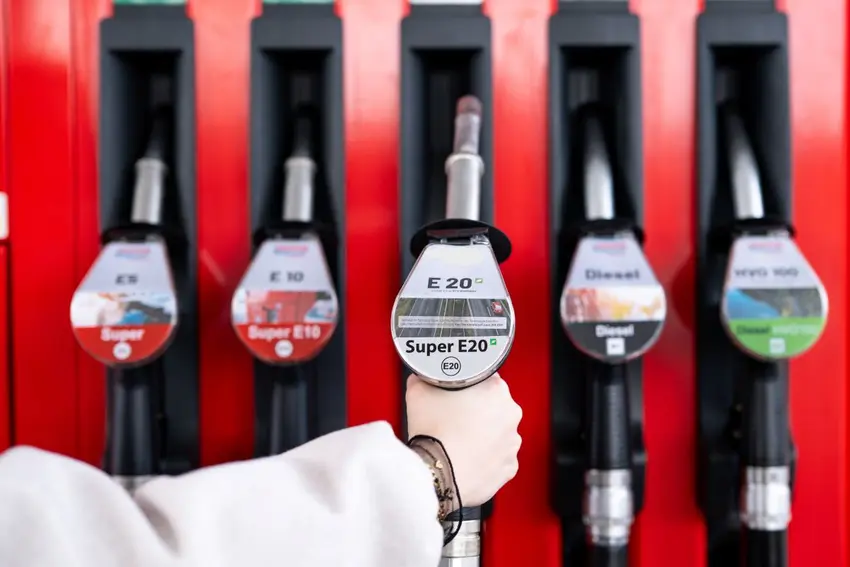
Friday's top story: Fuel tax cut and employee bonuses go to the Bundestag
Two measures to relieve the financial burden on consumers brought by high energy prices amidst the US and Israel's war on Iran are to be adopted in the Bundestag today: the two-month fuel discount and the so-called relief premium (or employee bonuses).
Both are controversial, and the debate is likely to become heated.
As recently as mid-March the idea of simply cutting taxes on oil and gas was not considered a good solution by the conservative Union (CDU/CSU) and Social Democrat (SPD) parties.
As reported by Tagesschau, CDU politician Tilman Kuban had received applause from members of both groups when he said in the Bundestag: "A fuel discount is no help. Such a fuel discount is corporate funding. You can't stop rip-offs with taxpayers' money."
But with diesel and petrol prices soaring to record levels the federal government was under immense pressure to do something, and specifically to do something "that will quickly and noticeably be seen," as Co-Chancellor and Finance Minister Lars Klingbeil put it in an interview with ZDF.
The question that remains, and that is likely to be at the centre of debate on the Bundestag floor on Friday is: Will the tax cut on fuels actually reach motorists in Germany, or will it simply add to the profit margin for the industry?
Leaders of the coalition government, pointing to a recently emboldened Federal Cartel Office (Bundeskartellamt) suggest that it will. Recent history, however, would suggest the opposite. The previous government had brought forward virtually the same measures in response to spiking fuel prices in the beginning of Russia's war on Ukraine, and it did little to reduce consumer prices.
Another point of debate is the relief bonus, which the government would allow employers to pay.
And on top of the ongoing debates on these measures, there is also growing criticism of the government's plan to save money in the public health insurance funds.
The General Practitioners' Association has called the plans a "destructive programme for family doctors' practices".
OPINION: Germany's fuel crisis response shows the government has lost its mind
Two potential agents held in Germany suspected of plotting sabotage
German authorities said Thursday they had arrested a Ukrainian man and Latvian man on suspicion of planning acts of sabotage for a foreign organisation after "suspicious" items were found in their car.
The men, aged 43 and 45, were found with fake identity documents, cameras, a drone, GPS trackers as well as several mobile phones and sim cards during a routine traffic stop, police and prosecutors said.
It comes with Germany on high alert for acts of sabotage amid fears that Russia is targeting it because of Berlin's support for Kyiv throughout Moscow's four-year-old full-scale invasion of Ukraine.
Their car, which had a Latvian licence plate, was stopped on April 12th on a motorway near Nuremberg.
"We are currently working on the assumption that the suspects were acting on behalf of a group or institution outside Germany," they said, without giving further details.
The men, whose identities were not disclosed, have been remanded in custody.
They face up to five years in prison should they be charged and eventually convicted of preparing sabotage for a foreign power.
They are also suspected of falsifying identity documents, which carries up to two years in prison.
Electric vehicles see supercharged sales in the EU
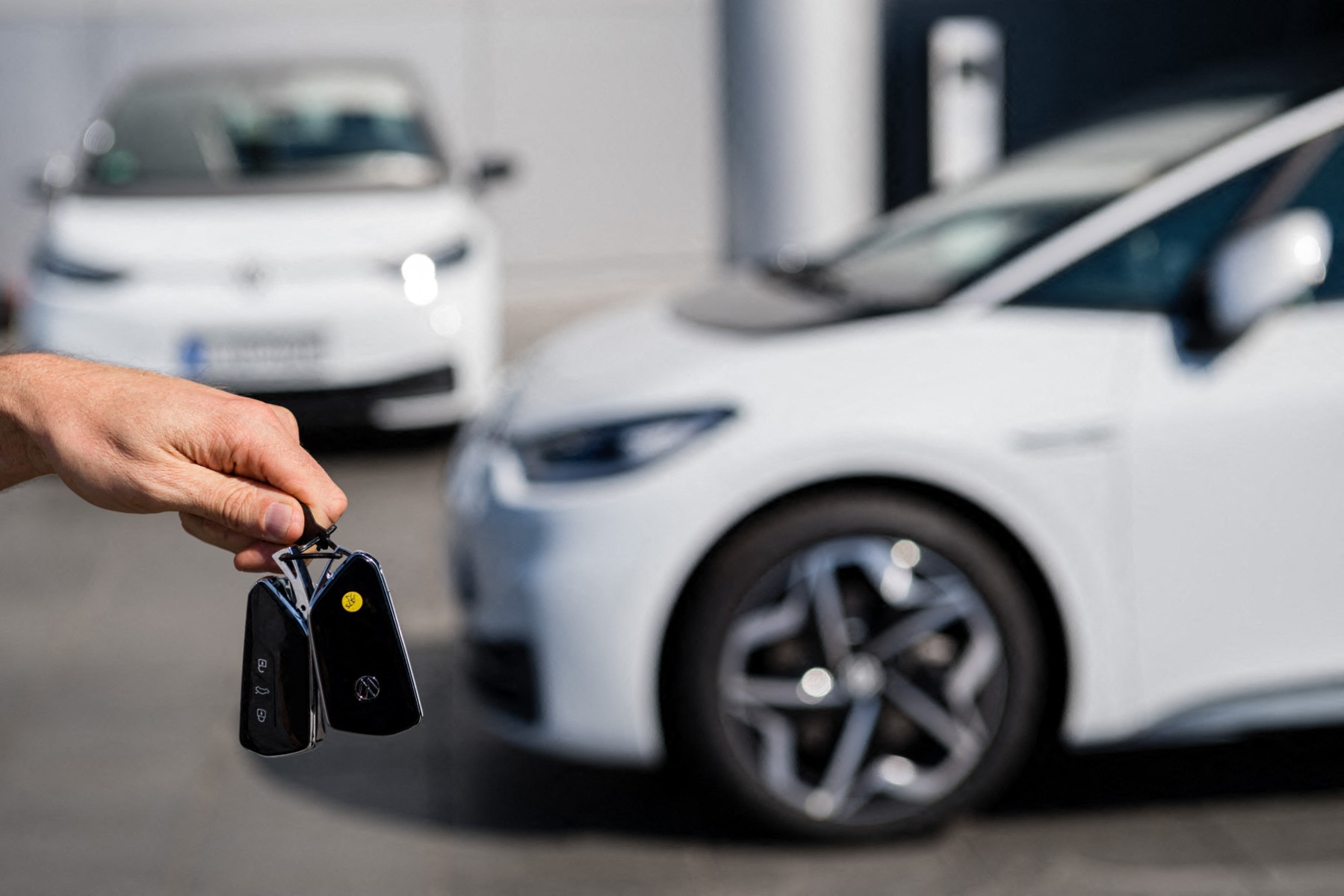
Sales of new cars jumped last month in the European Union as consumers turned to electric vehicles as petrol prices soared due to the war in the Middle East, data showed Thursday.
Overall sales rose 12.5 percent in March from the same month last year to 1.16 million vehicles, according to registration data from the European Automobile Manufacturers' Association (ACEA).
That jump helped the market attain a four percent rise for the first quarter overall following declines in January and February.
Sales of fully electric vehicles soared by 49 percent, with plug-in hybrids also jumping 20 percent.
The ACEA noted the sales performance of electric vehicles varied strongly by country, with Italy, France and Germany posting strong gains.
READ ALSO: What are the cheapest electric cars you can buy in Germany right now?
On Thursday Tesla announced that it would hire an additional 1,000 workers in Germany to join the crew at the company's plant near Berlin.
Bayern fined but avoid fan ban over Champions League crowd incident
Bayern Munich have been fined by UEFA but avoided a supporter lockout after photographers were injured when fans stormed over barriers during their Champions League quarter-final win over Real Madrid.
Earlier in April, Bayern scored twice in the final moments of the last-eight second leg at their Allianz Arena home to seal their spot in the semi-finals.
A group of fans from the Bayern ultras section climbed over barriers while celebrating, trampling pitch-side photographers.
One photographer reported a concussion while another suffered a head laceration, with others also needing medical treatment.
The governing body fined Bayern a total of 89,625 euros, breaking the penalty down into 40,000 for spectator disturbances, 30,000 for a fan banner critical of UEFA, 14,000 for blocking aisles and 5,625 for throwing objects.
Despite the threat of a fan lockout for the second semi-final leg against Paris Saint-Germain, Bayern were confident of a full house.
"We expect to be able to celebrate a football festival with a full stadium against Paris," sporting director Christoph Freund said prior to UEFA's decision.
Online archive lets people with German ancestors find out if their family had been Nazis
At the beginning of this month, German news magazine Die Zeit launched an online search tool that made it easier than ever before to quickly search if your own relatives were Nazis.
The tool, built on a database of several million Nazi Party (NSDAP) membership cards, made it perhaps easier than ever before for people to find out for themselves in their grandparents or other relatives were directly involved with the fascist party.
As one might expect, use of the tool by people across Germany led to the revelation of uncomfortable truths for many people.
Die Zeit has since followed up with an article compiling reader reactions, many of whom expressed extreme shock and sorrow and learning their loved ones had joined the party.
Membership in the party was not compulsory, but 10.2 million Germans joined the Nazi Party in the years from 1923 to 1945. Whereas early joiners largely did so out of enthusiasm for the party platform, after Adolf Hitler took power in 1933, membership surged, driven by job opportunities and social pressure.
Germany as a nation has made tremendous efforts to confront the realities of its Nazi past, the gruesome details of which are still taught in schools and memorials around the country are carefully protected. But on the individual level, many former party members may have hidden or obscured their own involvement.
“The family story that a relative was merely a bystander has just fallen apart,” one reader told Die Zeit.
Previously, a search through the German Federal Archives was possible with a formal request. Whereas Die Zeit's search tool made the process much easier. It is, however, only available to subscribers.
With reporting by AFP.
Comments