
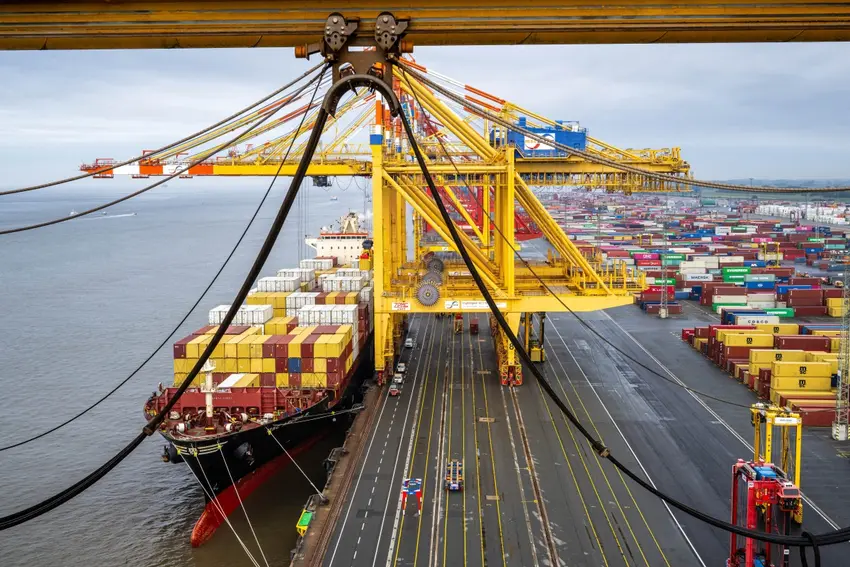
The outlook is currently grim for the German economy as knock-on effects from the Iran war are pushing energy prices up and slowing down projected growth.
Leading economic institutes cut their growth forecasts for Germany on Wednesday, warning that surging inflation resulting from the Middle East war would hit Europe's top economy hard.
The same institutes also expect a noticeable increase in consumer prices, with the inflation rate expected to rise significantly this year and possibly continue to stay high into 2027.
Meanwhile there is some evidence that consumers in Germany are pre-emptively preparing for price rises by shifting their shopping habits.
READ ALSO: How people in Germany are preparing for price hikes
German growth forecasts cut
Seven economic institutes in Berlin, including the Ifo Institute and the German Institute for Economic Research (DIW), published their "Joint Economic Forecast" for Germany on Wednesday.
The German economy should grow by 0.6 percent in 2026, the seven institutes said, down from a September forecast of 1.3 percent, while inflation is predicted to rise to 2.8 percent, up from 2.0 percent.
"The energy price shock triggered by the Iran war is hitting the recovery hard," said economist Timo Wollmershaeuser of the Ifo institute, adding that increased government spending was nevertheless "preventing a stronger slide".
Oil and natural gas prices have surged since the end of February, when the United States and Israel attacked Iran, killed its supreme leader and plunged the Middle East into war.
Iran has since closed the Strait of Hormuz to ships of countries it considers allied with the United States and Israel, effectively blocking a vital sea lane that normally transports about a fifth of the world's oil and gas trade.
Higher inflation in Germany would hit consumer spending, the institutes said, weighing on an already weak economy that has barely grown since a burst of pent-up demand after the Covid pandemic in 2022.
READ ALSO: Merz urges early end to Iran war in meeting with Trump
After years of slump and mini-growth in 2025, the German economy was expected to be on the rise again this year - even if driven primarily by billions in government spending on defence, and purportedly also infrastructure.
Which goods are expected to get more expensive?
The rise in the price of gas is also making fertilizers more expensive, which in turn is expected to have an impact on food prices.
In addition, higher production and transport costs can be expected to push up the price of virtually all goods which are shipped, and especially those which require heat to manufacture or which need to be kept cool.
Essentially, the cost of consumer goods can be expected to rise noticeably across the board in Germany if the war and its related energy supply disruptions continue. A similar effect was felt in Germany and Europe following the outbreak of Russia's war on Ukraine in 2022.
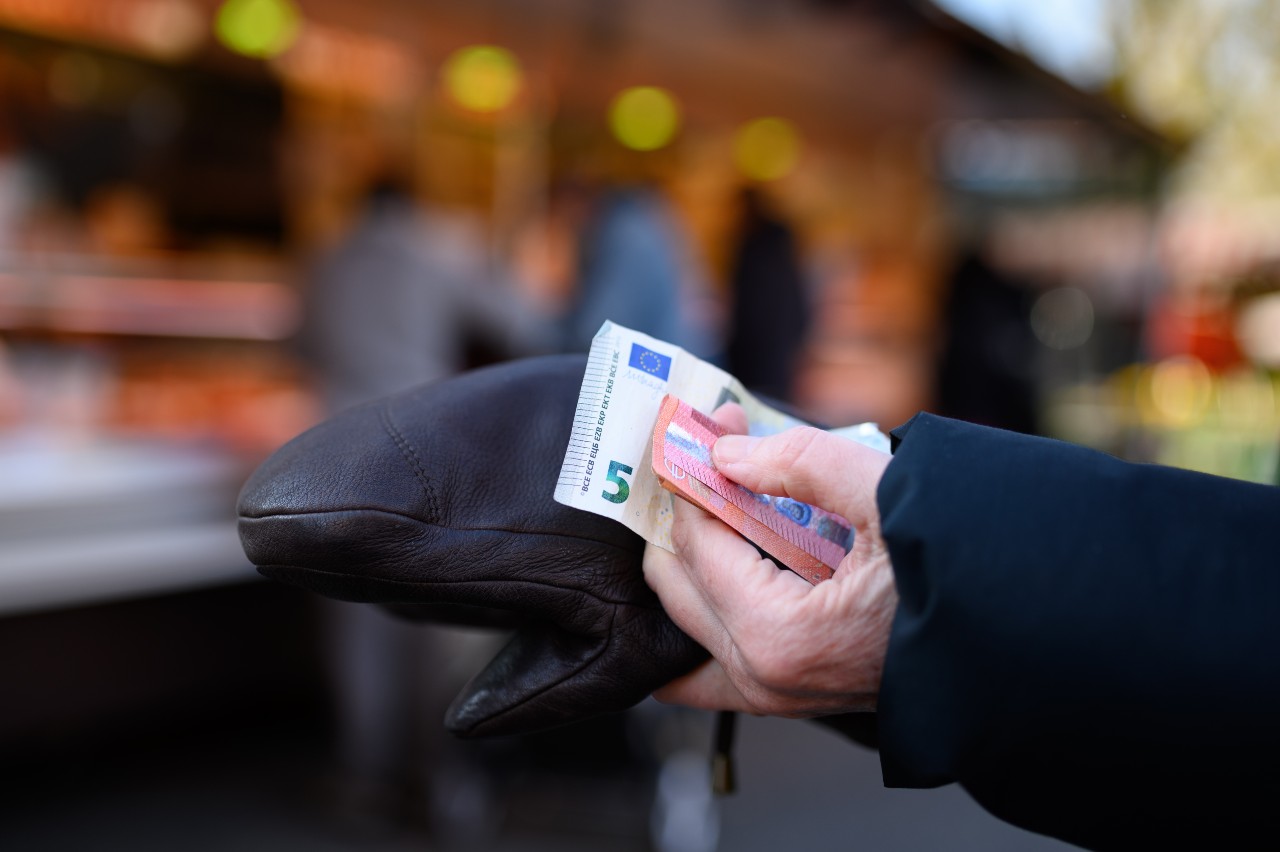
In the past month consequences from the Iran war already drove consumer prices to their highest level in more than two years. The inflation rate was 2.7 percent in March after 1.9 percent in February, according to preliminary data Germany's Statistical Office.
Energy prices rose particularly sharply in March.
How much inflation should Germany expect?
According to a report by BR24, the European Central Bank (ECB), which tries to keep inflation down across Europe by adjusting interest rates, is looking at two potential scenarios for how inflation may develop.
In an optimistic scenario the war ends by the summer and fuel production is able to be continued quickly. In this case, ECB would expect inflation to jump briefly and stabilize again next year at around two percent.
Alternatively, if the war stretches on and the production of oil and gas is disrupted for much longer, then the inflation rate could rise to 4.4 percent this year, and even 4.8 percent in 2027. In this case it would not be expected to stabilize again until at least 2028.
What is the government doing?
The German government has been discussing some measures to cushion the rise in energy prices. As of April 1st, a new fuel price rule was entered into force which limits gas stations from putting prices up more than once in 24 hours.
Moving forward, lawmakers are looking at a reduction in energy taxes and a possible reduction in VAT, for example on food.
However, tax breaks come at a considerable cost, and the country's reduced economic growth projections also mean the government could face even more pressure to balance the budget because tax revenue is lower in times of little growth.
READ ALSO: How Germany's major public health insurance reform will affect you
In the meantime, consumers who want to limit their own costs have little choice but to buy less or buy cheaper.
Efforts to save electricity, reduce home heating and drive less (with a combustion engine) may all prove to be worthwhile money savers.
Interestingly, analysis by the Hans Böckler Foundation suggests that rising gas prices tend to hit Germany's middle class the hardest. This is because low-income households often do not have a car, whereas high-income families spend less on fuel proportionally because their incomes are greater.
With reporting by AFP and DPA.
Comments