
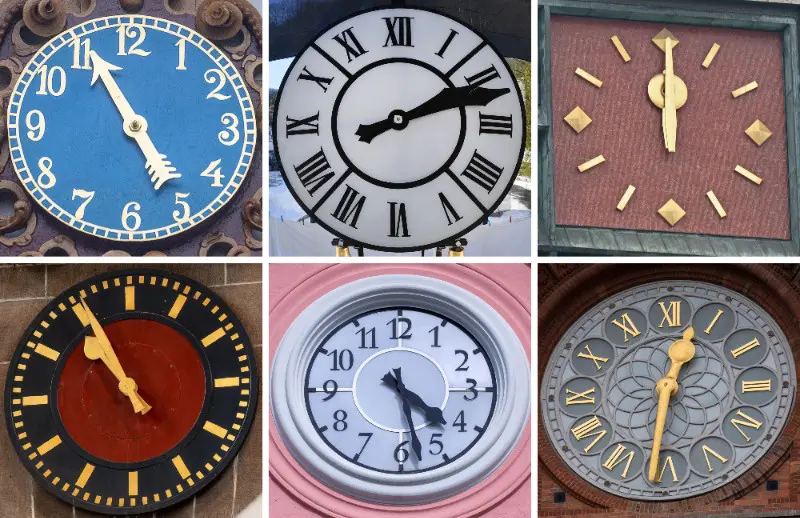
Germany changes its clocks twice a year, once in spring and once in autumn. The time shift (Zeitverscheibung) is meant to make better use of daylight, with longer evenings in summer and lighter mornings in winter.
What's the date of the next clock change in Germany?
Daylight saving time (DST or Sommerzeit) begins on the last Sunday of March. In 2026, that falls on March 29th, when clocks in Germany will move forward by one hour.
This occurs in the early hours of Sunday morning. At 2am, the clocks will jump to 3am.
Germany will then remain on DST until the last Sunday in October. In 2026, that falls on October 25th, when clocks will fall back by one hour. Then at 3am, the clocks will move back to 2am.
Many modern time bearing devices, like smartphones and computers, will automatically update to the new time. But if you have an analogue clock on the wall, you’ll need to manually adjust its arms on Saturday night or Sunday morning to reflect the new time. This may also be true for some digital clocks that are not connected to the internet.
READ ALSO: Six things you have to do in Cologne in the spring
Confirmed clock change dates for Germany:
- Sunday, March 29th 2026 – clocks go forward from 2am to 3am
- Sunday, October 25th 2026 – clocks go back from 3am to 2am
- Sunday, March 28th 2027 – clocks go forward from 2am to 3am
- Sunday, October 31st 2027 – clocks go back from 3am to 2am
Why does Germany observe daylight saving time?
The Canadian cities of Port Arthur and Fort William were the first cities in the world to enact DST, on May 1st, 1908 – to reduce energy costs.
But Germany and Austria-Hungary were the first states to make the change, introducing Sommerzeit during World War I (on April 30th, 1916) in order to try and alleviate hardship caused by wartime coal shortages and air-raid blackouts.
Today, all EU member states switch to DST on the last Sunday in March and then back to standard time on the last Sunday in October.
Although the EU proposed ending the twice-yearly clock change in 2018, no final decision has been taken, so the current system remains in place.
Germany is on Central European Time (CET) in winter and Central European Summer Time (CEST) when daylight saving time is in effect.
Is the clock set forward or backwards?
One way to remember which way the time changes is with a simple mnemonic device: "spring forward, fall back."
So on Sunday, March 29th at 2am, clocks in Germany will spring forward to 3am.
Comments