
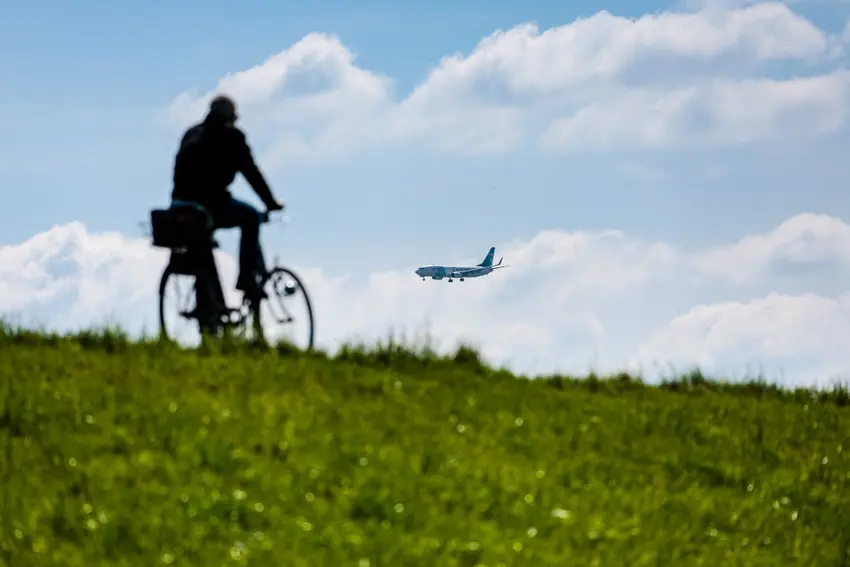
Thanks to pleasant weather, cultural events and public holidays, spring is one of the best times to be in Germany.
This year Easter Sunday falls on April 5th with two Feiertage either side on Good Friday and Easter Monday.
READ ALSO: How to maximise your public holidays like a German this spring
Many people have been making travel plans, whether they're taking a city break, escaping to the sun for a few days or organising day trips with visitors.
But one thing has threatened to throw a spanner in the works: transport strikes.
How are strikes affecting life in Germany?
At the moment Germany is seeing a slew of strikes in the public service and transport sector.
On Wednesday March 18th, for instance, the trade union Verdi called workers at Berlin's BER airport out on strike, effectively cancelling all flights. Around 57,000 passengers were affected by the action.
READ ALSO: All Berlin flights on Wednesday cancelled due to strike
It followed other air travel walkouts, including strikes by Lufthansa pilots and cabin crew. The most recent two-day strike by pilots at Lufthansa on March 12th and March 13th caused hundreds of cancellations.
But following renewed collective bargaining talks between Verdi and Berlin Brandenburg Airport (BER) management on March 25th, both sides reported significant progress towards a compromise.
Verdi said the employer had improved its offer on pay, contract duration and benefits, with additional progress made on agreements covering the airport fire service and trainees.
Negotiations between the two sides are set to resume on April 13th. Verdi has ruled out any further strikes at BER until then, meaning there will be no strike‑related flight cancellations at Berlin’s airport over the Easter holidays.
There has also been movement at Lufthansa.
On Friday, Lufthansa and Verdi signed a new collective bargaining agreement covering around 20,000 ground staff. Under the deal, employees will receive total pay increases of around 4.6 percent in two stages, with the agreement running until the end of February 2028.
As a result, there will be no further strikes by Lufthansa ground staff this year, easing pressure on airport operations during the busy travel season.
But Lufthansa has cautioned that this agreement doesn't automatically rule out industrial action by other employee groups. Talks with pilots and cabin crew are ongoing, and while there are currently no concrete strike dates, further action by those groups remains possible.
What about local public transport?
Another issue for travellers has been warning strikes affecting local public transport in different parts of Germany.
In recent weeks, passengers in several federal states faced disruption as Verdi called members out in a staggered timetable.
One coordinated wave of action in mid‑March affected areas including Hamburg, North Rhine‑Westphalia, Bavaria and parts of Saxony‑Anhalt, with buses, trams and U‑Bahn services in some cities largely coming to a standstill.
READ ALSO: Where transport strikes are expected in Germany this week
But recently the situation has eased in many regions as talks have progressed, with reports describing a temporary ‘breather’ for commuters over the Easter period.
Some states have already reached agreements. In others, including Bavaria and Saxony-Anhalt, the risk of further short-notice walkouts remains.
Schools in Germany take a one or two week break at Easter, meaning many families will be travelling. Depending on the state, holidays fall between March 30th and April 10th this year.
However, it is worth noting that Deutsche Bahn is not affected by the current strikes so people can use the S-Bahn, regional trains and the ICE network during strike days.
READ ALSO: Is it still safe to travel to the Mediterranean from Germany
So will there be strikes at Easter?
The outlook now is more positive than it was earlier in March.
At Berlin’s BER airport, strikes have been explicitly ruled out over the Easter holidays and Lufthansa ground staff have reached a long‑term agreement, reducing the risk of disruption at Germany’s largest airline.
But not all disputes have been fully resolved. Negotiations involving pilots and cabin crew at Lufthansa are still ongoing and warning strikes elsewhere in the transport sector remain possible.
As in previous disputes, any new strike action would typically be announced one or two days in advance. Travellers are advised to keep an eye on developments in the days leading up to Easter – and The Local will report on all upcoming strikes.
If a flight is cancelled, the airline should rebook you or refund you and provide accommodation in a hotel if necessary. However, airlines are not usually obligated to pay compensation as they can cite extraordinary circumstances when strikes are ongoing.
READ ALSO: What are your rights in Germany if your flight is delayed or cancelled?
Comments