
Inside Germany is our weekly look at some of the news, talking points and gossip in Germany that you might've missed. It’s published each Saturday and members can receive it directly to their inbox by going to their newsletter preferences or adding their email to the sign-up box in this article.
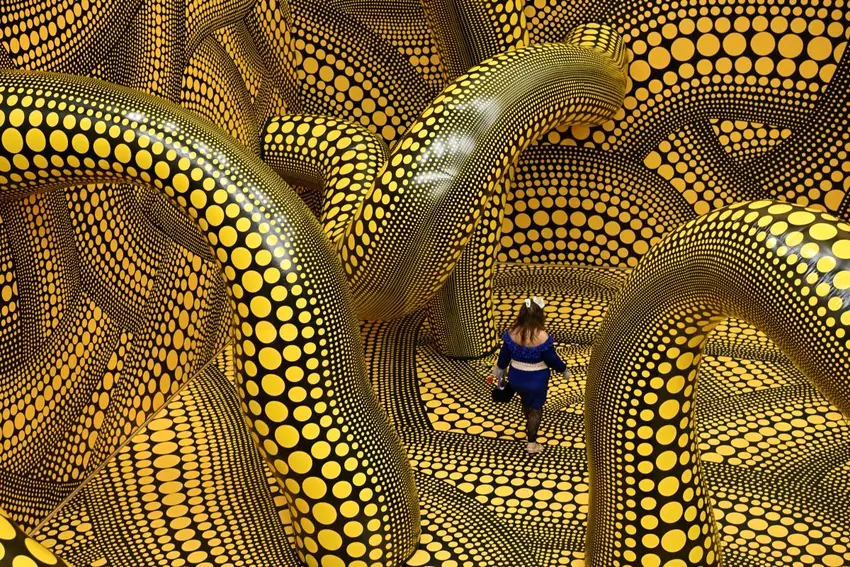
For anyone in or near Cologne this weekend, a treat awaits at the Museum Ludwig, where the anniversary‑year exhibition Retrospective of Infinity: Yayoi Kusama offers a joyful plunge into one of contemporary art’s most instantly recognisable worlds (March 14th to August 2nd).
Spanning more than seven decades of work, the exhibition includes works never before shown in Europe, making it a rare chance to see the full range of Kusama’s restless imagination in one place.
The highlight is the Infinity Mirror Room, an immersive experience that invites visitors to step into a shimmering, seemingly endless space of light and reflection.
Beneath the playful surfaces, Kusama’s art gently grapples with themes including love, pain and belonging – but always with colour, humour and an unmistakable sense of wonder.
A perfect antidote to grey skies, and a reminder of how uplifting art can be.
READ ALSO: 'Tartan to spaceports' - What it's like representing Scotland in Germany
Culture wars strike German Bookshop Award
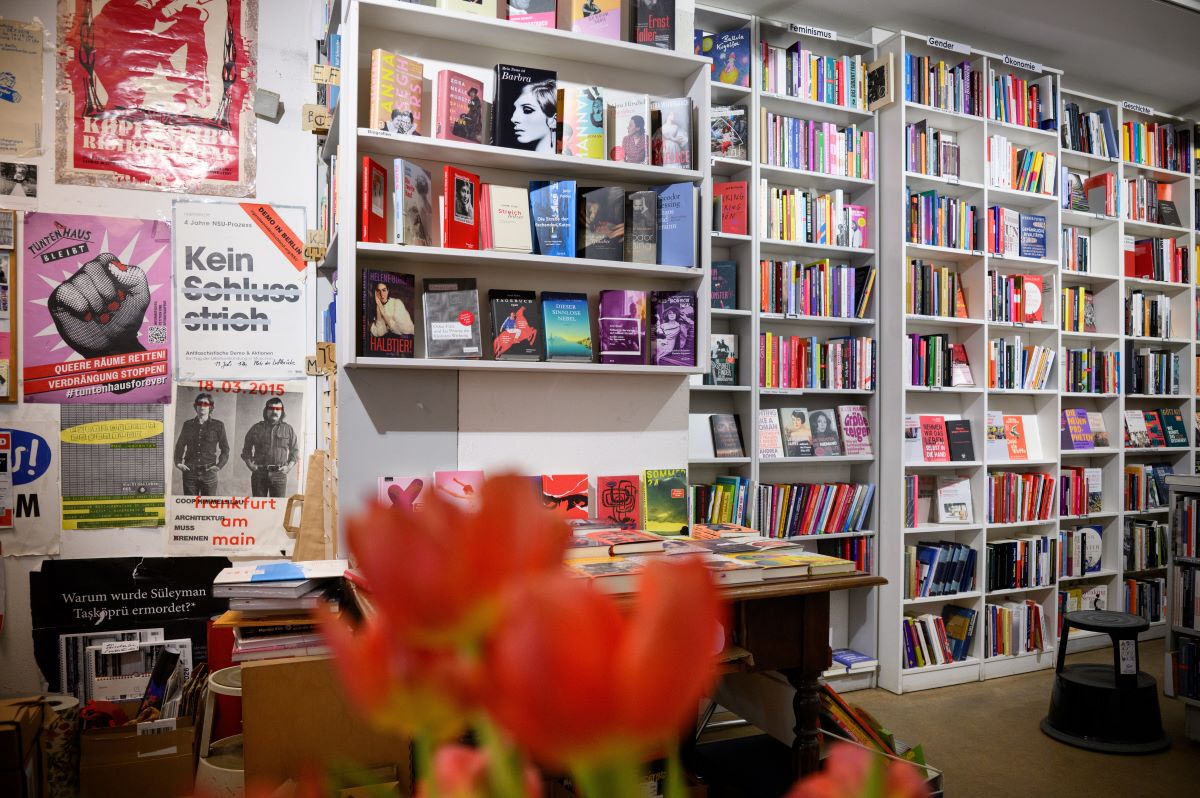
What do “The Golden Shop” in Bremen, “Rote Straße” in Göttingen and “Zur schwankenden Weltkugel” in Berlin have in common?
Until last week, the answer would have been simple: they’re all small, independent bookshops with strong local followings and a reputation for ‘antifascist’ political engagement.
But now all three suddenly find themselves at the centre of a rapidly escalating political row after being removed from the list of winners of the federal German Bookstore Award.
The decision was taken by Wolfram Weimer, the federal commissioner for culture and media, who struck the shops from the jury’s nominations citing “findings relevant to the protection of the constitution”.
No further details were provided, prompting immediate protests from booksellers’ associations, authors and cultural figures who warned of opaque state interference in cultural funding.
The affair intensified on Wednesday, when Weimer’s office cancelled the official award ceremony due to be held at the Leipzig Book Fair, arguing that the controversy risked overshadowing the event itself.
For the affected shops, the award would have represented not only a modest financial boost but also a public endorsement of their work as cultural institutions.
READ ALSO: Which jobs are desperately needed in Berlin and which are being cut?
Who is Wolfram Weimer?
Weimer is not a member of any political party. His appointment by Chancellor Friedrich Merz of the conservative Christian Democrats (CDU) in May last year was presented as a deliberately independent choice: a non‑career politician brought in from outside parliament to run cultural policy.
By profession, Weimer is a publisher and journalist. He founded the conservative monthly magazine Cicero and previously served as editor‑in‑chief of Die Welt, the Berliner Morgenpost and Focus.
Although formally non‑aligned, Weimer is widely regarded as CDU‑adjacent. Since taking office, he has attracted sustained attention for his approach to cultural institutions.
Weimer has questioned gender‑inclusive language in publicly funded bodies and he dominated headlines again late last month when it was reported that he was considering dismissing Tricia Tuttle, director of the Berlinale, because a film-maker had made a pro-Palestinian speech during the festival’s closing gala.
Weimer dropped the plan after nearly 700 international filmmakers signed an open letter of protest.
Trouble in Baden-Württemberg
The Bookstore row unfolded in the same week as the CDU began another fight, this time in Baden‑Württemberg.
Following elections last Sunday, party leaders in the state appeared eager to ignore the fact that they had come second to the Green party. Senior Christian Democrats have since been floating the idea of sharing the office of Minister‑President – a proposal dismissed by Green leader Cem Özdemir as “ridiculous”.
Taken together, the bookshop affair and the Baden‑Württemberg standoff point to a wider political reflex on the part of the CDU – a desire to deny or suppress uncomfortable realities instead of facing them.
With more state elections on the horizon, beginning in Rheinland-Pfalz on March 22nd, it will be interesting to see how the strategy continues to plays out with voters.
Spring plans and second thoughts
The weather forecast may not be great for this weekend, but spring is undeniably on its way – and many people will be turning their thoughts to Easter breaks.
For some, that may mean revisiting long‑made arrangements and asking uncomfortable questions about how the world has shifted since those bookings were made.
READ ALSO: Is it still safe to travel to the eastern Mediterranean from Germany?
On a purely personal note, I received an email from a travel agent this week containing plane tickets, hotel vouchers and best wishes for a family holiday in Turkey – booked months earlier.
The message didn’t even hint at the fact that NATO defences had shot down a ballistic missile in Turkish airspace on Monday – it seems that politicians aren’t the only people who sometimes prefer to operate in an alternative reality.
Perhaps that’s why we wanted to turn our gaze closer to home, by looking at eight destinations in Baden-Württemberg which capture the state at its most beautiful, surprising and quietly unforgettable. A trip to Ba-Wü may yet prove the most restful escape of all.
READ ALSO: Eight places everyone should visit in Baden-Württemberg
Comments