

Setting up a bank account is one of the first and most essential steps for anyone moving to Germany. Without a German or European IBAN, getting paid, renting a flat or signing up for everyday services can be difficult.
But in choosing a German bank, newcomers face a maze of options – from traditional German banks charging monthly fees to app‑based digital banks promising speed and simplicity.
We asked our readers to tell us about their experiences of banking in Germany: What works, what doesn't and which banks and apps they'd recommend.
READ ALSO: Sparkonto - Where to find the best high-yield savings accounts in Germany
Language support is key
While the idea of needing to pay monthly fees to keep a checking account can surprise many newcomers in Germany, respondents overwhelmingly said that what matters most to them is language and usability.
For many, the real challenge was not cost of services, but trying to navigate essential financial functions in German. Several respondents said they avoided German banks entirely for this reason.
Rebecca Loades, who lives in Berlin and is from the UK, said she tries “to avoid German banks as much as possible” because “different language support is minimal”.
Others described relying on goodwill from bank staff.
Chris Owen, from the UK and now living in Cologne, wrote that he uses “minimalistic German” and that staff usually “suss out that I’m English and pass me on to a good English speaker or try English themselves”.
Kai Chan, who is from Hong Kong and lives in Frankfurt am Main, described his main challenge simply as "language", noting that his bank "does not have an English website".
Across the responses, communication challenges – especially German‑only apps, websites and helplines – emerged as a recurring frustration, particularly when something goes wrong.
READ ALSO: Can you get a good job in Germany if you don't speak German?
Digital banks win on everyday experience
A clear pattern emerged around day‑to‑day banking: foreign residents tend to favour digital or mobile banks for speed, transparency and ease of use.
“When we first moved to Germany in 2016, we walked into Commerzbank to try to open an account. They immediately turned us down when they heard we weren’t German,” wrote Steven, who lives in Berlin.
Steven eventually had more luck with Deutsche Bank but switched to the digital bank Revolut about five years ago.
“It’s hard to emphasize enough how much better they are than Deutsche Bank,” he wrote. “Everything is faster and you can actually keep track of your balance because it updates in real time.”
Others highlighted similar benefits. Graham, who lives in Berlin, said Wise was “excellent for transferring funds into different currencies” and praised its low fees and transparency for daily expenses.
Chris Owen, from Dorking and living in Cologne, also highlighted the ease of "transfer[ing] money from my English bank to my German one" with Revolut.
READ ALSO: The big money and tax changes in Germany you need to know in 2026
Long‑term users also stressed reliability rather than novelty. David Lynch, who lives in Reutlingen, wrote: “I have had N26 for the seven years I have lived in Germany with no issues. I would recommend them.”
Overall, around half of respondents said they primarily use a digital or mobile bank, while just under half rely mainly on a traditional German bank.
A smaller but notable group said they combine both – using digital banks for everyday spending and legacy banks for savings or recurring payments.
The EC card issue
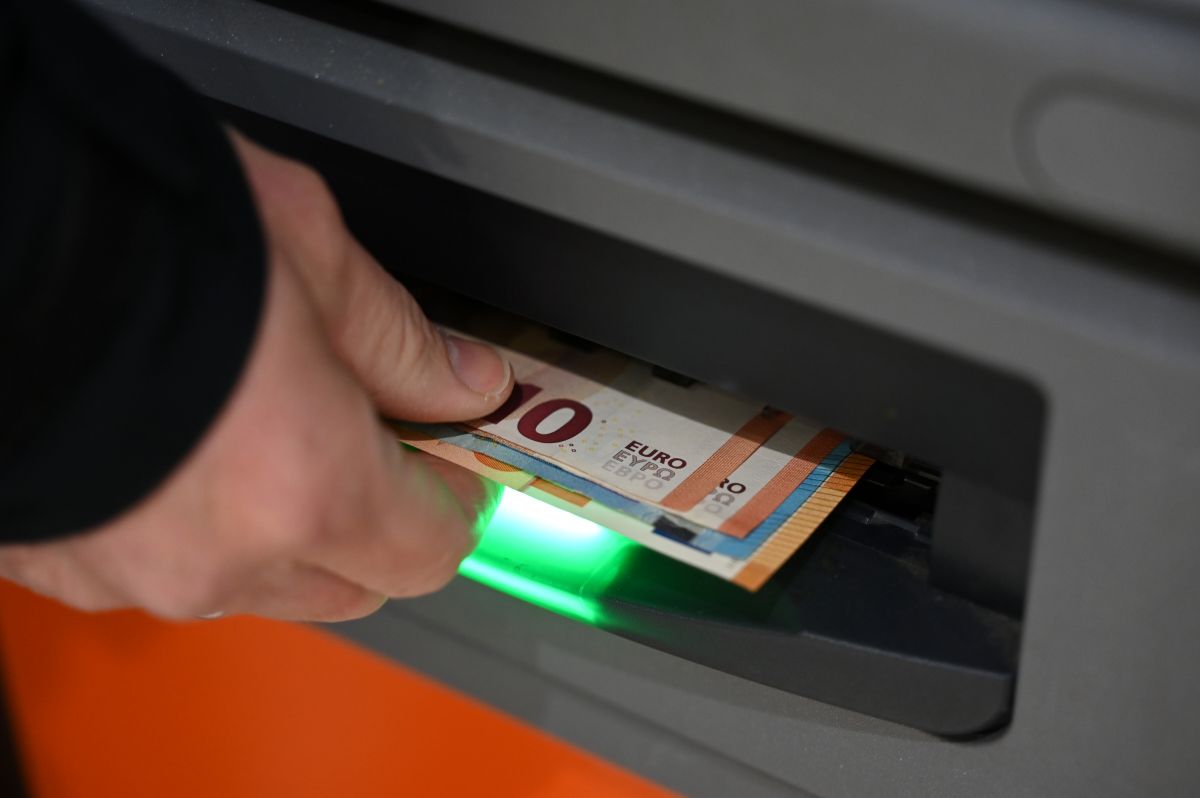
One issue that surprises many newcomers is the continued importance of the "Girocard", also called an EC card, in Germany.
The EC card scheme is controlled by Germany’s traditional banking sector. It's difficult for foreign banks to join, so most new and online banks instead issue only a single international Visa or Mastercard debit card.
“My most annoying issue is N26 and other digital banks not offering an EC Karte, which is still the only means of digital payment accepted in many places,” said Thais P., a Brazilian living in Munich.
But not everyone found this a major problem. Simon, who lives in Berlin, wrote: “My bank doesn’t provide an EC card, but in most places it doesn’t matter.”
Overall, the responses suggest the issue is more frustrating in smaller shops or rural areas, and less so in cities. The workaround for many becomes adopting the German habit of keeping some cash on hand for small purchases when cards aren't accepted.
A uniquely tough system for US citizens
US citizens reported serious issues with banking in Germany more often than respondents from other countries.
This largely stems from FATCA, a US law which requires Americans abroad to report foreign financial assets to the IRS, and also obliges German banks to identify US clients and report their accounts.
“No problems signing up or transferring money, but as a US citizen I am limited in investment options,” wrote Jim, originally from Boston and now living in Berlin.
“You have to transfer it back to a US account and then you get hit with transfer fees and are at the mercy of the exchange rate,” he added.
Charles Sullivan, from Massachusetts and living in Cologne, said: “For a US citizen, the FATCA requirements are a huge challenge. Most large German banks want nothing to do with Americans.”
The frustration was echoed by Myles Gearon, who lives in Berlin, and described moving from the US to Germany as “a financial nightmare on every front”.
He added that as an American he earns “basically no interest” and finds it unclear how to access investment options.
READ ALSO: 'I store cash at home' - Why Americans in Germany struggle to save for retirement
Some respondents recommended using multiple accounts, often at least one digital account and one traditional account – largely on the basis that one is for living and the other is for sleeping well at night.
Sam Sharaf who lives in Berlin, wrote that “online banking is great for everyday life while for saving standard banks are more secure”.
Thank you so much to everyone who completed our survey. We weren't able to include every response, but we read them all and they helped inform our article. If there’s anything you’d like to add, feel free to comment below, or drop us a line at news@thelocal.de.
Comments (1)