
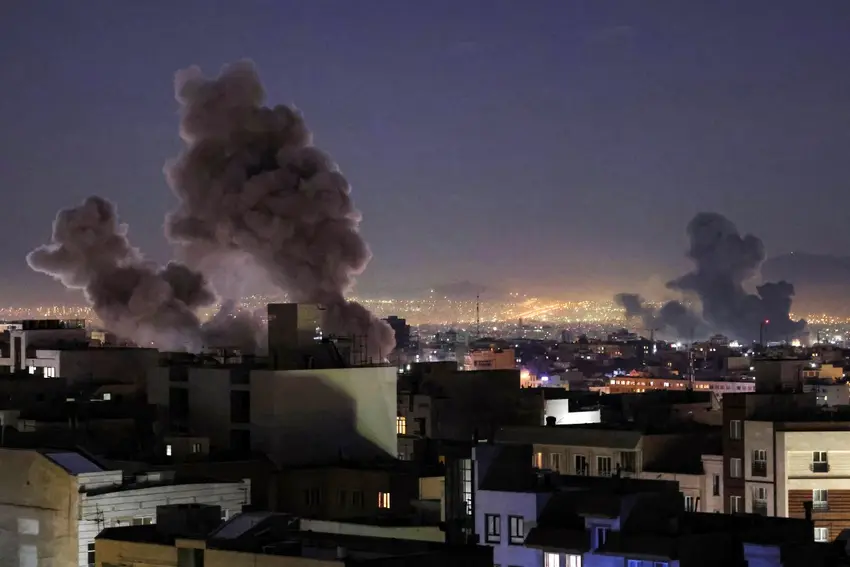
As Chancellor Friedrich Merz meets US President Donald Trump in Washington on Tuesday, Germany finds itself watching the war in Iran largely from the sidelines – but not without consequences at home.
So far, the German government has made it clear that Germany will not take part in military action against Iran.
On Monday, Foreign Minister Johann Wadephul of the Christian Democrats (CDU) said the federal government had "no intention of participating" in the conflict, stressing that Germany lacks both the bases and the military capacity for such involvement.
German troops stationed in Jordan and Iraq would only act in self‑defence if attacked, he added.
Politically, Merz has avoided publicly criticising either the US or Israel. Speaking shortly before his Washington visit, he argued that European appeals, condemnations and sanctions have historically had little effect on Iran. About the US's role in the conflict he added that now was “not the time to lecture our partners and allies”.
READ ALSO: Germany-US relations have been badly damaged but not beyond repair
At the same time, Merz has warned that Europe – and Germany – will still "bear the consequences" of the conflict, even without direct involvement.
For many people in Germany, some of those consequences are already being felt.
Fuel prices
On Tuesday morning, oil prices climbed above $80 per barrel, with analysts warning that prices above $100 are possible if the war drags on. This is largely because Iran controls access along much of the Strait of Hormuz, a narrow shipping route through which around one fifth of global oil and liquefied gas supplies pass every day.
At German petrol stations, the impact is already visible. According to the ADAC, the average price of Super E10 rose from €1.78 to €1.83 per litre in just three days, with diesel increasing from €1.75 to €1.80. At some stations, prices were already approaching €2 per litre at the time of writing.
READ ALSO: Three apps to help drivers in Germany find the cheapest fuel
Germany's federal government coalition has not ruled out introducing temporary price‑curbing measures, similar to the fuel tax cut used during the Ukraine energy crisis.
Food prices
Food prices are not expected to rise overnight, but experts are warning of possible knock‑on effects in the coming months. Higher oil and gas prices increase the cost of fertilisers, transport and packaging – all of which eventually feed into supermarket prices.
Shipping disruptions also play a role. With tankers and container ships avoiding the Strait of Hormuz, some vessels are taking two‑week detours around Africa, pushing costs higher.
As a result, consumers could start to see more expensive fresh produce and everyday goods in German supermarkets later this spring.
Interest rates
Rising energy prices also feed into inflation expectations, something the European Central Bank (ECB) is watching closely.
Economists have warned that if high oil and gas prices could put pressure on interest rates later in the year which could have knock‑on effects for people who rely on loans, are planning to buy property, or have variable‑rate mortgages.
Travel and logistics
Travel disruption is already affecting thousands. Around 30,000 travellers from Germany were stranded in Gulf states after airports and airspace were closed or damaged following Iranian reprisal strikes.
Evacuation flights began arriving in Frankfurt on Tuesday.
Airlines and shipping companies have also suspended or rerouted services. Lufthansa and other carriers have cancelled flights to the Middle East, while shipping firms such as Hapag‑Lloyd have introduced crisis surcharges of $1,500 per container on some routes.
For consumers, this could mean delivery delays and higher prices for imported goods.
READ ALSO: Germany advises against Israel travel, Lufthansa cancels flights
The impact on Germany’s Iranian and Jewish communities
Among Germany’s roughly 324,000 people with Iranian roots, reactions to the conflict are intense and often deeply divided.
Some people have taken to the streets to celebrate the death of Iran’s former supreme leader, seeing it as a moment of hope after decades of repression. Others are anxious about relatives still in Iran and struggling to make contact as air strikes continue and communications are disrupted.
At the same time, Germany’s security services warned about an increased threat level for Jewish, Israeli and US institutions, with police stepping up protection around synagogues, schools and community buildings.
The Central Council of Jews in Germany has issued a statement that continuing the war until Iran’s Islamist regime is overthrown is in Germany’s national security interest, arguing that Iran poses a long‑term threat through terrorism and missile development.
For many people in Germany – including those without direct ties to the region – this translates into a more tense public atmosphere: visible security, emotionally charged debates and the sense that there’s no such thing as a distant war.
Comments