
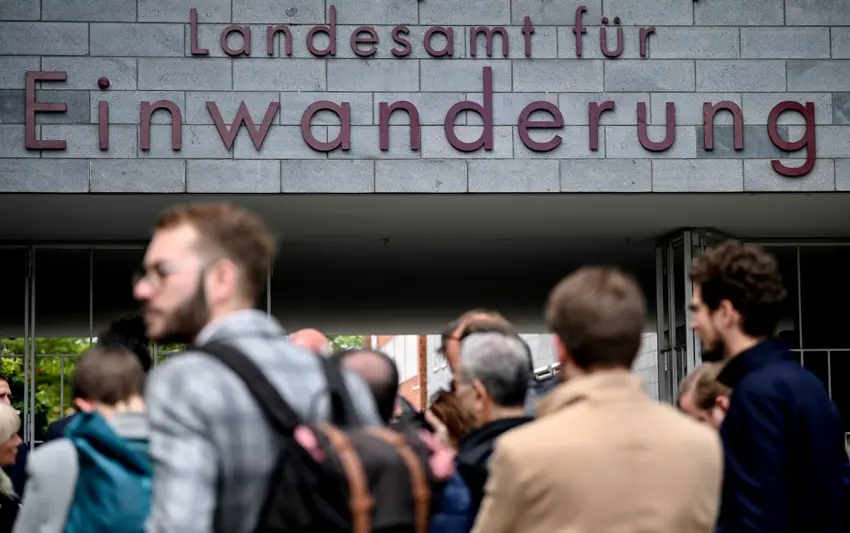
Tuesday's top story: Berlin tightens citizenship checks as one in 20 applications rejected
Nearly five percent of naturalisation applications in Berlin were rejected last year as stricter checks and digital procedures came into force, according to the city’s immigration authorities.
In 2025, the State Office for Immigration (LEA) approved 39,034 naturalisations, while 1,931 applications – around one in 20 – were rejected.
Interior State Secretary Christian Hochgrebe told Berlin’s Interior Committee that applications were turned down for reasons including missing or incorrect information, forged documents or inconsistencies in applicants’ statements. Cases involving suspected forgery were reported to the authorities, he said.
READ ALSO: How many newly naturalised Germans have their citizenship revoked each year?
The figures follow a major restructuring of Berlin’s naturalisation process. Since 2024, responsibility has shifted from district offices to a newly created state-level authority. As part of the reform, staff numbers have almost doubled and many procedures have been digitised.
Applicants no longer attend in‑person consultation appointments, with identity and security checks now carried out digitally. According to Hochgrebe, the new system allows authorities to identify potential grounds for exclusion more quickly and has significantly raised security standards.
For applicants, the changes promise faster and clearer decisions, but also mean more rigorous scrutiny during the naturalisation process.
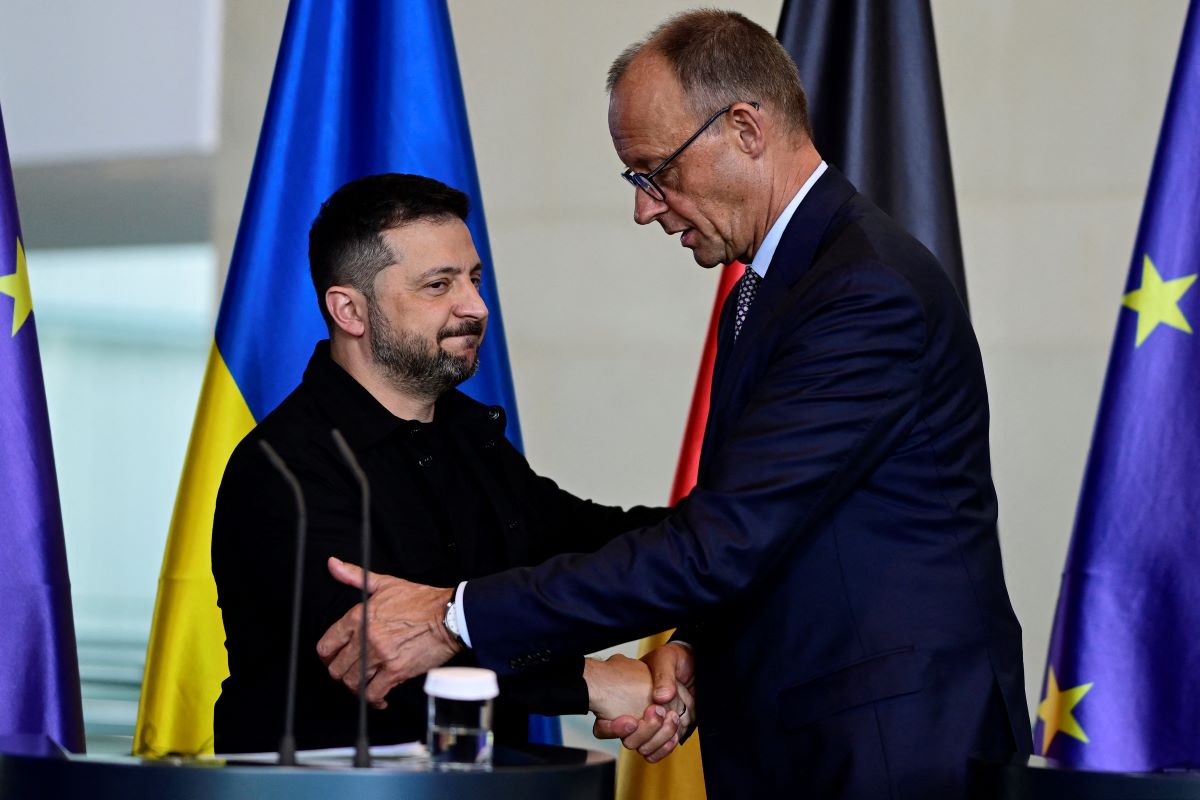
Merz denounces 'utter barbarity' of Putin's Russia
German Chancellor Friedrich Merz on Monday denounced the "utter barbarity" of Russia under President Vladimir Putin in a speech a day ahead of the fourth anniversary of Russia's full-scale invasion of Ukraine.
"This country, under this leadership, is currently at the lowest point of utter barbarity, and no one should have any doubt about what kind of regime and barbarity we are dealing with out of Russia these days," Merz said in Berlin.
February 24th will mark four years since Russia's assault in 2022, sparking a conflict that has shattered towns, uprooted millions and caused hundreds of thousands of casualties.
READ ALSO: Two years later, two Berlin residents from Ukraine on how war affects their lives
Accusing Russia of "psychological warfare", Merz called on European countries to support Ukraine and resist the impression that Russia was winning.
"It is important to emphasise that Russia is not about to win this war," he said. "Russia wants us to believe this, but the facts are different."
"I urge our European partners: do not waver in your support, in our shared support for Ukraine. We stand at a crossroads that could decide the fate of our entire continent."
Economists back plan to give asylum seekers faster access to German job market
Leading economic experts have welcomed plans by Federal Interior Minister Alexander Dobrindt to allow asylum seekers in Germany to start working sooner, arguing the move could help ease labour shortages and improve integration.
Under the proposal, asylum seekers would be allowed to take up employment after three months in the country, even if their asylum applications have not yet been decided.
Clemens Fuest, president of the Ifo Institute, described the initiative as “a step in the right direction,” saying Germany has a strong economic interest in labour migration.
Marcel Fratzscher of the German Institute for Economic Research called the plan “smart and long overdue,” predicting benefits especially for small and medium-sized businesses struggling to find workers.
READ ALSO: ‘Short-sighted’ - Cutting access to integration courses in Germany doesn't make sense
But experts and advocacy groups also warned that earlier access to the labour market on its own is not enough. Fratzscher stressed the need for greater investment in training and long-term prospects to encourage skills development.
Criticism has focused on planned cuts to integration and language courses. Refugee organisation Pro Asyl warned that lifting work bans while restricting access to German language training would undermine the policy’s effectiveness, arguing that language skills remain the key to successful labour market integration.
Survey: 55 percent of people in Germany consider children to be unaffordable
According to a survey, a majority of people in Germany consider children to be unaffordable. 55 percent of respondents agreed with the statement that people in Germany can no longer afford to have children, according to a representative Insa flash poll for Bild am Sonntag.
34 percent disagreed, while 11 percent were undecided.
According to the survey, 81 percent of respondents cited high living costs such as rent, food and energy as the main reason for their stance. Fifty-nine percent also cited taxes and duties as a significant burden.
READ ALSO: How does the price of childcare in Germany compare to countries in Europe?
48 percent consider government support for families to be insufficient. 58 percent of respondents also complained about a lack of daycare and childcare places. 40 percent of respondents cited loss of income due to parental leave or part-time work as a decisive factor.
Scepticism is particularly pronounced among 30- to 49-year-olds, Insa CEO Hermann Binkert told the newspaper. More than 60 percent in this age group consider children to be financially unviable.
German public broadcasters report record number of Olympic viewers
For some Olympic fans in Germany, the Winter Games may have ended with rings under their eyes because public broadcasters ARD and ZDF registered record numbers of viewers. Never before have so many people in Germany tuned in to watch the Winter Olympics.
An average of 3.173 million people watched the live broadcasts of the two public TV stations. The reach is almost twice as high as the previous Games in Beijing (1.67 million), which was in a different time zone.
READ ALSO: Germany's 'TV tax' expected to rise in 2027
But all relevant figures are also significantly higher than those of Turin, where 20 years ago the Winter Games were last held without a time difference.
What was particularly striking about the broadcasts from Milan and Cortina was the high numbers of young people that tuned in, suggesting perhaps a sort of renaissance of linear television.
With reporting by AFP and DPA.
Comments