
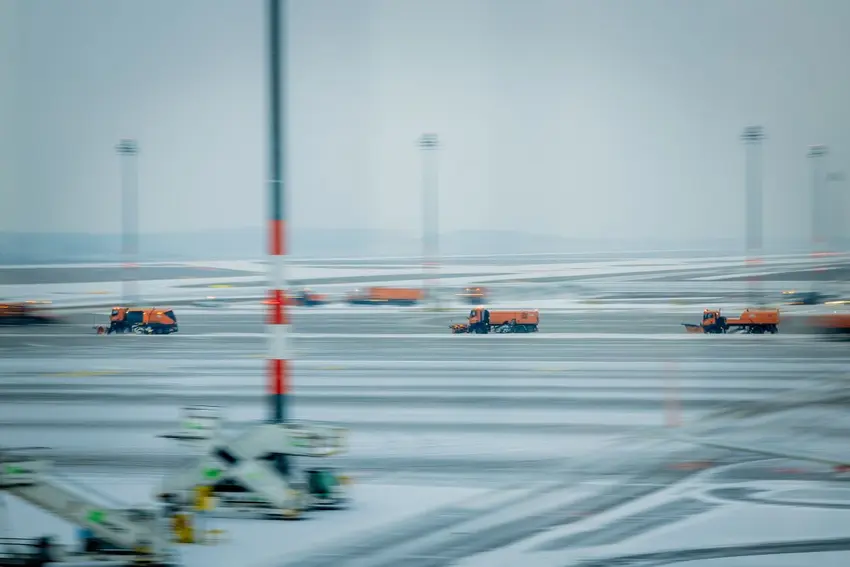
Friday's top story: Flight cancellations roll into second day at Berlin airport
At the capital's Berlin-Brandenburg (BER) airport in Schönefeld, flight cancellations continued on Friday morning.
No departures have been possible since Thursday morning, with some landings also cancelled.
"Due to flash ice and persistent freezing rain, no take-offs and landings at BER are currently possible," said a spokeswoman for the airport.
By late afternoon, "several dozen" flights had already been cancelled, another spokesperson told AFP, adding that she could not provide precise figures due to the quickly evolving situation.
READ ALSO: What are your rights in Germany if your flight is delayed or cancelled?
The airport company's winter service had treated the flight operations areas with de-icing agent throughout the night, but without success, they were as smooth as glass. It is currently unclear when flight operations can be resumed.
"To protect passengers and employees, flight operations have been temporarily suspended. Passengers are asked to check their flight status regularly before arrival," the spokeswoman said.
The regional cold snap has caused several accidents and disruptions, including a series of crashes on a Potsdam highway that injured around 20 people on Thursday afternoon.
January in Germany was significantly colder than the national average for the past three decades, according to the DWD.
Germany records lowest marriage rate since 1950
Germany saw a record low in marriages in 2024, with just 349,200 couples tying the knot – the lowest figure since the Germany's Statistical Office began collecting data in 1950.
Only half of German adults are now married, down from 60 percent in 1994, while the proportion of single people has risen to over a third
READ ALSO: Number of people living alone in Germany surges
But despite the decline, marriages are lasting longer: the average duration before divorce has increased from 12 years in 1994 to nearly 15 years today.

Sociologists attribute the drop to changing social norms and economic uncertainty, with fewer people feeling pressured to marry.
Women, in particular, face financial drawbacks: a recent study found that wives’ incomes drop by an average of 20 percent after marriage, partly due to joint taxation rules.
Church weddings have also plummeted, with Catholic and Protestant ceremonies both down by more than two-thirds since 2000, mirroring a sharp fall in church membership.
Despite the downward trend, Germany’s marriage rate remains slightly above the EU average. Those who do marry are older than in previous decades, with women averaging 32.9 years and men 35.3 at first marriage.
READ ALSO: Saws, spades and scissors - The quirky traditions to expect at a German wedding
Germany's Merz urges Iran to 'truly enter talks' with US
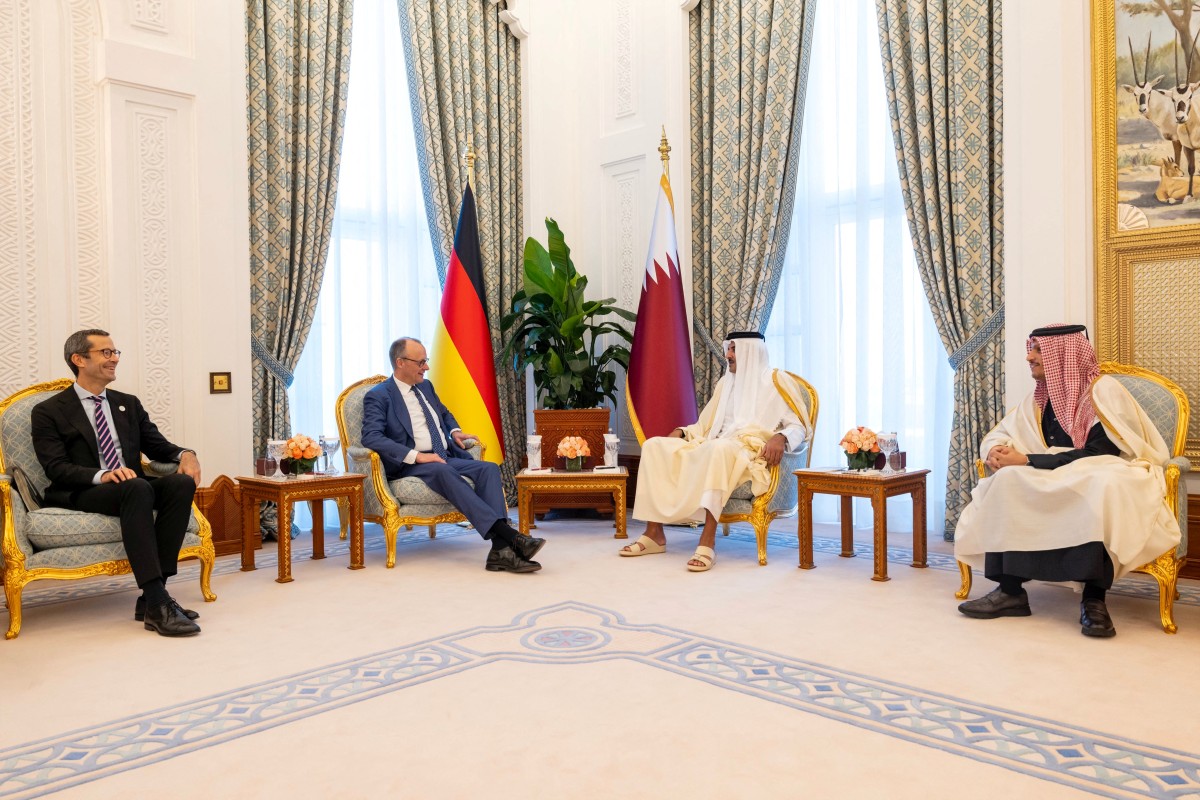
German Chancellor Friedrich Merz urged Iran's leadership to "truly enter talks" on Thursday, the eve of their planned negotiations with US envoys, saying there was a "great fear of military escalation in the region".
Speaking to reporters in the Qatari capital Doha, Merz said Iran had to "stop its nuclear programme" and avoid "further military threats" to Israel and other countries in the region.
"Talks will therefore be intensified in the next hours," Merz said, adding that Germany was "co-ordinating closely" with the US.
Merz is currently on a three-day visit to the region, where he has met Saudi Crown Prince Mohammed bin Salman and Qatari Emir Sheikh Tamim bin Hamad Al Thani and will later head to the United Arab Emirates.
German exports to US plunged in 2025 due to tariffs
German exports to the United States dropped 9.3 percent last year due to President Donald Trump's tariff blitz, and Germany's trade surplus with the world's biggest economy shrunk to its lowest level since 2021, data showed Friday.
But total exports for 2025 rebounded by around one percent following two years of contraction, as stronger trade with Europe offset falling shipments to the United States as well as to China, statistics agency Destatis said.
READ ALSO: 'Insanely frustrated' - Americans in Germany react to Trump's threats against Europe
Justice Ministry contemplates how to bring more protection for train attendants
In order to better protect train attendants, the Federal Ministry of Justice is considering adopting a draft law.
"We are currently voting on the draft law and evaluating the comments received," said Federal Minister of Justice Stefanie Hubig (SPD) to the newspapers of the Funke media group.
It is being examined whether adjustments are needed to better reflect the particular injustice of attacks against endangered occupational groups such as train attendants.
On Monday evening, the 36-year-old train conductor Serkan C. was fatally injured in a regional express near Kaiserslautern during a ticket inspection. According to the police, a passenger did not have a valid ticket and was supposed to leave the train, whereupon the 26-year-old hit the train conductor violently in the head several times with his fist. The act caused horror throughout Germany.
In an interview with Funke, however, Hubig also stressed: "Penalty increases alone will certainly not solve the problem." Severe penalties are already possible today.
At the turn of the year, the Federal Ministry of Justice published a draft to strengthen the criminal protection of the community. This provides that people who work for the common good should be better protected under criminal law.
With reporting by AFP, DPA and Tom Pugh.
Comments