
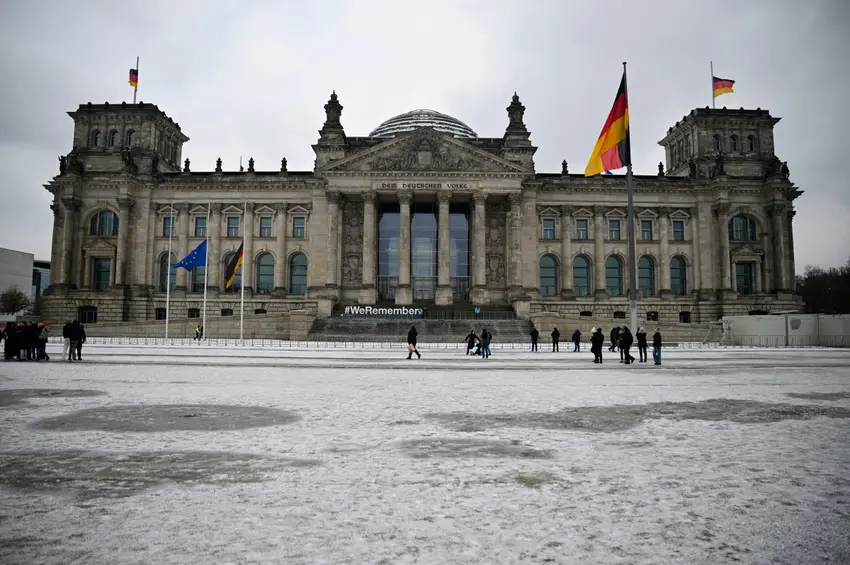
Thursday's top story: Parliamentary president pushes for more security for the Bundestag
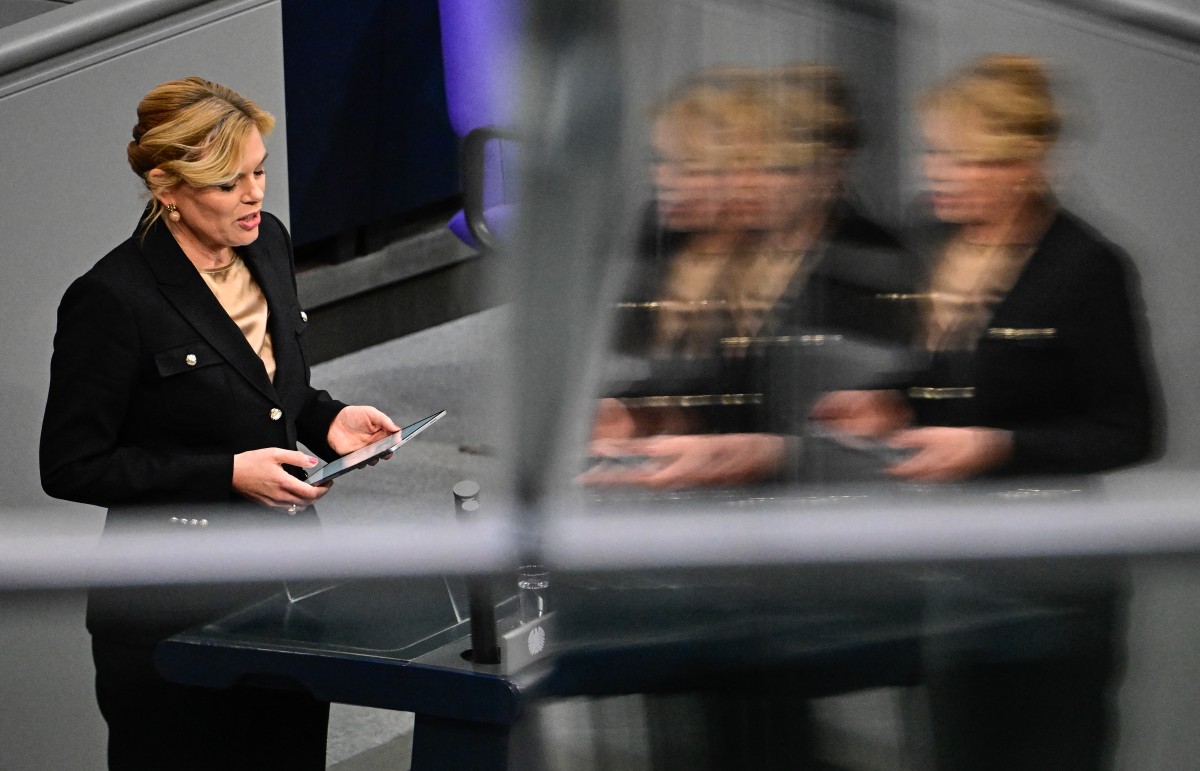
Julia Klöckner, current President of the Bundestag, has earned a reputation for a strict adherence to the rules. When it comes to speaking times, insults on the floor, even clothes that parliamentarians wear, she makes no compromises.
Now she is pushing for more security in the Bundestag in light of growing threats.
"Our German Bundestag was deliberately designed as an open parliament," Klöckner told the ARD capital studio. "And in order for it to remain so, it must also be defended."
Specifically, Klöckner would like the Bundestag police be able to access information from the Office for the Protection of the Constitution. Not only that which is publicly available, as it is now.
When anyone enters the Reichstag building, employees or visitors alike, they are checked and then granted an ID by the Bundestag police.
With better access to all that is known by Germany's domestic intelligence agency, Klöckner suggests the police could better assess threats in making the decision to let people enter.
Anyone considered a threat to the German constitutional order, or who has contact with foreign agents, for example, could be barred from entry.
Almost every German political party has endorsed this idea except for the far-right Alternative for Germany (AfD), which is known to have been under investigation by the Office for the Protection of the Constitution.
So far - according to the Bundestag administration - seven house passes have been denied in this legislative period. All by employees of AfD MPs or the parliamentary group.
READ ALSO: Anti-immigration AfD party wants to bring ICE to Germany
Probe launched into drug use at German defence academy
Germany's armed forces have launched an investigation into illicit drug use at a military academy, the defence ministry said Wednesday, vowing "zero tolerance" on the issue.
"Drugs were not only allegedly consumed but also sold by students" at the German Armed Forces University in the northern city of Hamburg, the ministry said in a statement without specifying which drugs were involved.
A campus search was carried out in mid-January and disciplinary measures have been taken in the investigation targeting officer cadets, said ministry spokesman Kenneth Harms.
"To be perfectly clear, drug use and drug possession are incompatible with the values upheld in the German Armed Forces, and we maintain a strict zero-tolerance policy in this regard," he said.
The ministry said an investigation was also underway into "potentially humiliating initiation rituals" at the university.
The issue comes as the German armed forces steps up a recruitment drive, sending questionnaires to all young people turning 18.
READ ALSO: Everything you need to know about Germany’s new military service letters
The ministry is already investigating a scandal centred on sexual misconduct and right-wing extremism at an elite paratrooper regiment based in the southwestern town of Zweibrücken.
Germany lowers 2026 economic growth forecast to one percent
The German government on Wednesday lowered its 2026 growth forecast to one percent, conceding that efforts to kickstart Europe's beleaguered top economy with vast public spending were moving slower than hoped.
The estimate was down from a previous official forecast of 1.3 percent GDP growth made in October, and comes as Chancellor Friedrich Merz faces mounting criticism over his stalling efforts to revive the export-driven economy.
While the performance is set to be better than in recent years -- output was weak in 2025 after two years of recession -- the prediction may still disappoint officials in Berlin who had hoped for a stronger turnaround.
"The expected stimulus from economic and fiscal policy measures did not materialise quite as quickly or to the extent that we had assumed," Economy Minister Katherina Reiche told a press conference.
She noted however that recent data suggested "we are now seeing a significant recovery".
READ ALSO: Which major German companies are cutting jobs this year?
The German economy has been hit hard by a manufacturing slump, high energy prices, weak demand in major export markets like China, fierce international competition and US President Donald Trump's tariff blitz.
Merz, who took power last year, eased Germany's strict debt rules to pave the way for spending hundreds of billions of euros on defence and infrastructure, but critics say the outlays have been slow to filter through to the wider economy.
German coalition proposes greater flexibility for eight-hour working day
Germany’s Black-Red coalition government is advancing plans to make the traditional eight-hour working day more flexible.
According to a strategy paper linked to the new national tourism strategy, the government intends to allow weekly, rather than daily, maximum working hours, in line with the European Working Time Directive.
In theory, this would enable workers – particularly parents – to concentrate their hours and take time off in return, improving work-life balance.
Currently, German law permits eight hours of work per day, which can be extended to ten if the average remains eight over six months.
The proposed changes would apply across all sectors. Proponents argue the move will support small and medium-sized businesses and enhance Germany’s competitiveness, especially in tourism.
READ ALSO: 'Digital reboot' - How Germany is planning to overhaul its welfare state
SPD pushes for direct Kremlin talks as Greens voice opposition
Amid stalled negotiations to end the war in Ukraine, politicians from Germany’s centre-left Social Democrats (SPD) have proposed that Chancellor Friedrich Merz (CDU) pursue direct talks with Russia.
SPD foreign policy spokesperson Adis Ahmetovic called for a new diplomatic strategy in the Wednesday edition of the Süddeutsche Zeitung, urging clarity on who should engage Moscow and insisting that Chancellor Merz show greater courage.
Ahmetovic stressed the need for Germany and its European allies to secure a firm place at the negotiating table, rather than leaving dialogue with Russia solely to the United States.
Former SPD parliamentary leader Rolf Mützenich echoed these calls, expressing doubts that US negotiators would prioritise European interests and lamenting missed opportunities for European independence.
With reporting by AFP.
Comments