
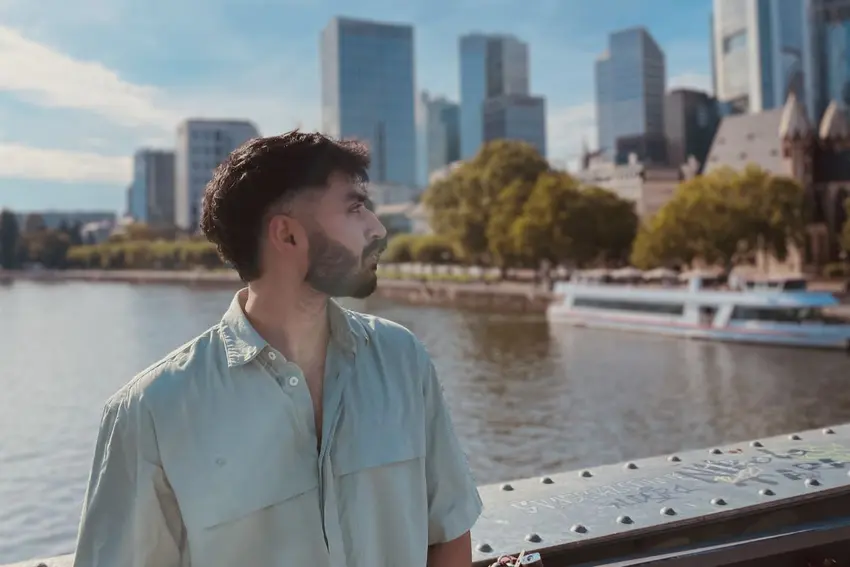
Having grown up in Pakistan, Abdullah Tayyab arrived in Germany at the age of 18 to begin his university studies. He's since completed both Bachelor's and Master’s degree programmes, and subsequently launched a successful career.
Speaking to The Local about his journey, he outlined some of the challenges he faced as well as sharing some helpful tips for anyone looking to further immerse themselves in German society.
Encountering discrimination
Tayyab emphasised that the vast majority of his experiences with Germans over the years have been positive.
“Ninety-five percent of the time I feel like I belong," he says.
But that’s not to say he hasn’t had his fair share of negative experiences, including with discrimination and racism.
“Sometimes you feel this passive thing,” he told The Local. “You feel that extra stare or side-eye, or perhaps you’re treated differently because you have an accent…”
Tayyab recently shared one experience, in which he was completely ignored by an employee at Media Markt, in a video he posted to Tiktok. In the comments users left on the video, a number of others shared similar experiences.
“Everybody talks about integration for immigrants. [We have to] learn the language, learn how Germans behave, what they like and don't like,” Tayyab said.
While he said it’s “valid” that foreigners should make these efforts, he added that ultimately it “goes two ways”.
READ ALSO: Your views - 'Foreigners in Germany will always feel like second class citizens'
“Often Germans don’t think they have to do anything,” he said, adding a couple of easy suggestions: “If someone is struggling or doesn't speak as much of the language; then be kind to them, speak slower for them.”
In comparison, Tayyab suggested that in some other European countries he interacted with people whose English was worse than most Germans, and yet he said that because people made some effort, he felt more welcomed.
Arriving in Germany
Asked why he came to Germany originally, Tayyab told The Local that he ended up in the country after “randomly” applying to a private university in Bremen.
He had finished grade school studies in Pakistan and knew that he wanted to study abroad, but he faced a crucial challenge: To go abroad he'd have to pay his own way.
“My father said you can only go abroad if you get a full scholarship,” Tayyab said.
In the end he was accepted at a private university – called Jacob’s University at the time, it’s since been renamed Constructor University – and staff there suggested he should apply for a full-ride scholarship, which he managed to secure.
“It was an offer too good to refuse,” he said.
READ ALSO: Everything that changes for international students in Germany in 2026
Starting a new life in cold, windy Bremen of course came with some big shocks, but Tayyab says he thoroughly welcomed stepping into a new international atmosphere: “One month before I was in Pakistan, in a very ethnically homogenous city, and then suddenly I was at a campus with 120 nationalities.”
Moving around
Tayyab studied industrial engineering and management, and then after graduating he moved to Berlin with little more than a suitcase.
“At the time I didn't know you had to reserve a seat on Deutsche Bahn. So for that ride I was just sitting on my suitcase, in the area between passenger cars,” he said.
In Berlin Tayyab moved five times in a short period because it was hard to find a long-term place to live. But in doing so he said he had “very interesting experiences”.
One room he rented, for €300 per month, was in a shared flat for six people that functioned like a commune with the roommates sharing everything. Then he found a room in Kreuzberg with a guy who turned out to be “a bit off” – Tayyab described “framed knives” hung up on the walls and finding his roommate “drugged up” and passed out in the stairwell.
RANKED: The trendiest neighbourhoods in Germany
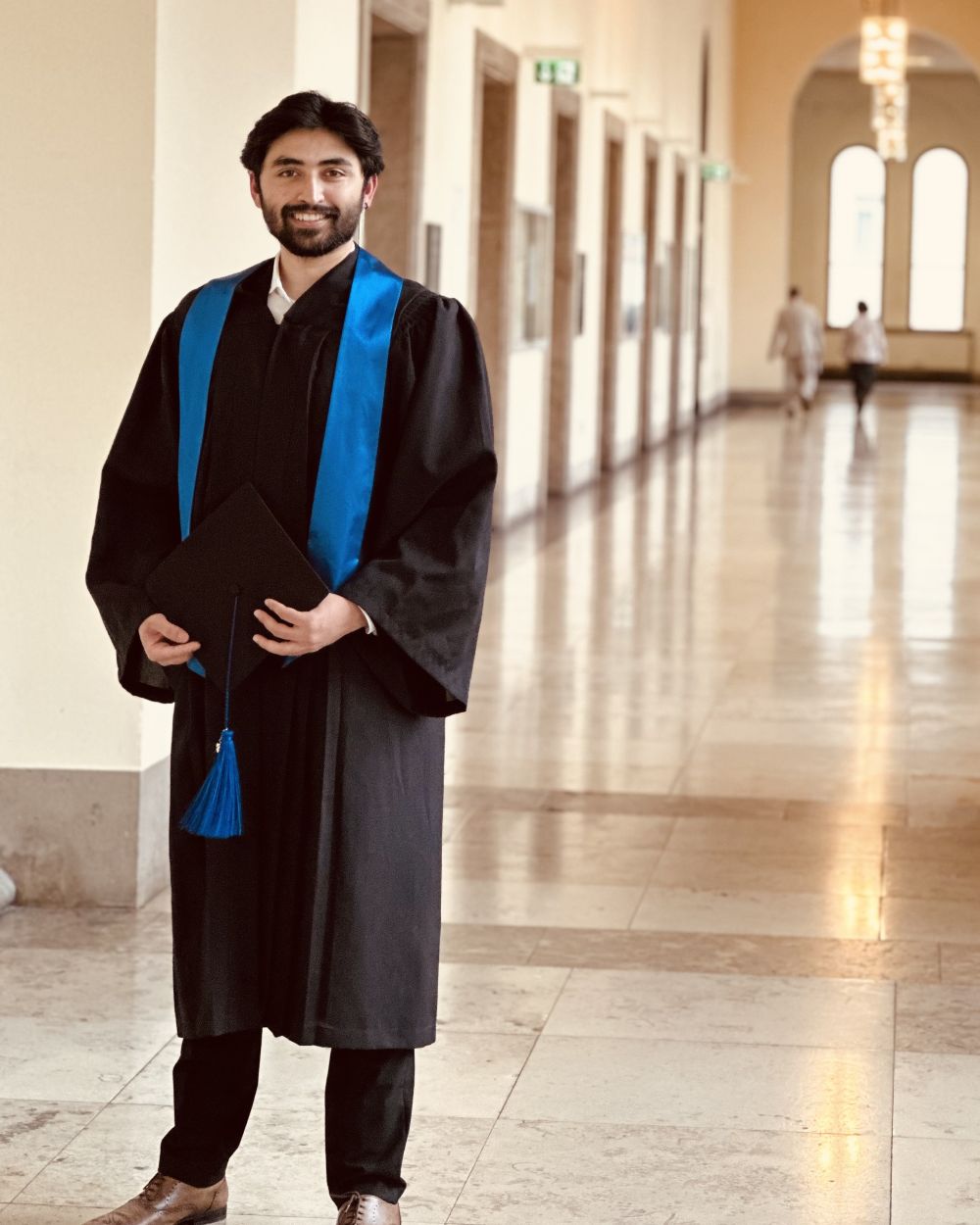
Eventually, he moved to Munich to enrol in a Master’s programme in management and technology at Ludwig Maximilian University (LMU). He noted that he took on a working student job while studying there which allowed him to support himself.
“I think that's an essential part about living in Germany,” Tayyab told The Local. “You can sustain yourself and also build some very practical experience. That's not possible in a lot of other countries.”
Learning German
Both of Tayyab’s university programmes were in English, but during his time at LMU in Munich he intentionally immersed himself in a German-speaking dormitory to force himself to start learning the language.
Tayyab said he had gotten an offer for a room in a public university dorm, where he would have been surrounded by other international students, but he instead opted for a dorm in a Catholic student community building (Katholische Hochschulgemeinde) because he knew that there he would be surrounded by German speakers.
“I think I passively learnt the language a lot there because everybody was just speaking German around me,” he said, adding that it was one of the better decisions he’s made.
“I tell people, ‘learn German, and then life gets 200 percent better’.”
READ ALSO: Six ways to fall in love with learning German again
Massive improvements
Asked about the biggest changes he'd witnessed in Germany during his time here, Tayyab suggested that everything about the foreigner's experience in the country has improved in the last ten years.
“When I came to Germany nothing was available…no one spoke English. There was no information about residence permits, how things work or how to find jobs...
"Now, whenever I walk on the street I hear English. I hear a lot of American accents, and international people around me."
Despite all the noise about Germany being backward, or stuck in a bygone era and hopelessly bogged down by bureaucracy, Tayyab suggested that the lived experience of most foreigners who come to the country now is significantly improved compared with what it was like a decade ago.
"The level of support or service you get in English is much more than it was in 2016.
"Back then, if you wanted to find an apartment and you spoke English, that would be very hard, because it was still very strange for people...but now it's very common, like [in shared flats] everybody has one flatmate from abroad," he said.
‘Fantastic place to be’
What Tayyab accomplished in ten years is impressive: He earned two degrees, got a job at one of the ‘big four’ companies, and then opted for a career shift and took a job as a product manager at a private insurance firm.
On top of launching his career he learned to speak Deutsch at a pretty high level and gained German citizenship. (He naturalised in October 2024, but had applied a year prior under the previous, tighter requirements).
Oh, and he recently got engaged to a woman he met during his first year of studies in Germany.
Asked if he plans to return home, Tayyab noted that he’d like to spend more time with his parents as they are getting older. But also that maintaining his residence here makes a lot of sense for starting a family, and also for his career goals.
“One-third of my life I’ve lived in Germany now,” he said. “I’ll never be 100 percent German, but I’m also not Pakistani Pakistani…
“My long term vision is to stay connected with Germany, and also stay connected with Pakistan.”
He added, “Germany is a fantastic place to be.”
Comments