
Friday's top story: Bundeswehr questionnaires are in the mail
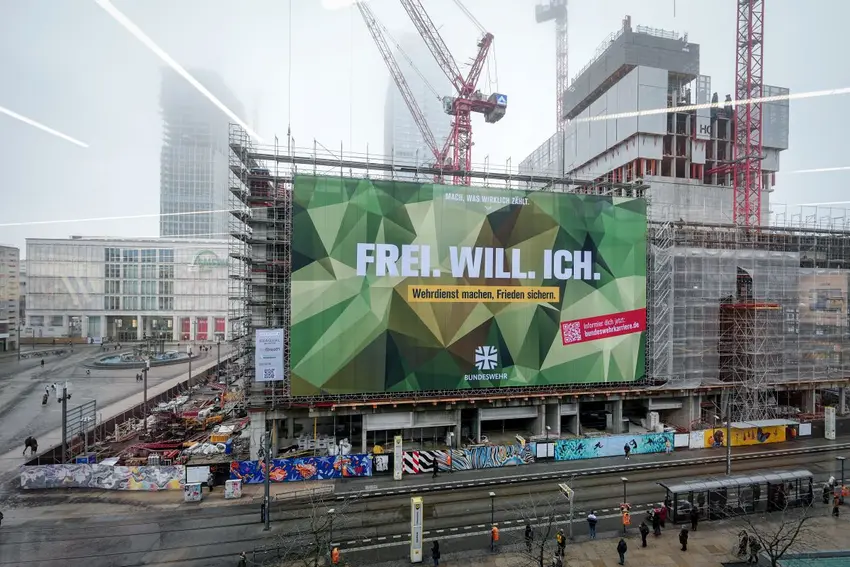
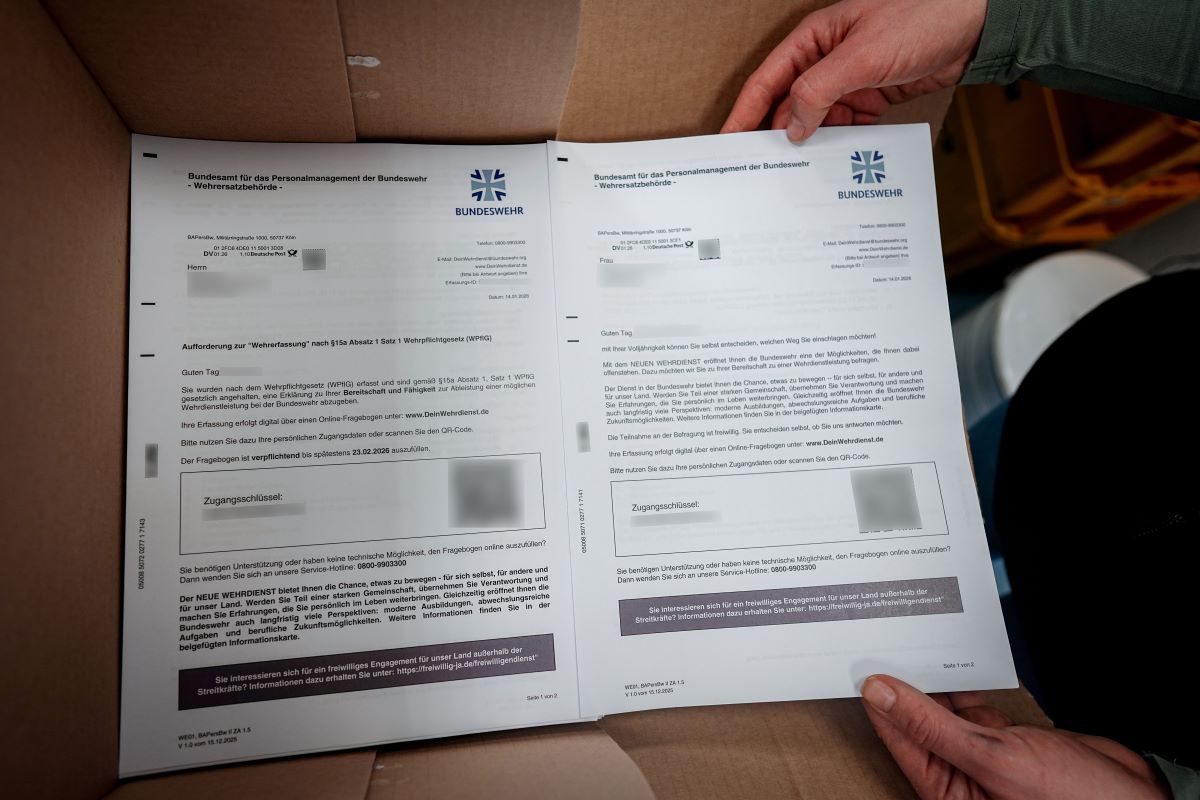
The German army has sent its first round of questionnaires to potential recruits, in accordance with its new military service model.
Letters with the questionnaires were packed and posted as of Thursday, as a spokeswoman for the army confirmed to the dpa news agency.
All men and women who reach the age of 18 will now receive the questionnaire to determine their suitability and motivation for joining Germany's armed service.
Under the current rules, men are required to complete it, while its voluntary to do so for women.
The letters contain a QR code for the actual questionnaire as well as a brochure and legal information. The questionnaire is then completed online.
In the coming months, the first volunteers are expected to start their service.
READ ALSO: German parliament passes military service law as school students protest
German economy returns to growth, but headwinds fierce
Germany's economy eked out meagre growth in 2025 and dodged a third straight year of recession, data showed Thursday, but Europe's languishing industrial powerhouse still faces huge challenges to return to long-term health.
Battered by an energy shock triggered by the Ukraine war, a manufacturing slump and weakening demand in the key Chinese market, the world's third-biggest economy shrank in both 2023 and 2024.
Despite the shock of last year's US tariffs blitz, the German economy returned to growth with a modest expansion of 0.2 percent, helped by higher government and household spending, according to statistics agency Destastis.
READ ALSO: What’s a good salary in Germany in 2026?
But another year of falling exports weighed on Europe's top economy, the agency's chief Ruth Brand said.
"Germany's export business faced strong headwinds owing to higher US tariffs, the appreciation of the euro and increased competition from China," she said.
The preliminary GDP reading was in line with a government forecast. For the final quarter of 2025, the agency estimated that the economy grew 0.2 percent from the third quarter.
Over 4,000 firearms held legally by right-wing extremists and Reichsbürger in Germany
Right-wing extremists and so-called Reichsbürger in Germany possess more than 4,000 legally registered firearms, according to figures released by the Federal Ministry of the Interior in response to a parliamentary inquiry by the Green Party.
As of the end of 2024, the National Weapons Register listed 2,996 firearms held by right-wing extremists, 932 by Reichsbürger and self-styled “sovereign citizens,” and 124 by individuals deemed to undermine the constitutional order.
Green Party politicians expressed outrage, calling the situation a “scandal” and demanding stricter measures to disarm those who oppose Germany’s democratic system.
READ ALSO: EXPLAINED - What you need to know about gun laws in Germany
Critics noted that the numbers have not declined for years despite repeated calls for reform. The Reichsbürger movement, which overlaps with right-wing extremism, is known for rejecting the legitimacy of the German state and has been linked to violent plots.
Security authorities have repeatedly uncovered attempts at violent overthrow within these circles, prompting renewed calls for faster and more decisive action to remove weapons from extremists.
Wine consumption falls again in Germany
Wine consumption in Germany has fallen once again, deepening the crisis facing the country’s wine industry. According to the German Wine Institute (DWI), adults over 16 drank an average of 21.5 litres of wine each between August 2024 and July 2025 – one bottle less per person than in the previous year.
This marks a continued downward trend, with consumption having stood at 22.2 litres in 2023/24 and 24.3 litres in 2020/21. The DWI’s figures account for wine purchased both in shops and directly from producers, as well as wine consumed outside the home.
READ ALSO: Germany loses top spot as Europe's largest beer maker
Industry experts attribute the decline to changing consumer habits, rising living costs and demographic shifts, with Germans drinking less alcohol and the population ageing.
The ongoing slump poses significant challenges for winemakers, particularly those producing traditional varieties such as Riesling and Grauburgunder, as demand continues to wane.

Magic rally to top Grizzlies in Berlin NBA game
German forward Franz Wagner hit his stride late to help the Orlando Magic rally for a 118-111 victory over the Memphis Grizzlies on Thursday in the first NBA regular-season game ever played in Germany.
The Grizzlies did their best to spoil the return of Orlando's Wagner brothers, Franz and Moritz, to their home country in the showcase game in Berlin.
Memphis led by as many as 20 points in the first half before the Magic stepped it up on the defensive end to turn the tide.
READ ALSO: Ice hockey to basketball - How to find tickets for sports games in Germany
Wagner called it "super-special" to have a chance to show his Magic teammates around Berlin, the city where he grew up.
He said it wasn't just the emotion of the trip that accounted for his slow start but also some rustiness as he returned from a 16-game absence with a high ankle sprain.
"I'm not making any excuses, though. Once you decide to play you've got to be ready."
Germany returns Bayeux Tapestry fragments to France
Germany has returned two fragments of the famous Bayeux Tapestry to France, ending a decades-long absence. The tiny pieces of unembroidered linen, measuring just one to two centimetres, were discovered in 2023 in the personal archive of Karl Schlabow, a German textile specialist and museum director who died in 1984.
Schlabow had been tasked with examining the medieval tapestry during the Nazi occupation in 1941 and is believed to have taken the fragments at that time. Eighty-five years later, the pieces were formally handed back to Bayeux by Rainer Hering, director of the Schleswig-Holstein State Archive.
The Bayeux Tapestry, created in the eleventh century, is a 70-metre-long embroidered cloth depicting the Norman conquest of England in 1066. The tapestry was removed from display last summer and placed in storage; it is scheduled to be exhibited at the British Museum in London from September.
With reporting by AFP, DPA and Paul Krantz.
Comments