

Wednesday's top story: Is German punctuality falling behind?
Germans' alleged obsession with punctuality is well known, but a recent survey suggests the classic stereotype may be on its way out.
A recent representative YouGov survey commissioned by the German Press Agency reveals that only 78 percent of adults in the country still consider "punctuality" to be "typically German" (by comparison, 89 percent do so when it comes to "bureaucracy").
In a similar survey in 2017, the value for bureaucracy and punctuality was still the same at 90 percent.
There are generational differences at play here. According to their own assessments, around 97 percent of boomers (61 to 79 years old) say they are punctual people, whereas 92 percent of millennials and generation X (covering the ages 29 to 60) say they are.
Among Gen Z the figure drops to around 81 percent.
Almost all generations are relatively unanimous in their assessment "that punctuality is less widespread in Germany today than it used to be". All in all, 70 percent agree with this statement.
And then there's Deutsche Bahn...or rather it should be there but is more likely delayed again.
A quarter of a century ago, the then head of Deutsche Bahn boasted that around 90 percent of its trains arrived on time, with no other European railway able to match that value. Twenty-five years later, it sounds perhaps a bit overly ambitious when Deutsche Bahn CEO Evelyn Palla said that at least 60 percent of long-distance trains should be punctual this year, and that the company is aiming for a punctuality rate of at least 70 percent by the end of 2029.
READ ALSO:
- Deutsche Bahn pays out compensation to millions of rail passengers in Germany
- OPINION - Deutsche Bahn's problems are too big for a new boss to fix
German president calls for action on homelessness
German President Frank-Walter Steinmeier has called on politicians to intensify efforts to combat homelessness following a deadly cold wave that claimed at least four lives among the country’s homeless population.
Steinmeier emphasised that the suffering of tens of thousands living on the streets is “intolerable” and must not be accepted as normal, urging policymakers to prioritise solutions.
He expressed deep gratitude to the many volunteers working in shelters, soup kitchens and on “cold buses” providing emergency aid during freezing nights, describing their commitment as a powerful sign of compassion in society.
READ ALSO: How you can help fight homelessness in Germany this holiday season
Steinmeier, who has previously participated in outreach initiatives, highlighted the importance of both professional and volunteer helpers, and encouraged citizens to show kindness and vigilance, noting that even small gestures can make a difference in a crisis.
Welfare organizations report that more than 531,000 people in Germany are homeless, with around 47,000 sleeping rough. Despite expanded emergency services, social groups warn that support remains insufficient and criticise proposed welfare reforms that could worsen poverty.
Is 16 federal states too many?
Bavarian Minister-President Markus Söder of the conservative CSU has reignited debate over Germany’s federal structure, proposing a reduction in the number of states to streamline decision-making and improve competitiveness.
Speaking at a CSU caucus in Kloster Banz, Söder argued that the current system – with 16 states – creates excessive bureaucracy and prolonged negotiations, hampering efficiency.
He cited the financial burden caused by the obligation to share state revenues, which requires wealthier states like Bavaria to subsidise others, as a key motivation for reform. But Söder declined to specify which states should be merged.
READ ALSO: Which US states have driver's licence exchange agreements with Germany?
The proposal was met with scepticism and amusement by Saarland’s Premier Anke Rehlinger (SPD), who invited Söder to visit her state, insisting that “Saarland pride is Söder-resistant.”
Sven Schulze, CDU leader in Saxony-Anhalt, also rejected the idea, stating there would be no “Mitteldeutschland” super-state and emphasising regional cooperation over mergers.
Schulze, widely expected to become Saxony-Anhalt’s premier, plans to discuss shared administrative structures with neighbouring states, such as joint mining offices, as a more practical alternative.
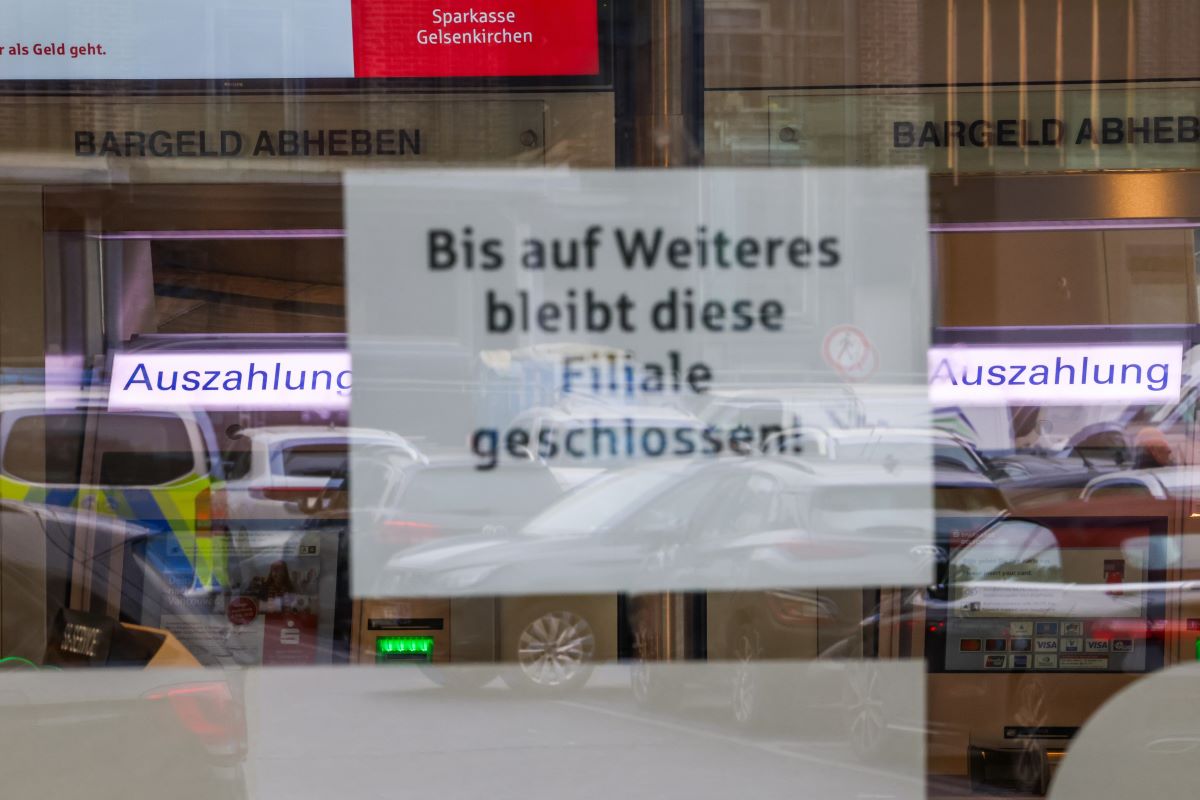
Police identify an escape door used at the Gelsenkirchen bank heist
In the multi-million euro heist at a Sparkasse in Gelsenkirchen, the perpetrators apparently entered the building through a manipulated escape door, police announced.
The door could not usually be opened from the outside, but it no longer closed properly and the perpetrators were "able to gain unhindered access from the multi-storey car park to the Sparkasse building".
In the burglary at the end of December, the perpetrators had overcome several security systems and then drilled directly into the vault of a Sparkasse branch, where they then cleared out around 3,100 customer lockers.
READ ALSO: German bank clients furious after robbers steal €30 million in cash and valuables
It's still being investigated how they managed to avoid triggering the bank's burglary alarm.
The police have assigned 230 officers to the case.
"There are a number of questions," said North Rhine-Westphalia's Interior Minister Herbert Reul (CDU), adding, "We'll clear this up."
Two Ukrainians charged with spying for Russia
German prosecutors said Tuesday they had charged two Ukrainians with plotting to send exploding parcels from Germany to parts of Ukraine on the orders of a Russian intelligence service.
The suspects, named as Daniil B. and Vladyslav T., are accused of working together with a third suspect named as Yevhen B. to send two parcels from Cologne to Ukraine equipped with GPS trackers.
"The purpose of this action was to investigate shipping routes and transport procedures at the parcel service provider and later to send parcels containing incendiary devices," the prosecutors said in a statement.
READ ALSO: Germany charges two Ukrainians with spying for Russia
Orders for the mission had allegedly been placed by a Russian intelligence service via intermediaries in the port city of Mariupol, which was seized by Russian forces in May 2022.
"Such parcels were to be ignited in Germany or elsewhere on their way to parts of Ukraine not occupied by Russia and cause as much damage as possible in order to undermine the population's sense of security," the prosecutors said.
With reporting by AFP, DPA and Paul Krantz.
Comments