
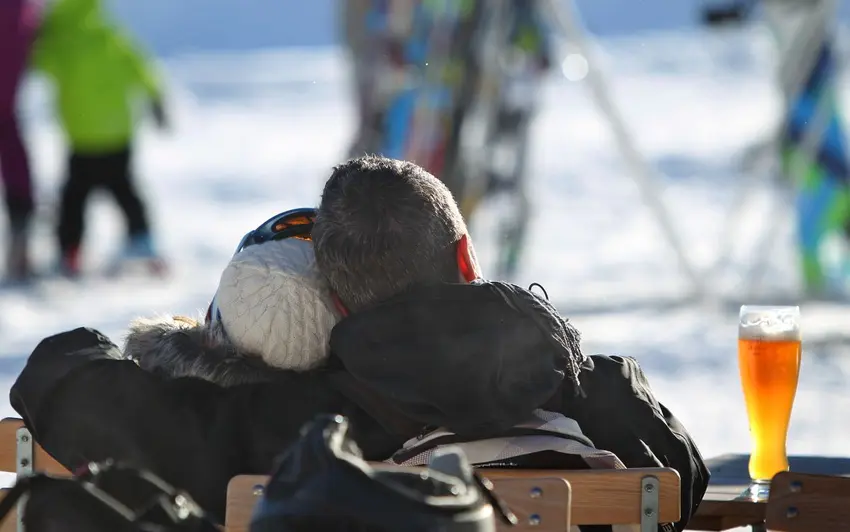
Is it really a holiday in Germany if you don't enjoy a pint or five of the local lager? Even among those who visit the German Alps in the winter for a ski holiday, there are plenty who think not. But the rules around alcohol consumption on the slopes are less than crystal clear.
Many may assume that, like driving, skiing under the influence comes with strict legal limits -- but in Germany, that's not the case. Unlike Italy, where a strictly defined alcohol limit applies to skiers and snowboarders, Germany has no specific blood alcohol limit for those on the slopes.
But that doesn't mean that skiers can drink as much as they like. There can be consequences for skiing while intoxicated, particularly if an accident occurs.
Is there a legal limit on alcohol while skiing?
Strictly speaking, there is not a legal blood alcohol limit for skiers and snowboarders in Germany. This is confirmed by ADAC as well a numerous German media reports.
Law expert, Kay Rodegra told BR3: "There is no fixed blood alcohol limit, but you are not allowed to ski fully drunk or under the influence of drugs..."
Rodegra added that slope operators can pull your lift ticket if you are too drunk, and additionally having a significant blood alcohol level can lead to problems with your insurance if an accident occurs.
What do the ski safety rules say about alcohol?
While German law does not set an alcohol limit for skiers, the International Ski Federation (FIS) rules still apply.
FIS rules state that every skier should act in a manner that ensures no one else is endangered or harmed. This includes taking personal ability into account as well as maintaining mental and physical acuity when engaging in the sport.
Violating FIS safety guidelines is not a criminal offence, but it could lead to legal liability in the event of an accident.
Also, as mentioned above, lift operators have the right to remove intoxicated skiers from the lift, or even confiscate their ski pass, if they pose a risk to themselves or others.
What happens if you cause an accident while intoxicated?
Even though Germany does not have a law banning alcohol on the slopes, an intoxicated skier involved in an accident can face severe consequences.
If an accident leads to civil proceedings, being under the influence of alcohol can be used as evidence of fault, which means that an intoxicated skier who injures someone may be held fully or partially responsible for the damages.
Many Germans have personal liability insurance, which in some cases would cover the costs owed if one was found to be at fault in a ski accident, but if you are intoxicated at the time this can void your coverage.
READ ALSO: What is German liability insurance and do foreigners need it?
According to information shared by Nürnberger Versicherung the average cost of damages in a ski accident amount to €7,900.
Skiing responsibly
So while there is no legal alcohol limit for skiing in Germany, it's clear that there can be consequences for being intoxicated on the slopes.
The safest option is therefore to refrain from drinking until you've finished riding for the day. But if you do opt for a beer or a taste of schnapps at a lodge on top of the mountain, be mindful of your personal limit so that you can ensure you'll still be in control as you carve your way to the bottom.
READ ALSO: The little known ski resort rated best in Germany for reliable snow cover
Comments