
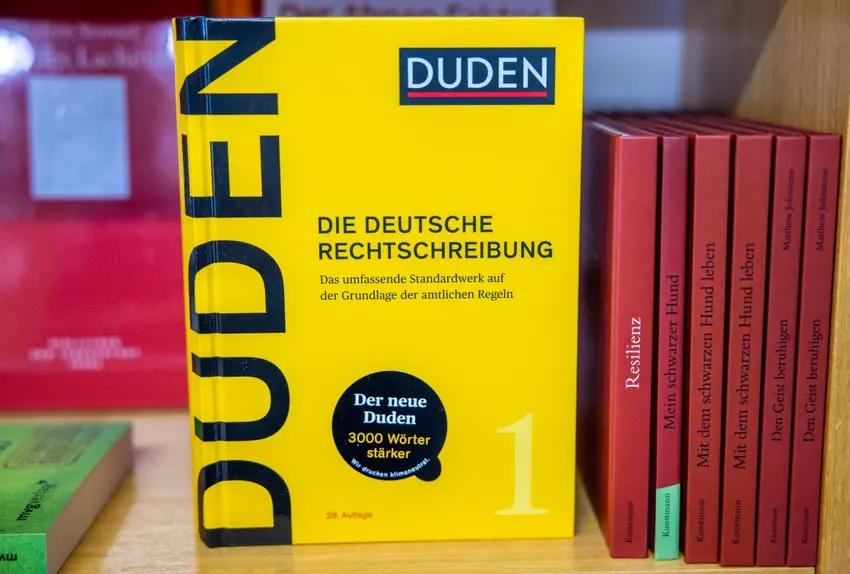
Reports of fraudsters selling fake German language and integration certificates online emerged this year, prompting outrage from politicians and the media.
Now ministers are pushing to tighten the laws to make sure anyone caught cheating cannot apply to become German for 10 years, German newspaper Bild reported on Thursday.
According to a motion passed in the Bundestag this week, the centre right Christian Democrats (CDU/CSU) and centre-left Social Democrats (SPD) plan to amend the Nationality Act to prevent applicants from reapplying for citizenship for a full decade if they are caught cheating the system. The proposal, formed by the Union parties, was also scheduled for discussion in the Bundestag’s Internal Affairs Committee.
Alexander Throm, domestic policy spokesperson for the CDU/CSU group, said the aim is to send a clear signal that abusing the naturalisation process will have serious consequences.
He told Bild: "We are introducing a 10-year ban on naturalisation for anyone who commits fraud. This applies in particular to anyone who wants to become a German citizen using forged language certificates."
The aim is to prevent those who cheat from being able to submit a new application immediately. The politician claimed there are hundreds of cases of deception.
In another interview with Welt TV, Throm said: "Anyone who cheats in the naturalisation process does not deserve a German passport."
Throm also made it clear that applicants caught cheating will have their citizenship revoked.
"The 10-year ban applies even more so to those whose fraud was only discovered after they had been naturalised," he said.
Germany's nationality laws already allow the state to revoke citizenship from people who have been caught lying on their naturalisation application for up to ten years after citizenship has been granted.
Under the plans, two new provisions spelling out the changes would be added to the Nationality Act. One requires authorities to reject applications as "inadmissible" during a designated restriction period, and another spells out: "The period of restriction shall be set at a flat rate of 10 years."
The explanatory notice to the proposal states that naturalisation must be reserved for applicants who genuinely meet all legal criteria, including proof of language proficiency.
Those who commit fraud should expect to have "blocked their own path to naturalisation", the motion says.

How common are fake language certificates?
Foreigners in Germany who want to apply for citizenship have to pass several hurdles including having maintained five years of legal residence in the country, a naturalisation test certificate and B1 level German.
Of course, the the vast majority of applicants for naturalisation complete all of these steps and feel proud to do so.
READ ALSO: ‘Turbo German-studying’ - An American in Berlin on the race to qualify for three-year citizenship
But as The Local reported, a joint investigation by German media outlets Stern and RT published in September found evidence of people selling fake German language and integration certificates through social media platforms like TikTok.
Media reports described it as a "gigantic scam" and a "huge fraud".
The story prompted conservative politicians, who have long been opposed to Germany's easing of naturalisation rules, to call for tougher penalties.
READ ALSO: Just how widespread is the use of fake language certificates in Germany?
However, on closer inspection, The Local found little in the way of concrete data indicating that this is a widespread problem.
Therefore it's hard to determine whether fraudulent certificates are truly a major issue or whether the claims feed into a wider narrative among some right-wing politicians who would generally prefer fewer people to become German in the first place.
FACT CHECK: Can you get German citizenship 'at the click of a mouse'?
Comments