

On Wednesday, public sector unions and representatives from German states were due to meet in Berlin to begin the first round of collective bargaining for wages.
The pay talks affect millions of state employees, including teachers and medical professionals. These negotiations often come with so-called 'warning strikes' to help strengthen the union members' position. Here's what we know so far.
Who are the negotiations for?
They are being held on behalf of around 2.2 million people in the public sector. According to Verdi, more than 900,000 employees across Germany's states are directly affected. The state of Hesse is excluded because it negotiates separately with unions.
Around 1.3 million civil servants and pension recipients would indirectly receive the same outcome through state laws.
The pay talks are being held for the likes of school teachers, university lecturers, nurses and doctors at university hospitals, among others. Employees in the prison and justice systems are also affected as are workers at daycare centres in Berlin.
READ ALSO: Local government debt in Germany passes €343 billion
What are the unions demanding?
The unions want to see a seven percent increase in monthly pay – or at least an additional €300. This is intended to strengthen the lower wage groups.
Unions are campaigning for young professionals to receive an additional €200 per month – and the prospect of permanent employment. Meanwhile, they are also calling for bonuses to rise, and additional time off. This would form a 12-month contract.
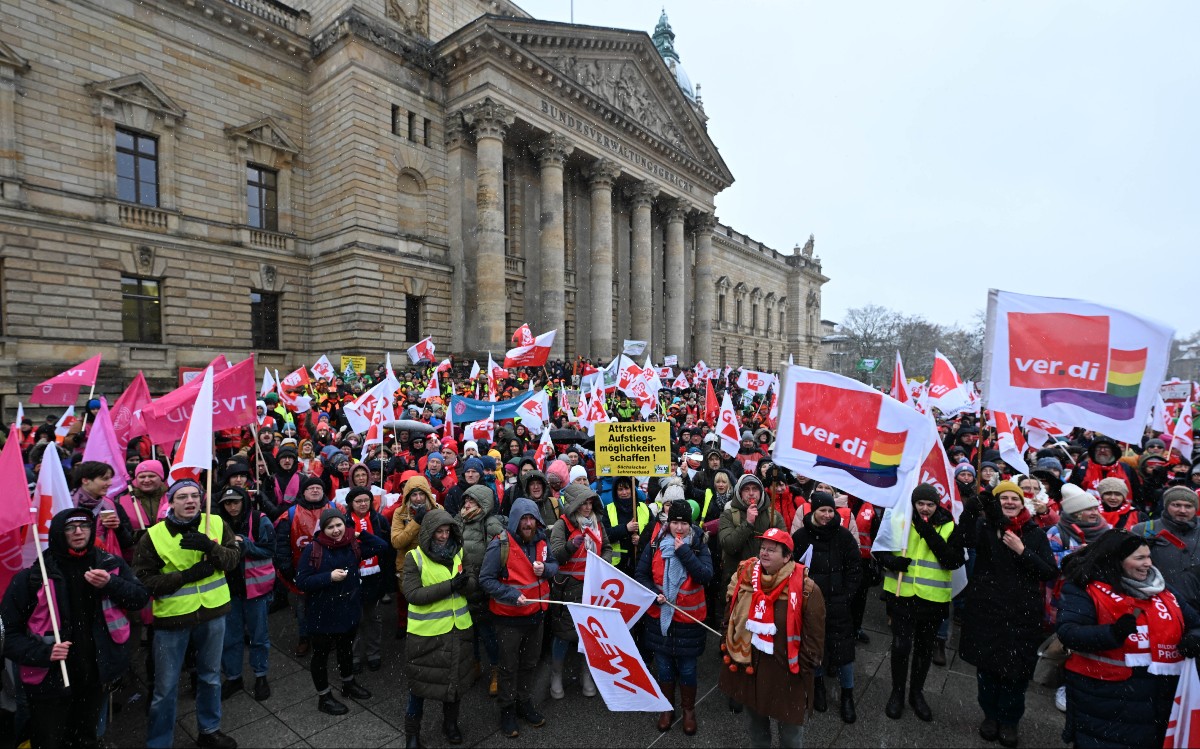
Verdi boss Frank Werneke said public sector employees are facing ever-increasing demands.
“We have a large-scale shortage of staff across the entire public sector," he said, adding that this affects university hospitals, road construction authorities, the judiciary, and, in the city states, a whole range of public-facing services.
How do German states (as the employers) view the demands?
As you can imagine, states aren't happy.
Hamburg's finance senator Andreas Dressel (SPD), who is the chief negotiator for the states, said the demands were "too much". He added: "It's not affordable.”
He argues that the standard wages of public sector employees have already been increased by an average of around 42 percent since 2013, and by up to around 59 percent for lower wage groups. In comparison, consumer prices have risen by around 33.6 percent, points out Dressel.
He said the financial situation of states is poor, and that a “dramatic increase in spending” on social benefits far exceeds the modest growth in revenue.
Dressel is particularly critical of the demand for an additional day off for union members, as he believes this serves more to recruit members than to improve the collective bargaining structure.
READ ALSO: How you can help fight homelessness in Germany this holiday season
How will people in Germany be affected by the collective bargaining round?
Warning strikes and protests could hit in the coming weeks. And if they go ahead, some services will be disrupted.
That could result in schools or daycare centres closing or having shorter teaching days, and other public services like road maintenance being scaled back.
However, it should be noted that people employed as civil servants (Beamte) in Germany are generally not allowed to strike under German law. They make up around 60 percent of the public sector workers affected in the negotiations. According to the German constitution, civil servant work involves special tasks in the name of the state, which is why they cannot protest by walking off the job.
Verdi deputy leader Christine Behle signalled that on the whole, members who can strike are prepared to do so. "The capacity for mobilisation is good," she said.
Verdi boss Frank Werneke told the Süddeutsche Zeitung that where warning strikes were necessary, broad participation would be called for.
"This could affect university hospitals, salaried teachers, police employees and even personnel who clear the roads in winter, for example," he said.
Comments