
Today's top story: Family business association faces backlash for opening up to far-right AfD
Germany’s association of family businesses (Der Verband Die Familienunternehmer) is now open to having a dialogue with Alternative for Germany (AfD), sparking criticism from politicians and other economic groups.
Marie-Christine Ostermann, head of Familienunternehmer, said the association still rejects the AfD’s stance and opposes the party entering government, but added that contact was needed given that roughly a quarter of voters in Germany support the party.
She said the exclusion of the AfD “was not successful". Therefore, “we have jointly decided to remove this 'firewall 'in the sense of a total ban on contact with the party". Ostermann said the vast majority of feedback from members had been "positive and supportive".
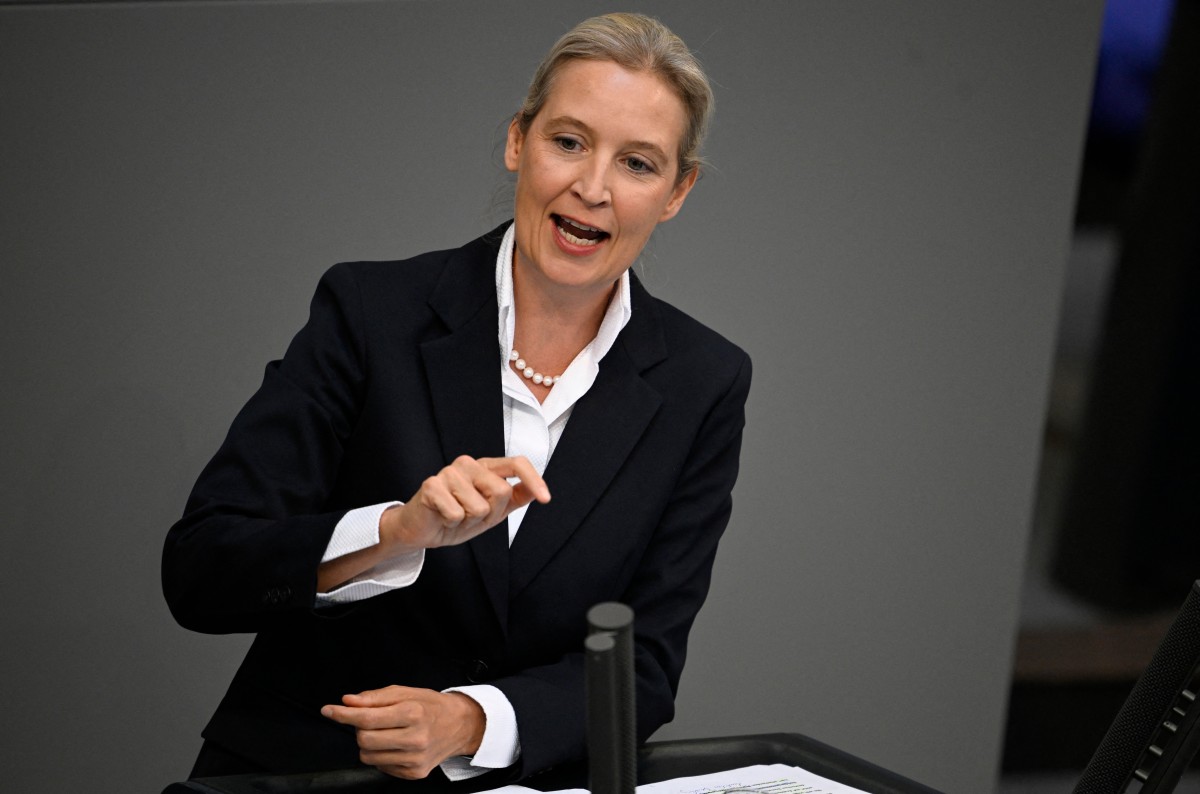
Alice Weidel, co-leader of the AfD, welcomed the move, predicting it could lead to a relaxation of relationships between businesses and the far-right party.
Experts, however, have warned that treating the AfD like any other political party could harm Germany’s business reputation domestically and abroad.
CSU Secretary General Martin Huber told German daily Bild: "Any representative of the business community who sees the AfD as a partner is playing with fire and undermining the foundations of our social market economy."
Some industry groups have distanced themselves. The German Association for the Digital Economy, Bitkom, said the AfD is “backward-looking in terms of digital policy, socially oriented toward division and segregation, and questions the democratic constitutional state". It does not offer AfD politicians a platform at events and digital conferences and said there are "no plans to change this fundamental policy".
As a result of the controversy, Deutsche Bank said it will no longer host future events for the family businesses association, which has around 6,500 members, while drugstore Rossmann revoked its membership from the group.
Meanwhile, Green Party politicians Konstantin von Notz and Andreas Audretsch slammed the association's contact with the AfD. In a joint statement they said: "We simply cannot imagine that the members of the association of family businesses feel represented by this action."
The debate highlights growing tension in Germany over how far firms should engage with the AfD amid rising polarisation.
READ ALSO: Germany's biggest companies against far-right parties ahead of EU elections
13 people injured after tram crash in Düsseldorf
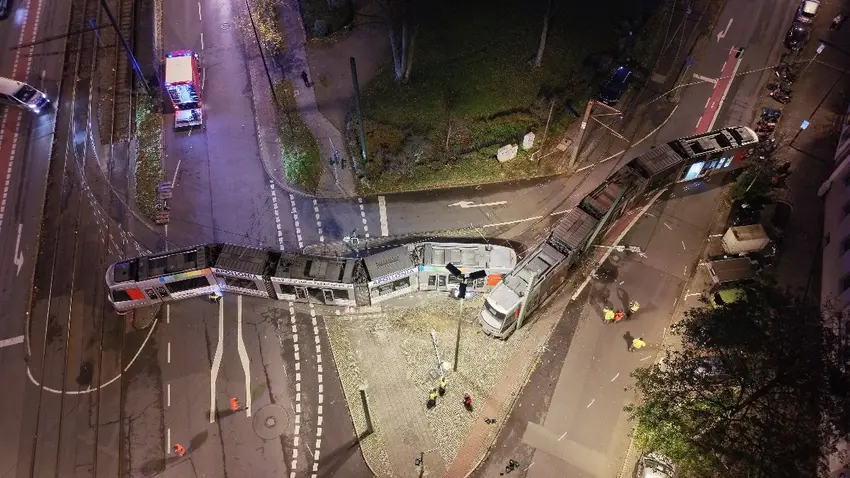
Thirteen people are reportedly injured – one seriously – after a tram came off the rails in the south of Düsseldorf on Wednesday morning.
A police spokesperson said it appeared the tram had derailed because of a technical issue with the signal box. The driver was also injured.
According to the news site Ddorf-aktuell, the tram was traveling at 5:40am when the derailment happened. The tram then collided with another tram.
German broadcaster Tagesschau reported that nine people were taken to hospital while other injured passengers were being treated at a nearby hotel.
Fire and rescue workers were on site throughout the morning.
Rising number of fireworks imported to Germany
The use of DIY fireworks on New Year's Eve in Germany has long been a heated debate.
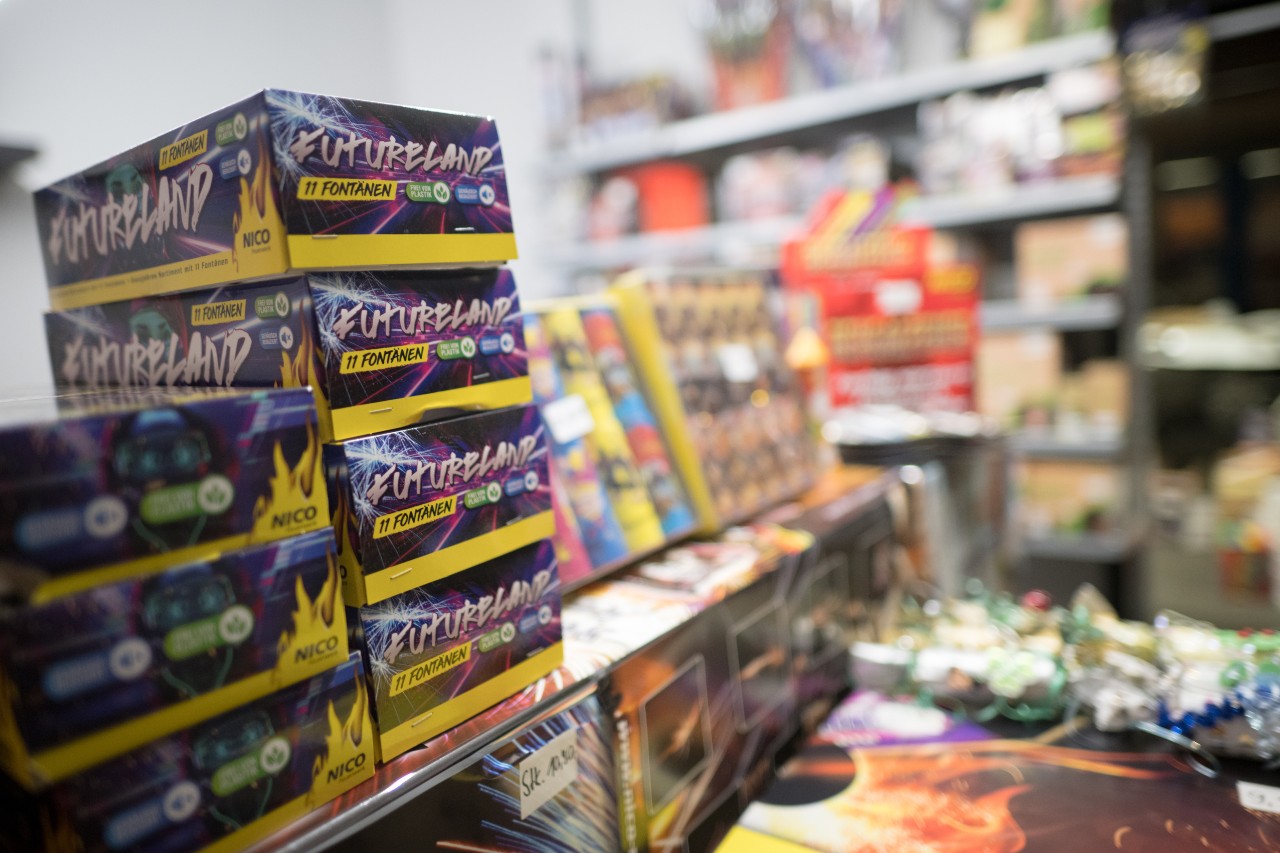
But it seems they are still very much sought after. New figures show imports of fireworks to Germany from abroad have risen sharply.
From January to September this year, more than 42,400 tons of fireworks were imported into Germany – almost two-thirds (62.6 percent) more than in the same period last year.
This is a record amount since 2001, according to the Federal Statistical Office.
The reports states that fireworks imports in the first three quarters of the year exceeded the level of the pre-Covid year 2019 (29,800 tons) by 42 percent.
"During the Covid-19 pandemic, there were bans on the sale of fireworks, so imports were correspondingly low," the experts explained.
READ ALSO: Fireworks bans and deportations - the new laws German ministers could put forward
German far-left 'Hammer Gang' activists go on trial
Seven alleged members of the German far-left militant group Antifa Ost went on trial Tuesday accused of attacks targeting right-wing extremists that earned them the nickname "Hammer Gang".
The United States this month designated Antifa Ost as a terrorist group along with several other European far-left and anarchist organisations.
Supporters greeted the defendants as they arrived in the courtroom in the eastern city of Dresden, and outside the building left-wing activists put up a banner that read "Free all Antifas".
German prosecutors say the group – six men and one woman aged between 28 and 49 – played various roles in 14 attacks on 35 people they deemed to be right-wing extremists in Germany and Hungary between 2018 and 2023.
They are accused of belonging to or supporting a criminal organisation, with some of them also charged with attempted murder and serious bodily harm.
The owner of a restaurant in the central state of Thuringia which served as a meeting point for right-wing activists is alleged to have been attacked twice.
Some of the suspects allegedly targeted presumed right-wing extremists with hammers, leaving some severely injured.
German car giant Volkswagen says it can now make cars entirely in China
Volkswagen can now develop cars from start to finish in China, the German automotive giant said this week, as it plots a fightback in the world's largest market.
The company's new test laboratories in the Chinese city of Hefei meant Chinese customers could now buy VW vehicles made entirely in the country, Volkswagen said – the first time in company history that new vehicles could be fully developed outside of Germany.
The new research centre in Hefei is Volkswagen's only one dedicated exclusively to electric cars, the firm said, and it would also play a role in exports from China to South East Asia and the Middle East.
"We are taking our development capabilities in China for China to the next level," Volkswagen China boss Ralf Brandstaetter said.
"We are strengthening our ability to respond quickly to local needs and to shape technologies directly where they will be used."
German carmakers have come under intense pressure from local competitors in China in recent years, with worldwide sales and profits suffering amid their slump in China.
With reporting from AFP and DPA
Comments