
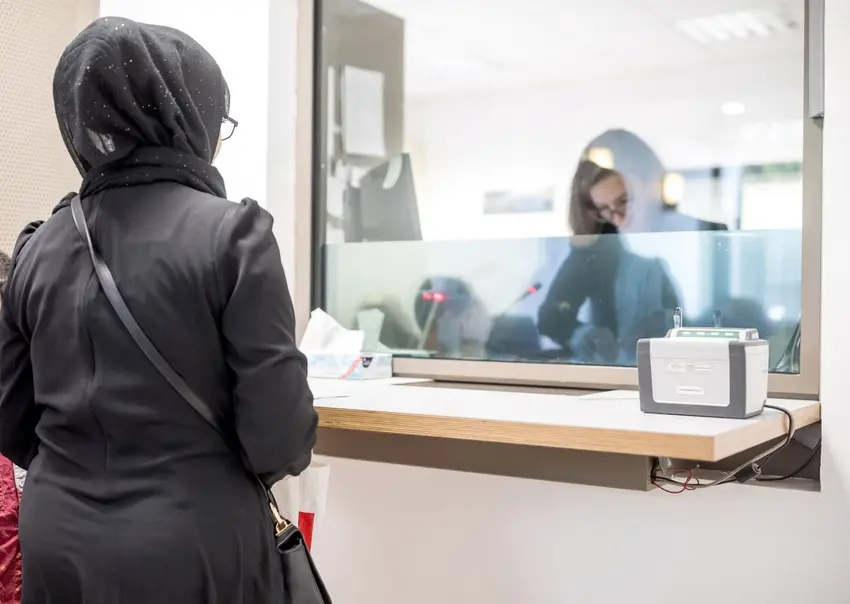
Applicants from poorer nations face much longer waits for appointments at German embassies and consulates, according to a new study.
The research, conducted by the German Centre for Integration and Migration Research (DeZIM), the University of Flensburg, and the European University Institute in Florence, analysed visa appointment waiting times at German embassies and consulates worldwide between late 2023 and late 2024.
The headline finding is clear: people from the Global South – countries with lower average incomes – are much less likely to secure a visa appointment, and when they do, they wait significantly longer than applicants from richer countries.
As the authors note: “Even if we were not able to analyse the degree to which this pattern is intentional … a political rationale in which long wait times are created deliberately as a ‘cooling out’ mechanism to discourage applicants from less prosperous countries certainly seems plausible.”
The impact
Long waits for visa appointments can have serious personal consequences. Applicants may miss out on educational, professional or family opportunities. For some, delays mean being unable to visit loved ones when they need to, attend conferences or start new jobs.
READ ALSO: How to write the visa invitation letter in Germany for family and friends to visit
The process is often described as expensive, nerve-racking and humiliating, especially for those from the Global South, notes the study.
But these delays also risk harming Germany’s reputation as a destination for migrants and tourists. The consequences could include deterring urgently needed skilled workers and students, limiting international cooperation and exchange, and ultimately reproducing and strengthening global inequalities.
In widely reported comments, the study’s authors argue that a system which produces unequal chances is “unfair,” leads to frustration and is “rightly perceived as discriminatory” by those affected.
An opaque system
While long waiting times for visa appointments are clearly a problem, the study emphasises that the lack of transparency in Germany’s system is perhaps an even greater concern.
The researchers themselves encountered significant obstacles when trying to obtain reliable information.
Germany does not publish a central, up-to-date overview of visa appointment waiting times for all its embassies and consulates.
Instead, data is scattered, limited and often only available through parliamentary queries or piecemeal reports, which makes it difficult for applicants and journalists to see where delays are worst or to plan realistically.
READ ALSO: EXPLAINED - How to get a freelance visa for Germany from outside the EU
By way of contrast, the authors of the study point out that the US Department of State maintains a public, interactive website where anyone can view estimated wait times for visa interviews at embassies and consulates worldwide.
This information is updated regularly and covers different visa types and locations. The system allows applicants to check current backlogs, plan their applications and gives media and researchers the ability to monitor trends and shifts in wait times over time.
The authors of the study recommend that Germany move towards a similar public reporting model to improve fairness and allow public scrutiny of where long waits arise.
In addition to establishing a digital platform, the study’s authors also propose allocating consular resources based on demand and regional needs, using automated systems to identify where extra capacity is needed.
Shorter and more equitable wait times would improve access to legal migration pathways and support Germany’s labour market needs, they argue.
Methodology
Having collected data on how many days it took to get a visa appointment at German embassies and consulates around the world, the authors of the study grouped results by world region and income level, comparing average waiting times and the distribution of delays.
The study discusses several factors that influence wait times:
- Capacity and demand: Embassies and consulates in the Global South often face high demand for visas but have limited staffing and appointment slots, leading to long queues.
- Policy priorities: Germany’s prioritisation schemes (e.g., for highly qualified workers) can shorten waits for some but leave others facing long delays.
- System design: The lack of a central overview makes it harder to detect and address structural bias in how capacity is allocated.
While these explanations fit the data, the authors caution that the precise contribution of each factor is difficult to prove from appointment data alone.
READ ALSO: Germany launches new online portal for visa applications from abroad
Rather than publishing a full country-by-country table, the study focused on representative examples and the size of the gap between groups.
The overall pattern was unmistakable however: Germany’s visa system imposes a significant “time penalty” on applicants from poorer countries, especially in parts of Africa, reinforcing global inequalities in who can travel, work, study, or visit family in Germany in a timely way.
Comments