

Tuesday's top story: Merz, Macron to push for European digital 'sovereignty'
German Chancellor Friedrich Merz and French President Emmanuel Macron will join forces Tuesday to push for greater European digital "sovereignty" and less dependence on US tech titans as the AI race gathers pace.
The leaders of Europe's biggest economies will make the call at a Berlin summit, which will also be attended by CEOs of top regional firms including French AI company Mistral and German software giant SAP.
With artificial intelligence set to play an increasingly important role in many sectors, Europe's leaders are responding to growing calls for the continent to take greater control of its own digital destiny.
Concerns about American tech dominance have also escalated since the return of US President Donald Trump, who has questioned long-standing ties between the continent and Washington in many areas.
German Digital Minister Karsten Wildberger said Monday that the summit's "core message" would be that "Europe is ready to shape its own digital future, to reduce dependence".
The European Union in particular has been criticised for moving too slowly in the battle for AI dominance against the United States and China.
The EU will propose a rollback of rules on AI and data protection later this week, a topic that is expected to feature prominently at the summit.
READ ALSO: Nvidia and Deutsche Telekom reveal plans for billion-euro AI hub
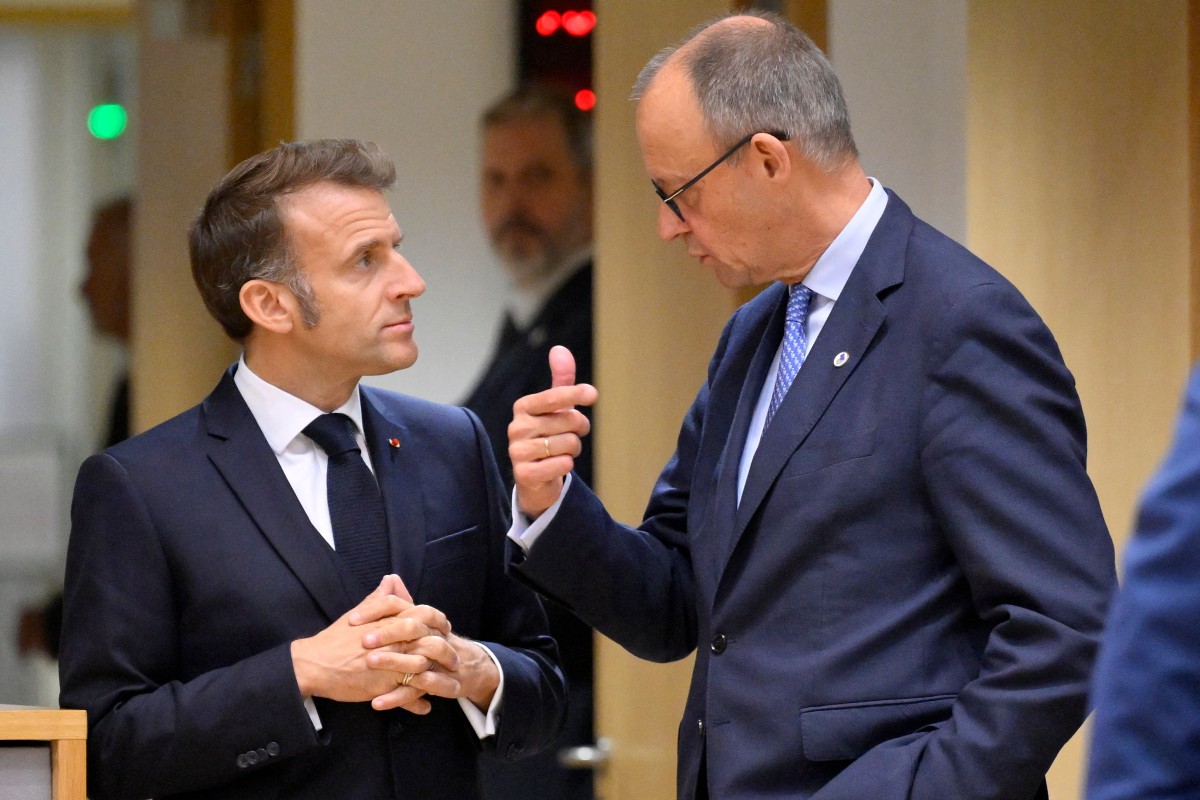
Merz and Macron are due to give keynote addresses in the afternoon at the summit, which will also be attended by digital ministers from across Europe. Both leaders will then have dinner with British Prime Minister Keir Starmer, a German government spokesman said, without revealing what the trio will talk about.
German national team locks in World Cup spot
Germany went on a goal spree as it wrapped up World Cup qualification with a resounding win in their last European group matches on Monday.
"Every player played well today and worked like a dog," Germany coach Julian Nagelsmann told German broadcaster ZDF.
Germany needed only to draw to be sure of reaching the global footballing showpiece in the United States, Canada and Mexico. Instead, they went on the attack.
Germany took early control as they beat Slovakia 6-0 in Leipzig. The night started with both teams level on points, but with Germany having an edge in goal difference. Slovakia, who beat Germany earlier in qualifying, created some threatening moments but could not take them.
Nick Woltemade headed the Germans into an 18th minute lead. Once Serge Gnabry added a second 11 minutes later, the hosts were in total control.
"We showed incredible team spirit and pushed ourselves on the pitch from the very beginning," coach Nagelsmann said.
Public sector unions to demand seven percent pay rise
German public sector unions are to demand a seven percent pay rise – or at least €300 extra per month – for state employees, including police and teachers, to address a growing shortage of skilled workers and keep salaries competitive with the federal government and municipalities.
The unions argue that the recent financial forecast gives states more room for wage increases, which should benefit lower-paid staff most.
Negotiations with the Collective Bargaining Association of German States (TdL) for around 1.2 million public sector employees will begin in early December.
READ ALSO: How employees can make the most of Germany's public holidays in 2026
The unions, which also want the deal to apply to civil servants and pensioners, are calling for a €200 monthly increase for new hires, plus higher shift allowances and guaranteed permanent contracts after training.
The dbb civil service union highlighted that 73 percent of Germans feel the state is overburdened due to understaffing, with issues like neglected infrastructure and education shortages.
The last agreement, from 2023, provided a 5.5 percent raise and one-off payments, but unions now insist on a boost well above inflation to make public sector jobs more attractive.
Auction of Nazi terror artefacts cancelled after outrage
A German auction house said Monday it had cancelled a planned auction of Nazi-era letters, postcards and other documents linked to the Holocaust following criticism from an organisation of Auschwitz concentration camp survivors.
The auction, which has been scheduled for Monday, had planned to offer letters written by Nazi camp prisoners to loved ones, files from Nazi Germany's Gestapo secret police and other documents recounting Nazi persecution from 1933 to 1945.
"We are aware that we made an incorrect decision in evaluating the consignment request and regret if we have hurt the feelings of relatives and victims of Nazi terror," the Ulrich Felzmann auction house, based in the western German city of Neuss, said in a statement.

On Saturday, the International Auschwitz Committee denounced the planned auction.
The auction house on Monday said that some of the items included in the planned sale were being provided by descendants of the victims, while others came from a private research collection of documents that had been "acquired legitimately on the open market".
In 2016, the Central Council of Jews in Germany expressed outrage over a controversial auction that allowed an Argentinian collector to acquire Nazi personal effects.
A 2019 auction of some of Nazi dictator Adolf Hitler's personal effects drew protests from the European Jewish Association, which argued that Nazi admirers would be the most likely buyers.
German economy set to grow in 2026
Germany’s economy is set to grow in 2026, but will remain just below the EU average, according to the latest European Commission autumn forecast.
The Commission expects Germany’s GDP to rise by 1.2 percent next year, compared to an EU-wide average of 1.4 percent and 1.2 percent for the euro area.
For 2025, growth is now projected at 0.2 percent, making Germany one of the EU’s weakest performers, though still ahead of Finland.
The outlook has improved from earlier predictions, with a robust labour market, rising consumer spending, and favourable financing conditions supporting moderate growth.
Other forecasts, such as those from the International Monetary Fund and Germany’s Council of Economic Advisers, are more pessimistic, predicting growth of only 0.9 percent in 2026. Despite the challenges, domestic demand remains the main driver, with consumer spending and investment expected to pick up gradually.
READ ALSO: Mercedes, Dr Oetker, Fritz - The faces behind Germany’s favourite brands
With reporting by DPA and AFP.
Comments