
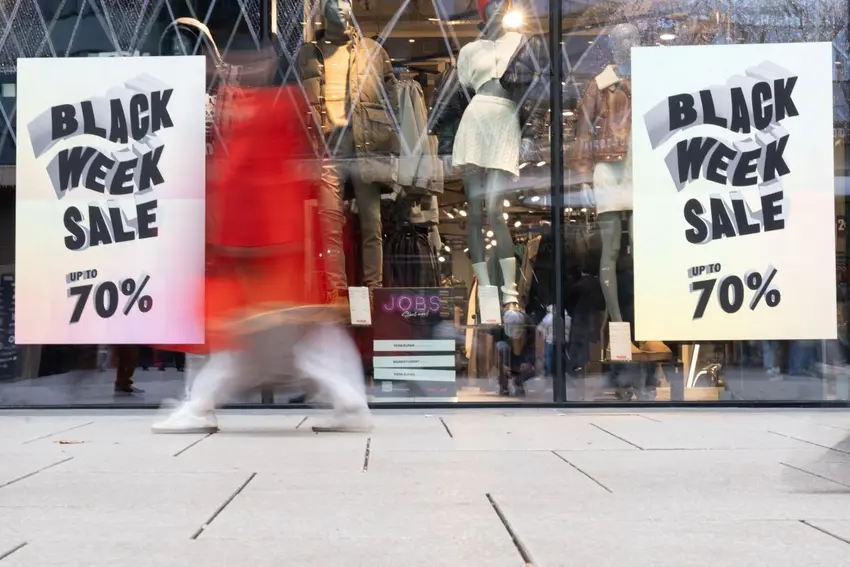
Do you know the difference between a Rabatt and an Angebot?
In Germany, there are strict rules about how retailers can advertise sales and discounts – but no shortage of loopholes.
The most important regulation is the Preisangabenverordnung (PAngV), which says that any advertised discount must show the reference price – or the lowest price the product was sold for during the previous 30 days.
This helps prevent shops from raising prices just before a sale and then pretending to offer a big discount.
Shops also have to display the total price, including VAT and shipping costs. So if you spot a price without these, beware – it’s not allowed.
Watch out for these ‘creative’ retail tactics
Despite existing regulations, retailers use a number of strategies to make their deals appear more attractive than they truly are.
In Germany, for example, retailers often use terms like Angebot (offer) or Aktion (promotion) instead of Rabatt (discount).
If retailers offer a Rabatt, they are obliged to follow the above rule, sharing the previous lowest price in the past 30 days, whereas terms like Angebot and Aktion are broader and less strictly defined under the law.
Also, retailers sometimes raise the price of a product above its usual level 30 days prior to a discount offer to skirt the law in that way.
READ ALSO: Could Germany force online giant Amazon to change its prices?
Then, during the advertised sale, they put it back to the original or a slightly lower price and market this as a discount, giving the impression of a significant saving. This strategy allows them to present “discounts” that appear attractive to consumers while maintaining higher average prices.
Another common trick is to display the manufacturer's recommended retail price (unverbindliche Preisempfehlung - UVP) as the "old price." This figure can be significantly higher than the prices shops actually charge, making the discount seem larger.
How can I check if a deal is actually good?
The best way to ensure you're getting a genuine bargain in Germany is to compare prices yourself on reliable third-party comparison websites such as Idealo and Geizhals.
These platforms allow you to compare prices across multiple retailers. They also provide historical price data, so you can see how prices have changed over time and make sure the seller hasn't been indulging in a little price manipulation before offering discounts.
READ ALSO: How does the cost of healthcare products in Germany compare to other countries?
It can also be useful to set price alerts, often called Preiswecker or Preisalarme, which notify you when a product's price falls to your desired level. The service is available from most price comparison websites.
Finally, before making a purchase – especially online – it’s always a good idea to read the small print and double-check the total check-out price.
How can I protect myself from fake deals and scams online?
Consumer watchdogs across Germany and beyond agree on several key tips to help you steer clear of scams.
- When shopping online, check the seller’s reputation. On platforms such as Amazon, verify whether the product is sold and shipped directly by Amazon or by a third-party seller, as established retailers tend to be more reliable.
- Be cautious of phishing emails that offer unbelievable deals, especially if they request personal details or payment upfront; always go directly to the retailer’s official website instead.
READ ALSO: 'Smart stores' - The new retail trend disrupting Germany's shop-free Sundays
- Look for a proper imprint (Impressum) on the retailer’s site to ensure that it’s legitimate and take time to read user reviews for additional assurance.
- Avoid rushing into purchases. Countdown timers and warnings of limited stock are designed to pressure you; take your time to thoroughly evaluate the offer.
- Finally, be aware of your consumer rights. For online purchases, you normally have 14 days to cancel the order without giving a reason but always check who is responsible for return shipping costs.
Comments