
Inside Germany is our weekly look at some of the news, talking points and gossip in Germany that you might've missed. It’s published each Saturday and members can receive it directly to their inbox by going to their newsletter preferences or adding their email to the sign-up box in this article.
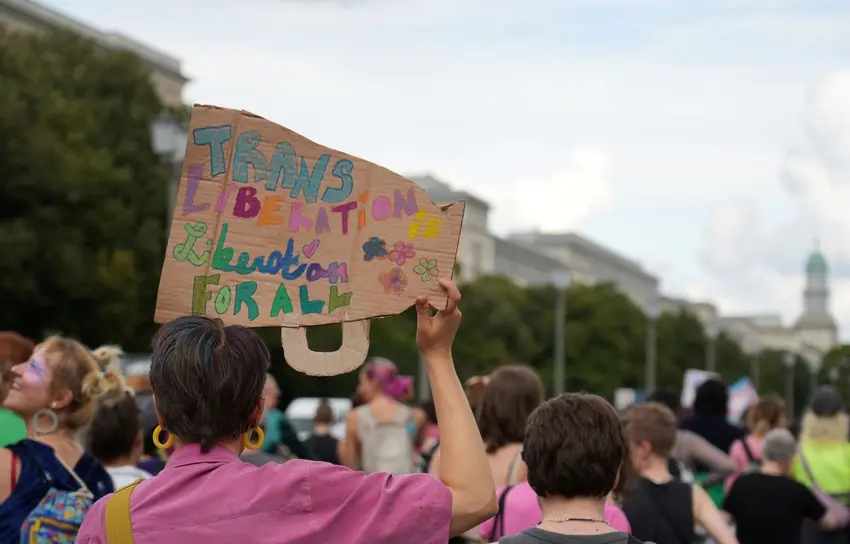
November 1st will mark one year since the Self-Determination Act came into force, and several thousand people in Germany's larger cities have taken advantage of their newfound freedom to change their official gender entry in the state records.
The law allows people to change their name or legal gender by making a simple application to their local registry office.
In Berlin around 2,500 people have done so, according to the city-state's senate chancellery, with more than half of those having been filed last November.
Leipzig recorded 1,308 registrations, with the change completed for 922 of them. Hamburg has seen 1,144 registrations.
Cologne has recorded 692 changes, and both Munich and Dresden have recorded around 500.
Frankfurt and Stuttgart had the next biggest number of registrations, followed by Rostock, Chemnitz, Potsdam and Münster.
The legislation replaces a law known as the Transsexuals Act which dated back to the early 1980s, and was largely seen by the LGBTQ* community as a welcome change following mistreatment of the community by German law in the years and decades prior.
According to the coalition agreement between the CDU, CSU and SPD, the law is to be reviewed by the end of July 2026 at the latest.
Gated U-bahns coming to a station near you?
Germany's barrier free public transit is both baffling (to many foreign visitors) and extremely convenient, but some government leaders would like to see it scrapped.
CDU parliamentary group leader Dirk Stettner has recently reignited debate over installing ticket barriers at Berlin’s underground stations.
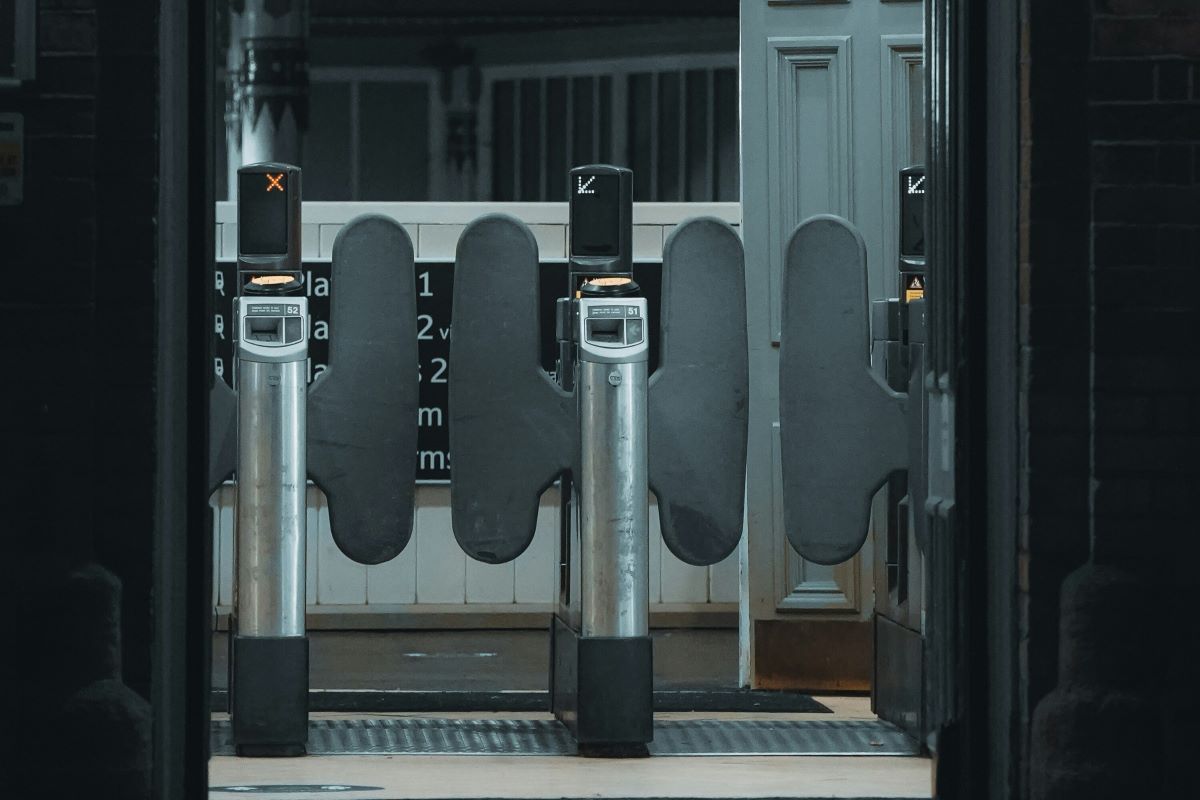
Stettner argues that barriers would improve safety and cleanliness. According to his proposal all 175 stations would be retrofitted at an estimated cost of €400 million, with the expense passed on to passengers through higher ticket prices.
Stettner claims the increase for individual tickets would be “in the cent range” if spread over ten years (and assuming savings on the costs of repairing vandalism). It’s a price he claims Berliners would be willing to pay in return for a safer system.
Similar proposals have been pitched before, and this one has been met with a familiar lack of enthusiasm from stakeholders.
The SPD’s transport policy spokesman, Tino Schopf, dismissed the idea as a “smokescreen,” saying, “We need to talk about how we can keep subway stations clean and safe. But new turnstiles are not a priority.”
The Berlin transport authority (BVB), also opposes the plan: “Our subway system is over 100 years old and varies greatly in terms of construction – many stations are too narrow or not structurally designed to install barriers.”
For what it's worth, I too would rather not see the stations gated, if only so I won't be blocked from sprinting to catch a train at the last moment when I'm running a bit late.
Image of the week:
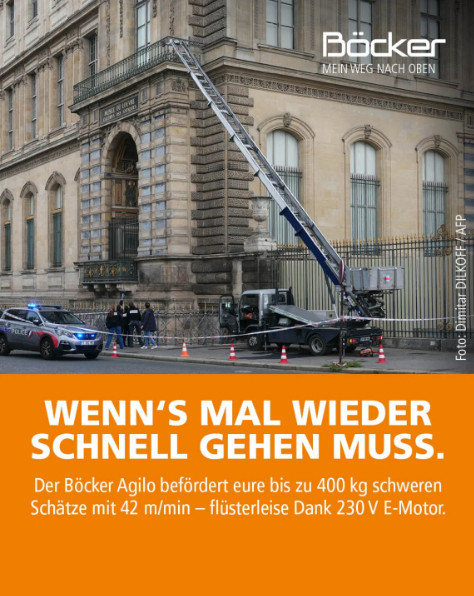
When a German company found out that one of their machines had been used to pull off the Louvre heist they didn't shy away from taking credit. In fact, they quickly and cleverly turned it into a marketing campaign.
"When you need to move fast," reads this ad, shared by the company on their Instagram.
‘What we call lies are not always distortions of fact’
Chinese contemporary artist and activist Ai Weiwei published a – shall we say interesting – analysis on Germany this week in online art magazine Hyperallergic.
The article begins: “A society governed by regulations, yet lacking individual moral judgment, is more dangerous than one with none at all.
“A society that values obedience without questioning authority is destined to become corrupt.
“A society that admits to error but refuses to reflect on its origins possesses a mind as stubborn and dull as granite…”
Weiwei’s argument continues to take shots at Germany’s bureaucratic society, and at what he sees as a people who have become conflict-averse and therefore unable to confront society’s bigger issues or faults.
But the entire piece is pretty abstract, largely refraining from making clear exactly what Weiwei is referring to.
Having spoken to a few people about what it all meant, one person said they saw it as a take on the country’s response to the Israel/Palestine conflict. Another thought it was about chat control laws and still others thought it was Germany’s historical ties to Russia.
To that end, the only recent news event that Weiwei mentions is the Nord Stream Pipeline bombing, about which he says, “When public events of great consequence…are met with silence from both government and media, the silence itself becomes more terrifying than any atomic bomb.”
The column was reportedly first commissioned by an editor at German newspaper Zeit, but was ultimately killed by another editor there after they read Weiwei’s take. Given the opaque nature of the article, one has to wonder how exactly they were interpreting it when they decided to pull the plug.
Oh, there’s also a pretty random critique of Berlin’s restaurant culture and its “sudden proliferation of Chinese restaurants — most of them noodle-based” tacked on at the end.
You can read the article here. If you do, we’d be curious as to what you think it's about. Please feel free to leave your interpretation of Weiwei’s take in a comment below.
With reporting by Tom Pugh
Comments