

Why do I need to know Marienkäfer?
Because they are arguably one of the cutest insects and you're probably seeing a lot of them around at the moment. Plus they are a well-known good luck symbol in Germany.
What does it mean?
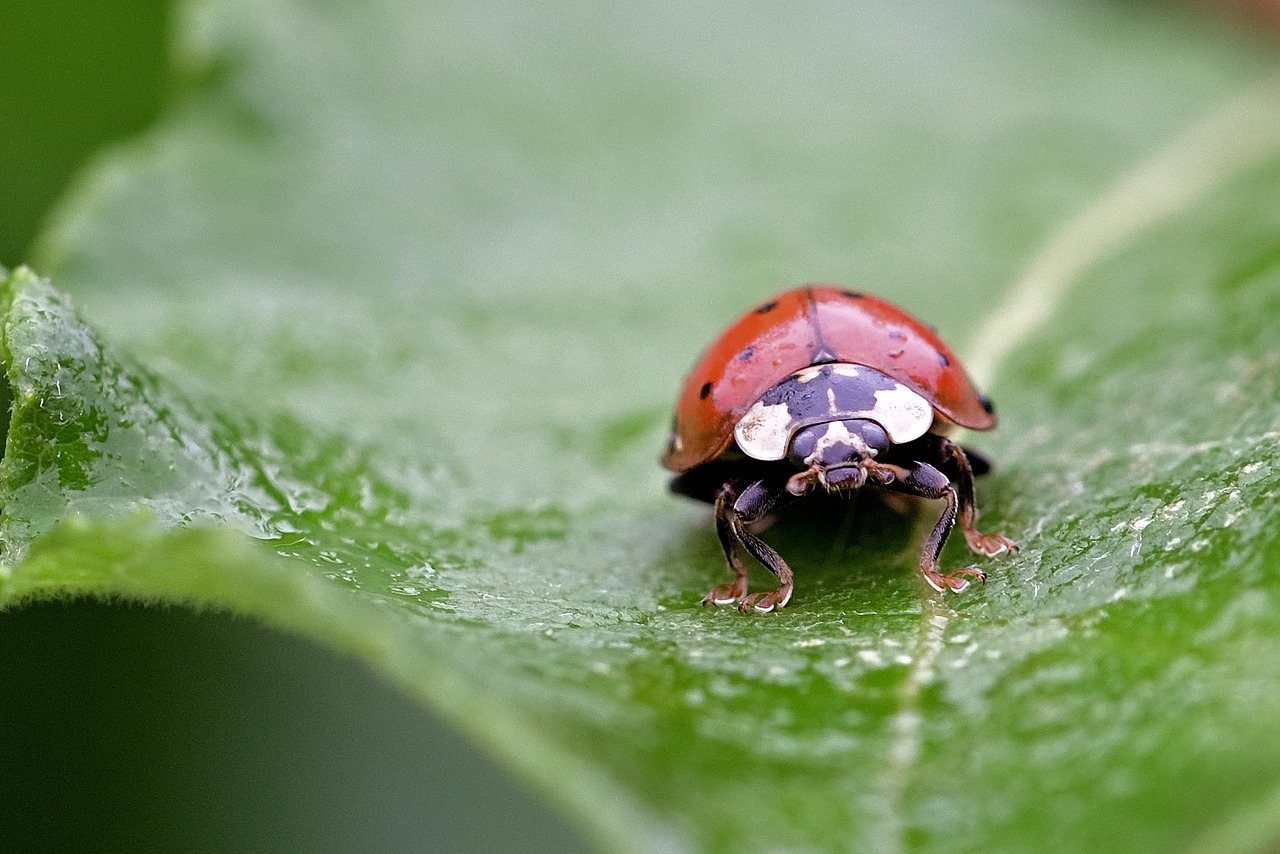
Der Marienkäfer is the German word for 'ladybug', or 'ladybird' as the Brits say.
In Germany, the name translates literally as 'Mary beetle' – named after die Jungfrau Maria or the Virgin Mary, according to the Nature and Biodiversity Conservation Union (NABU).
As ladybirds tend to have an enormous appetite for aphids, in the past it was believed that the little critters were sent as a gift from the Virgin Mary to get rid of pests that would wreck crops.
The bugs, which were also thought to protect against witches and evil spirits, were sometimes known as ‘Herrgotskäfer’ (God's/the Lord's beetle) or Frauenkäfer (woman's beetle).
The Bavarian State Institute for Viticulture and Horticulture notes that these small insects are also known colloquially in Germany as Himmelsziege (heavenly goat), Sonnenkälbchen (sun calf) or Sommervögelchen (summer bird).
There are around 80 different species of Marienkäfer in Germany alone and more than 4,000 worldwide. They vary in colour, shape and size depending on the species, and the number of their distinctive spots can also differ.
The most well-known is the red seven-spot ladybug, which is the classic lucky charm symbol. This one, or those that look similar, are also referred to as a Glückskäfer or 'lucky bug'.
You'll find plenty of mini Marienkäfer ornaments leading up to Silvester (New Year's Eve) in Germany.
Why am I seeing so many of them?
If you've spotted a number of ladybugs around your windows, don't fret. These little guys are not dangerous. They are simply taking advantage of the last warm sunny days to gather together before they swarm off in search of suitable winter quarters.
If they make their way into your house, you should allow them to fly back out the window or safely remove them so they are able to find a place outside to hibernate.
If you have to move them, experts recommend gently sweeping them up with a hand brush, which is less stressful for them than being handled. It's best to place the insects directly in a place that is suitable for hibernation.
NABU recommends releasing them in the corner of a natural garden, for instance, but a stone wall or a bush can also be suitable.
Use it like this:
Ach du meine Güte! Auf meinem Fensterbrett sind so viele Marienkäfer.
Oh my goodness! There are so many ladybugs on my window sill.
Bitte kauf mir einen Marienkäfer-Glücksbringer bei DM.
Please buy me a ladybird lucky charm at DM.
Comments