
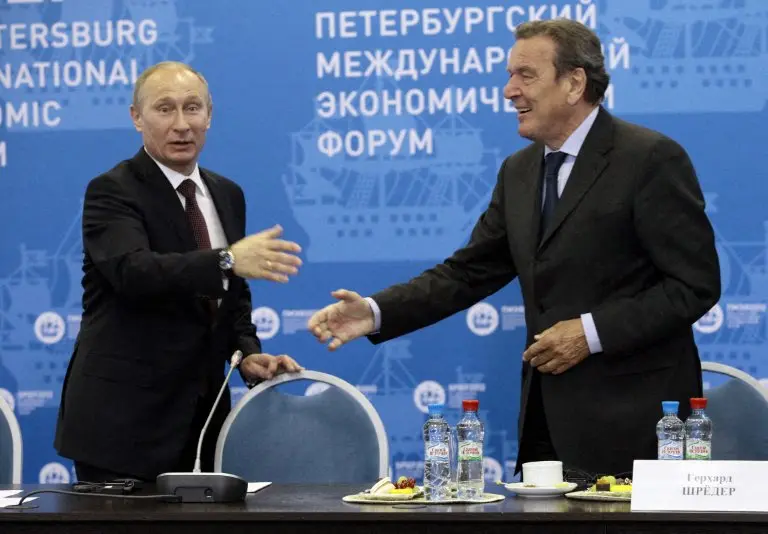
The inquiry, at the Mecklenburg-Western Pomerania regional parliament, is looking into political influence around construction of the pipeline between Russia and Germany and possible Russian interventions in favour of the project.
The investigation focuses on the state's Climate Protection Foundation that was allegedly used to shield companies involved in building it from US sanctions.
Giving evidence via video link, and citing ill health after a diagnosis for burnout, Schröder, 81, told the panel that it had been an "extremely sensible decision" for the state to consent to the creation of the foundation.
Nord Stream 2 AG, the company backing the pipeline project, contributed about €20 million to the foundation, Schröder said, adding that the foundation "served to advance the project without fear of US sanctions".
Germany needed natural gas "at reasonable prices", Schröder said, and he saw no reason to break with the "proven cooperation" that his predecessors had established with Russia when it came to energy supply.
Schröder, of Germany's Social Democrats party, repeatedly said that he could not remember key details, including when it came to his discussions with Manuela Schwesig, state premier of Mecklenburg-Western Pomerania.
The Nord Stream 2 pipeline never went into operation as German authorities cancelled its approval process just a couple of days before Russia launched its full-scale invasion of Ukraine in 2022.
Bomb attacks on both Nord Stream 2 and the original Nord Stream pipeline later in 2022 ruptured three of the four pipe tubes.
Italian authorities in August arrested a Ukranian suspect in connection with the blasts and Polish authorities arrested another Ukranian man in September. Courts in both countries rejected requests by Germany that they be extradited.
After leaving office, Schröder maintained a close relationship with Russia's leader Vladimir Putin and in 2016 joined the board of the venture behind Nord Stream 2.
He was due to join the supervisory board of Russian state energy company Gazprom in 2022 but backed out under pressure after Russia launched its full-scale invasion of Ukraine in February of that year.
He did however attend a reception at the Russian embassy in Berlin over a year after the invasion.
Schröder approved the first Nord Stream pipeline in his final weeks in office in 2005.
Angela Merkel, his Christian Democrat successor, approved the second pipeline project in 2018.
INTERVIEW: 'Failed climate policies are fuelling far-right politics in Germany'
Olaf Scholz, voted out as Germany's chancellor in February this year, is scheduled to appear before the inquiry in November, as is Sigmar Gabriel, a former energy minister.
Comments