
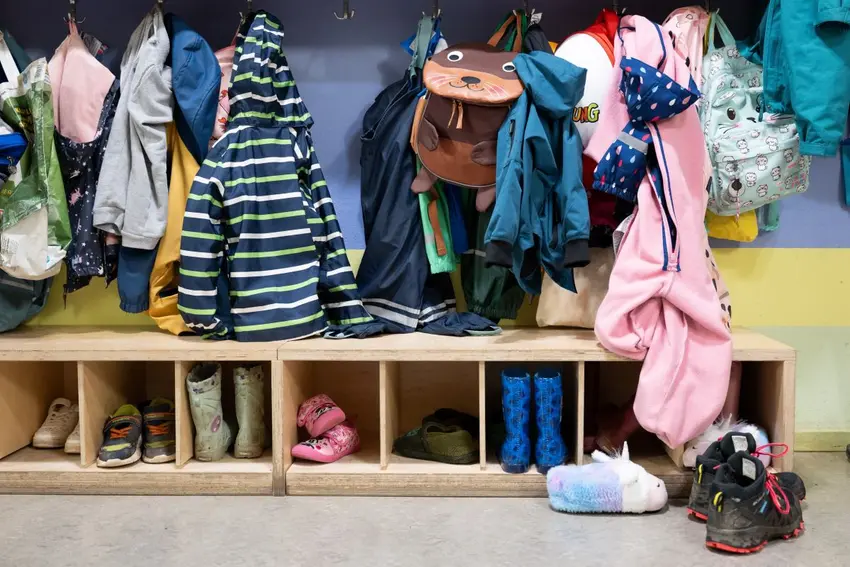
For parents in Berlin, the news that local daycare centres (Kitas) are closing due to a lack of children may sound far-fetched. Securing a place for your child in a Kita had recently become an infamous ordeal involving endless waiting lists and, in some cases, even registering your child before they were born.
Yet now, just a handful of years later, the city is witnessing the closure of Kitas.
Two state-owned daycare centres in Steglitz-Zehlendorf – Steinstraße and the smaller “Unter den Eichen” – have recently closed their doors because there aren’t enough children to fill their available places.
All five of Berlin’s municipal daycare providers are reportedly facing financial difficulties brought about by falling demand. Senator Katharina Günther-Wünsch of the conservative Christian Democrats (CDU) told rbb24 she couldn’t rule out further daycare centre closures in future.
At the end of the last school year, 189,000 places were available in Berlin. Of these, more than 18,000 were vacant, including 5,000 at state-owned Kitas, according to rbb24.
Staff from the closed centres have been relocated to other facilities. The children have also been accommodated elsewhere, with efforts made to keep siblings and friends together.
READ ALSO: What do children actually learn at school in Germany?
Good news for families?
For the first time in years, there are more available daycare spots than children in Berlin.
There are reasons to think this development could be good news for families and children, and not just because finding a Kita place is set to be easier (although competition for places is still high in areas like Lichtenberg and Spandau).
For one thing, the surplus has allowed the city to improve the staff-to-child ratio in Kitas.
Following an amendment to the Daycare Funding Act, starting next year one educator (Erzieher*in) should be responsible for four children under the age of three, instead of five. Whether all Kitas can meet this goal immediately will depend on staffing levels.
This change is also expected to keep thousands of skilled workers in the system, who might otherwise have been in danger of losing their jobs.
According to estimates, the declining number of children in daycare will free up approximately €270 million in the state budget. The planned shift in staffing ratios is expected to account for roughly two-thirds of this sum.
It is not yet clear what will be done with the remaining funds, with independent providers and The Left party (Die Linke) arguing it should be re-invested in the system.
READ ALSO: How health insurance works for children in Germany
Why are there suddenly too many places?
The root cause behind the fall in demand is demographic change.
While Berlin’s overall population continues to grow, the number of young children in the city is falling. The city-state has the lowest birth rate in Germany.
This apparent contradiction is explained by migration. Berlin attracts significant numbers of young immigrants, and also tends to repel people seeking to start a new family, because of the city’s housing crunch.
As a result, the number of children in publicly funded childcare has dropped by nearly two percent in the past year alone.

Long-term planning required
One obvious response to the present situation – tempting for a cash-strapped senate – would be to reduce the number of Kitas and available places in the city.
Commentators, including the Verdi union, warn that potential improvements in early-years education in Berlin are already being put at risk by cost-saving policy changes, including the decision to abolish the supplement for children with a non-German native language (Sprachförderzuschlag).
Instead, a “participation supplement” (Teilhabezuschlag) will be introduced in January. If at least 20 percent of the children attending a daycare centre come from poor families and receive benefits under the Education and Participation Package (BUT), the facility will receive additional funds.
Verdi also points out that despite the improved ratios on paper, high rates of staff sickness and absenteeism mean that actual conditions in many centres in Berlin remain challenging.
READ ALSO: The schoolyard terms you need to understand your German-speaking kids
Verdi is not alone in warning that budget cuts would mean repeating the mistakes made in the 1990s, when the city cut back on daycare places and staff only to find itself scrambling to rebuild capacity when the population began to grow again.
One very obvious reason why the current trend won’t continue indefinitely is the looming retirement of the baby boomer generation.
In other words, unless the government continues to invest in Kitas and their staff, it won’t be long before Berlin finds itself dealing with a shortage of places in daycares again.
Comments