
Germany's Taxpayers' Association called for “a consistent rethinking of how public investments are planned, implemented, and sustainably financed” in its Black Book, published on Tuesday.
The 2024 Black Book lists public projects whose costs have spiralled out of control or whose benefits are called into question by the Taxpayers' Association.
In Fuldabrück, Hesse, for example, the association highlights €7,000 of public money "wasted" on a bike lane which ends in front of a traffic island in such a way that cyclists inevitably end up riding into oncoming traffic.
Also in Hesse, the town of Eschwege wanted to create a meeting place with plastic seating: “A specially convened interdisciplinary working group decided against modular systems that were already available," according to the Taxpayers' Association.
"Instead, the city commissioned a prototype tailored to the diverse requirements and needs of Eschwege.” The project is alleged to have cost €223,000.
The association also criticises the sums spent – or the sums which will be spent – on renovating an opera house in Stuttgart and building a new opera house in Hamburg's HafenCity.
READ ALSO: Germany plans VAT cut in restaurants and hike in commuter allowance
In addition, the Black Book addresses nationwide scandals such as the bankruptcy of Swedish battery manufacturer Northvolt, which had received €600 million in loans from the KfW development bank in Germany.
The size of Germany's Bundestag and the number of members of parliament also remains a cause of concern for the Taxpayers' Association.
“Although we have 133 fewer members of parliament following electoral reform, the total costs remain extremely high at more than €1.2 billion for administration and parliamentary operations,” the association said.
READ ALSO: Is Germany headed for a period of austerity?
“Since the election, each representative is now entitled to not three, but four rooms.” The association believes these examples clearly show “that politicians are not very economical when it comes to themselves.”
The Black Book also examines the follow-up costs of public investments. “What is celebrated as an investment today can become a budget trap tomorrow because follow-up costs are ignored politically and are not financially secured,” the Taxpayers' Association said.
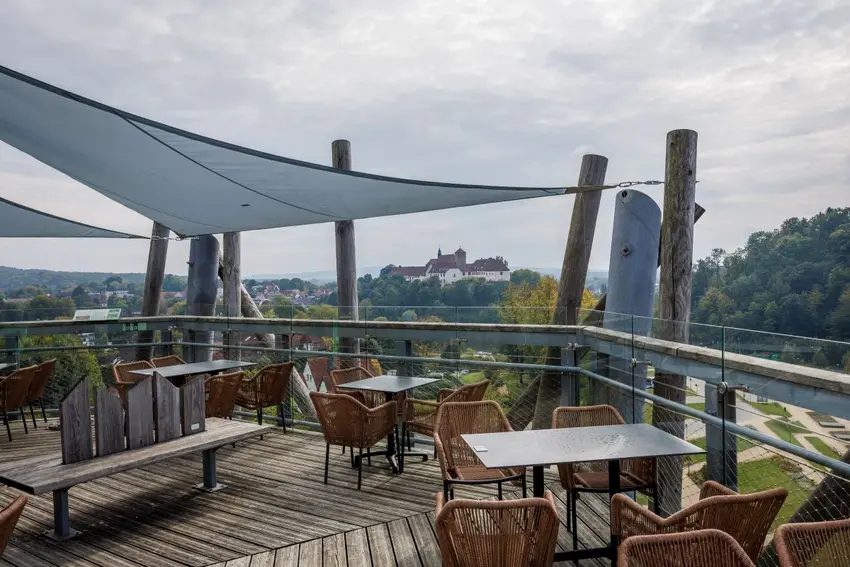
One example cited was a treetop walkway in Bad Iburg, Lower Saxony, which was built for the 2018 State Garden Show.
“The operation, which was loss-making from the outset,” incurred even higher losses after the State Garden Show: “The bottom line is costs of at least €6.3 million, which are still weighing on the city's budget today.”
Comments