
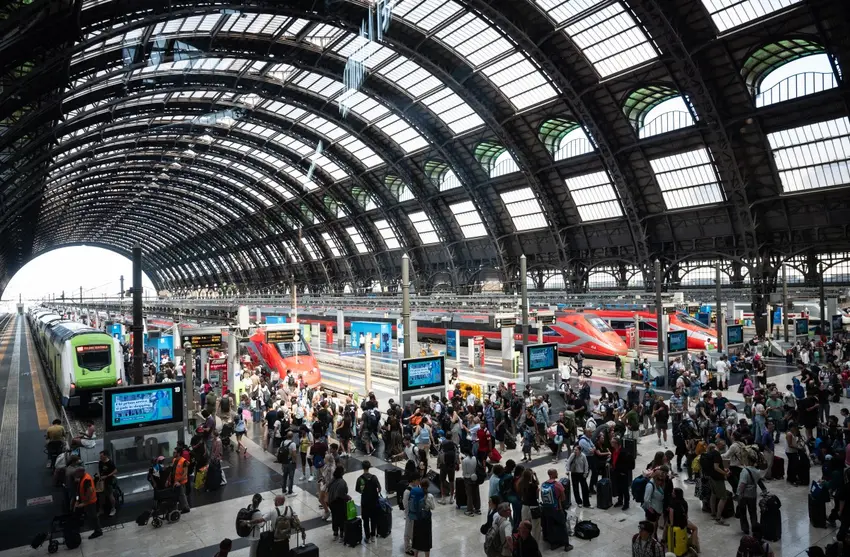
From the Baltic Sea to the Mediterranean, travellers in Europe can explore nearly every region on the continent by train.
But travellers coming from Germany, who may be be used to skipping seat reservations to save a bit or showing up for their train just a minute before departure, may be surprised about how things work on the railways in neighbouring countries.
Here's a quick guide to some of the ways nearby rail networks differ.
France
Rail passengers in France are advised to be early.
Access to TGV, Intercité and TER trains is only guaranteed up to two minutes before departure, according to the French railway SNCF.
Which is to say that to be exactly on time is to be just a minute too late here.
Note also that in large stations there are platform barriers with automatic ticket controls, which can add just a bit of time to your walk through the station.
Travelers should also book tickets early - on busy travel days express trains can be completely booked. French railway operator SNCF recommends reserving tickets immediately after the start of sales, which can be up to nine months in advance.
You will be assigned a seat directly when booking.
On the French railways, luggage must always be provided with a name tag of the owner. SNCF recommends filling in your name, postal address and email or phone number. Abandoned suitcases without a label are considered a threat.
During the journey, French trains are generally quieter than German ones: Children are generally kept a bit quieter by their guardians, and passengers are asked to make phone calls in the corridor between cars.
READ ALSO: ID, pets and smoking - 7 things French train ticket inspectors can fine you for
Spain
Spain has the second largest network of high-speed trains in the world. Only China has more super-fast trains. The 500-kilometre journey from Barcelona to Madrid takes only two hours and 44 minutes.
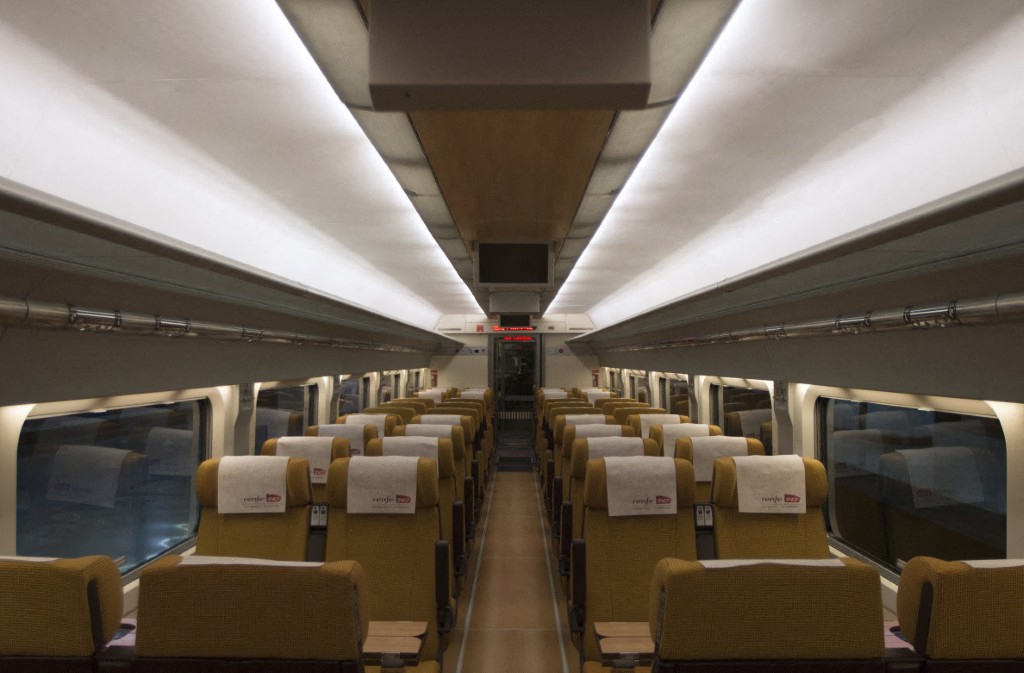
There are four major providers: the state-owned Spanish railway company Renfe, its low-cost offshoot Avlo, the French company Ouigo and the Italian Iryo.
The trains in Spain are much more punctual than in Germany, very clean, comfortable and also comparatively quiet. Talking on the phone is allowed, but discreetly, as is eating sandwiches and snacks you have brought with you.
But if you value absolute peace and quiet, it is better to book a place in a "Coche de Silencio y la Lectura" (rest and reading car).
READ ALSO: Spain's new public transport rates and discounts in 2025
Most trains have a cafeteria that offers small dishes. In some of them, you can book a meal online together with the ticket.
Tickets can be purchased at counters or on the Internet and the obligatory seat reservation can also be made. Basically, the same applies as in France: book as early as possible.
Italy
Travellers coming from Germany will be pleased in Italy: the tickets are often surprisingly cheap and the trains are relatively punctual.
The offer ranges from regional trains to express trains from Trenitalia ("le Frecce" - the arrows) or Italo. For example, a trip from Florence to Siena costs a good ten euros and takes an hour and a half. Prices fluctuate depending on occupancy and time of day, so it's worth booking in advance.
READ ALSO: Where Italy's 'tourist trains' can take you this autumn
Tickets can be purchased online via website, app or vending machines. If you want to remain flexible, choose tickets with a rebooking option. In general, the tickets are available in several comfort levels: from standard to executive, often with a seat and extras such as free refunds.
Talking on the phone is allowed, and Italians like to talk loudly - you can expect the trains to be a bit more lively than in Germany. If you prefer peace and quiet, book a place in the "Area Silenzio".
Eating at your seat is normal, and a glass of wine is also possible in many cases.
Bicycles are allowed on regional trains, often for an extra charge. On long-distance trains this is only possible with a reservation.
Scandinavia
For long-distance travel in Scandinavia, it is customary for the seat reservation to be included in the booking. In Sweden, for example, this makes taking the train more relaxed because you aren't checked-on while sitting in your reserved seat.
The disadvantage is that after trains can sell out faster with no option for standing room.
If you are travelling through Sweden with your children, you should look out for family offers from the rail provider SJ, which allow for rich savings if you book early. And for those who like to travel overnight and want to get north cheaper, the company Snälltåget connects to Hamburg or Berlin, among other places.
READ ALSO: What you need to know about summer travel in Sweden in 2025
On Danish trains of the DSB, you'll want to bring your own snacks and other provisions. There are at most snacks on board at the vending machine or from a service employee. On Swedish trains, on the other hand, there is usually an inviting on-board bistro.
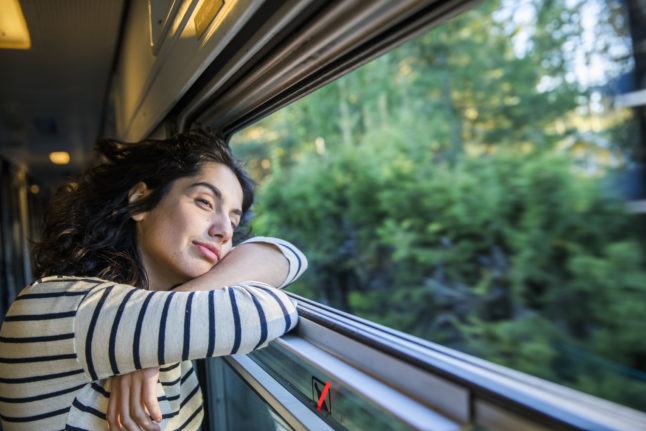
In general, Scandinavians are more relaxed than Germans when travelling by train.
Good to know: There have been repeated delays on the railway line between Hamburg and Copenhagen for some time. This is partly due to the border controls between the countries - especially in the direction of Denmark, it may be that you have to wait longer at the border town of Padborg.
Poland
With the Polish Railways PKP, you can book tickets at the earliest 30 days before the start of the trip. The best way to do this is online - and if you book early, you get the best prices.
During the train ride, it should be noted that Poles appreciate discretion and politeness and do not like loud conversations or calls. As a rule, however, phone calls are allowed, but taking them in the corridor is the best practice.
You can eat anything at your seat, and there is also the option of having food brought to your seat from the dining car via app. There are dining cars on many trains. A visit there is worthwhile because the food is good and affordable by German standards.
READ ALSO: The destinations you can reach by direct night train from Munich
There are no luggage limits in Poland. However, bicycle spaces are rare and often fully booked.
For example, if you want to travel from Warsaw to Gdansk to ride the Baltic Sea Cycle Path, you have to fight for four bike spaces per express train. Bicycle tourists therefore try and snag their tickets as soon as tickets go on sale.
With reporting by DPA.
Comments