
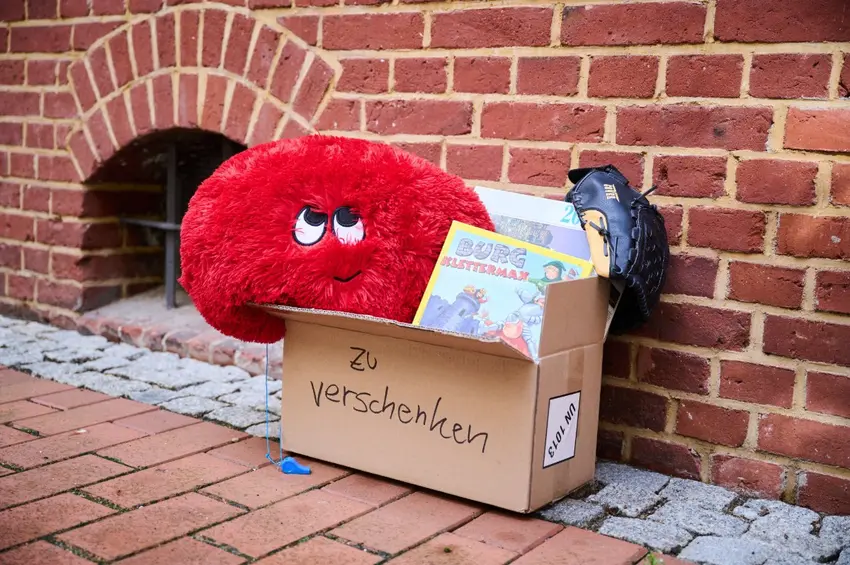
If you’ve ever taken a stroll through a German city, chances are you’ve noticed them. Maybe you’ve even paused to rummage through one and walked away with a new plate or a pair of shoes.
These are giveaway boxes – places where people leave things they no longer need, hoping someone else will give them a new home.
Clothes that no longer fit, books that have been read, old kitchenware – instead of throwing them away, many Germans simply put them out on the street with a handwritten sign: “zu verschenken,” which translates to “free to take” or “to give away.”
This practice, which is extremely common in Germany, feels like a neighbourly gesture. But there's a catch: technically, it is illegal. And in some places, you could even face a fine for giving away your items like this.
Wait... what?
I know, it's surprising right? The boxes seem so harmless.
However, in Germany, like other places, there is a problem with fly-tipping (or illegal dumping), when people leave rubbish on the street instead of disposing of items properly in a recycling centre, or arranging a pick-up.
Sometimes, smaller items in boxes or bags also get strewn across streets or left there for weeks, further adding to this mess.
That's why some local authorities are clamping down on people discarding items.
According to legal experts at insurance firm Ergo, giveaway boxes can be "considered illegal dumping" and can result in a fine even when people mean well.
"If the box remains on the street for several days without anyone taking anything, it is considered illegal dumping," they explain. "Even a note saying ‘free to a good home’ does not change this. The public order office can punish this action with a fine."
In many places, officials turn a blind eye to giveaway boxes unless they are causing problems.
For example, a spokesperson from the City of Stuttgart told the Stuttgarter Zeitung that putting a small box on the street is tolerated.
"The city tolerates small boxes of items being put on the pavement as long as it doesn't block the pedestrian's movement," the spokesperson said.
However, people are urged to check that the items have been taken away, and if not dispose of them themselves.
Berlin gets tougher on 'free' boxes
The city of Berlin is in the process of pushing through a new catalogue of fines for the illegal disposal of waste.
They include a plan to impose fines on people caught putting out 'zu verschenken' boxes. People could have to pay between €300 and €1,500 if they ignore a warning, according to the Berlin government, run by the centre-right CDU and centre-left SPD.
Other types of littering are also being targeted.
For instance, in future, anyone caught carelessly throwing cigarette butts on the ground could face a fine of between €55 and €2,500.
You could have to pay €100 for leaving a mattress at the side of the road, and €250-€500 for throwing disposable cups, drink cartons, packaging material, chewing gum and plastic bags on the street.
Meanwhile, those caught not cleaning up after their dog might have to pay €350 in future.
The amounts will be much higher for bigger and more dangerous items. For example, you might have to pay €1,000 to €15,000 for throwing electrical appliances that contain harmful substances, like fridges or mobile phones, on the street.
“With the new higher fines, we are making it clear: anyone who litters Berlin will feel that it is really expensive," said CDU faction leader Dirk Stettner.
And Stettner spelled out: "A ‘zu verschenken’ sign won't help either. Because only with noticeable penalties can we achieve more cleanliness for everyone."
Keep in mind that these fines still need to be finalised. It's not clear when they will come into force.
How to dispose of things properly
Berliners have been urged to dispose of their old items responsibly – even the smaller items.
"Items in good condition can be handed in directly at the second-hand department store, like the NochMall at Auguste-Viktoria-Allee 99," the Berlin Senate said in a statement.
"In addition, items can be handed in at the BSR recycling centres on Hegauer Weg, Gradestraße, Lengeder Straße, and Ostpreußendamm."
Elsewhere in Germany, look out for second-hand stores and charities that need quality items.
For bulkier things, you can visit a recycling point or arrange a pick-up.
Some garbage collection services also run special neighbourhood disposal days where locals can hand their bulky items over to collectors directly. These are usually well advertised in advance.
READ ALSO: How to discard unwanted furniture in Germany
Comments