
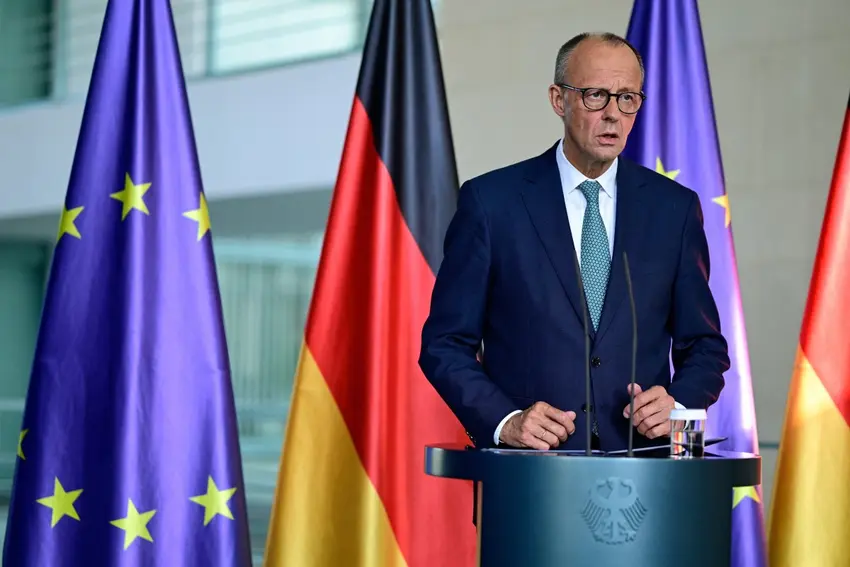
Monday's top story: Merz defends stopping weapons deliveries to Israel
German Chancellor Friedrich Merz on Sunday defended halting some weapons deliveries to Israel amid mounting criticism of the move from some within his own ranks.
"The Federal Republic of Germany has stood by Israel's side for 80 years," Merz told broadcaster ARD. "Nothing about that will change."
"We will keep on helping this country to defend itself," he added.
Merz said Friday that Germany would halt the export of military equipment that could be used in the Gaza Strip in response to Israeli plans to take control of Gaza City.
Merz's partial arms embargo sparked public criticism from members of Merz's conservative CDU party, including its youth organisation which said the move broke with the core principles of Germany and the party.
The chancellor said he had reassured Israel's president earlier on Sunday that Germany was not breaking with its traditional friendship with Israel.

"We have one point of disagreement and that concerns Israel's military action in the Gaza Strip," he said. "That is something which a friendship can withstand."
Merz also said on Sunday that he assumed Ukraine's President Volodymyr Zelensky would attend a summit between US President Donald Trump and his Russian counterpart Vladimir Putin next Friday.
"We hope and assume that the government of Ukraine, that President Zelensky will be involved in this meeting," the chancellor said in an interview with broadcaster ARD.
READ ALSO: European leaders urge more 'pressure' on Russia ahead of Trump-Putin summit
Merz told ARD that Berlin was working closely with Washington to try to ensure Zelensky's attendance at the talks.
Fewer tax audits and back payments in Germany
Germany's states are employing fewer tax auditors and are therefore recouping less money in back payments.
The number of tax audits carried out in companies in Germany has plummeted by almost 60 percent over the past ten years, recently falling to just 140,000, according to a survey of the country's 16 states published by the Süddeutsche Zeitung on Saturday.
In total, the tax authorities employed 12,359 auditors last year – almost ten percent fewer than in 2015.
The total amount of back taxes collected during the audits was also falling, to less than €11 billion in 2024, from over €16 billion in the 2000s and 2010s.
The states attributed the development to a shortage of skilled workers, among other things.
READ ALSO: How to find an English speaking tax advisor in Germany
More than one in ten deportees from Germany is a minor
More than eleven percent of the people deported from Germany last year were children and adolescents, according to a a statement by the federal government in response to a question brought by the Left Party.
Over 20,000 people were deported from Germany last year, 2,316 of whom were between six and 18 years old, reported the Redaktionsnetzwerk Deutschland (RND).
This corresponds to a rate of 11.5 percent.
The rate has been stable at over 11 percent since 2022.
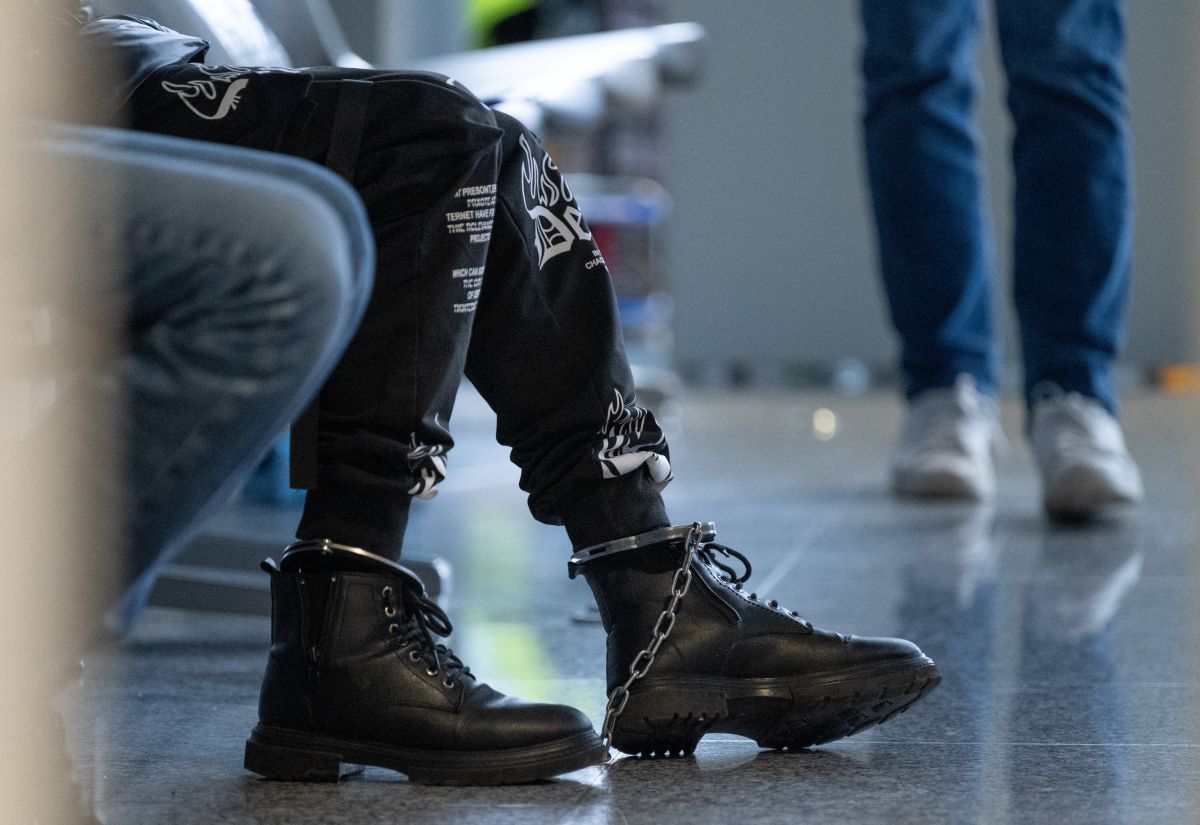
In the first half of 2025, there were 1,345 children and adolescents for every 11,807 deportees - or 11.4 percent.
The total number of deportations from Germany had risen significantly in the years of the traffic light coalition - from 12,945 in 2022 to 16,430 in 2023 to 20,084 in 2024.
Bundestag President wants to bring German Parliament to TikTok
Bundestag President Julia Klöckner shows comfort with social media like none of her predecessors. She wants to present the parliament on Tiktok in the future - despite concerns about the platform.
"We want to go on Tiktok as the German Bundestag. If this medium exists, it would be quite nonsensical not to provide information about our work and present parliament," said Klöckner to DPA.
She added that TikTok is not without its issues but that "it's not forbidden" for the German Parliament to join on. "And on this platform...there are people who don't get information anywhere else."
The Bundestag is already present on the platforms Instagram, Youtube, Whatsapp, X (formerly Twitter), Mastodon, Bluesky and Linkedin.
The platform is interesting to politicians because it offers access to a huge audience. According to the The Federal Commission for Data Protection and Freedom of Information (BfDI), it was actively used by around 21 million people per month in Germany alone last year. Worldwide, there were more than 1.5 billion users per month.
The AfD, which is present on Tiktok like no other party, was the first to recognize this. But the German government is now also using the platform.
READ ALSO: A fight for the youth vote - Are German politicians social media savvy enough?
With reporting by AFP, DPA and Paul Krantz.
Comments