
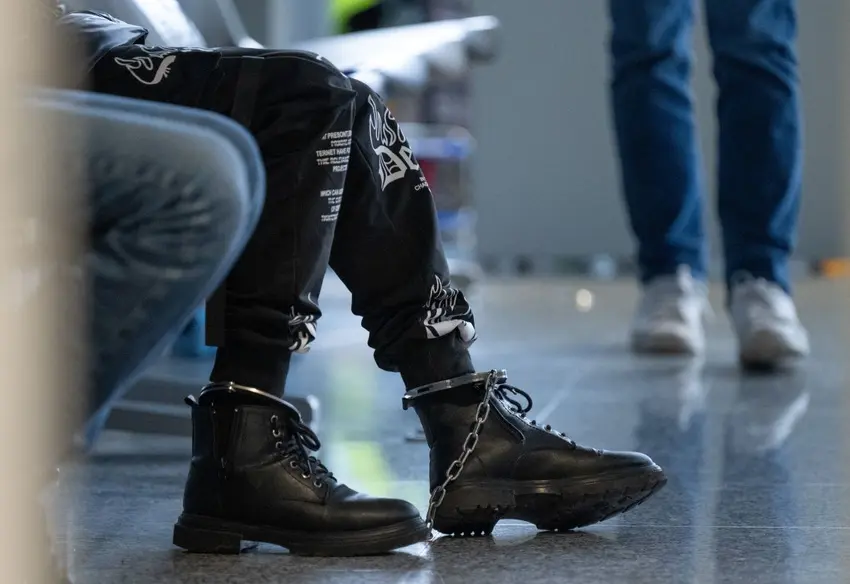
One of the major election campaign promises made by Chancellor Friedrich Merz's conservative Christian Union (CDU/CSU) parties was a "migration turnaround" in Germany.
We asked our readers if the recent developments are a source of concern to them, and whether they have worries about their future rights as foreigners in the country.
Respondents from across Germany revealed a range of reactions – from deep concern to a degree of sympathy for the current government's predicament.
Concerns around political rhetoric and the social climate it enables
Many respondents drew a sharp distinction between the actions of the government and the harsh tone heard when politicians talk about foreigners in Germany. While the government's hardening stance on migration garnered a wide variety of responses, the tone with which leaders address immigration issues elicited a much more consistent negative response.
“I’m not worried about [the government’s hardening stance towards immigration] per se, but rather about the narrative,” wrote Ahmed Maher, who lives in Berlin. “Ugly statements like ‘we imported antisemitism…’ are a sign of scarier things to come!”
Saleem S. agrees: “What concerns me more is the rhetoric in the streets against all immigrants, good and bad. If people in the street continue rejecting all immigrants, the government will eventually follow – most probably by empowering far right parties and policies.”
READ ALSO: Why a quarter of Germany's immigrants are thinking of leaving
Some respondents expressed concerns about being scapegoated or treated as “less German” as a result of the rhetoric.
“I’m worried that Germans view highly skill migrants as ‘people we bring in to pay high taxes’ and want to kick out the poor/artists/etc. who don’t boast such flashy and high paid skills but nonetheless have a positive impact on society,” said Elliott Rarden in Berlin.
Elliot, who is a dual national, added: “I worry that Germany views me as 'less German' and will strip my citizenship away.”
READ ALSO: Germany's government could make it easier to strip citizenship from dual nationals
For some, the prospect of a tougher stance on immigration is tied to fears of increased discrimination.
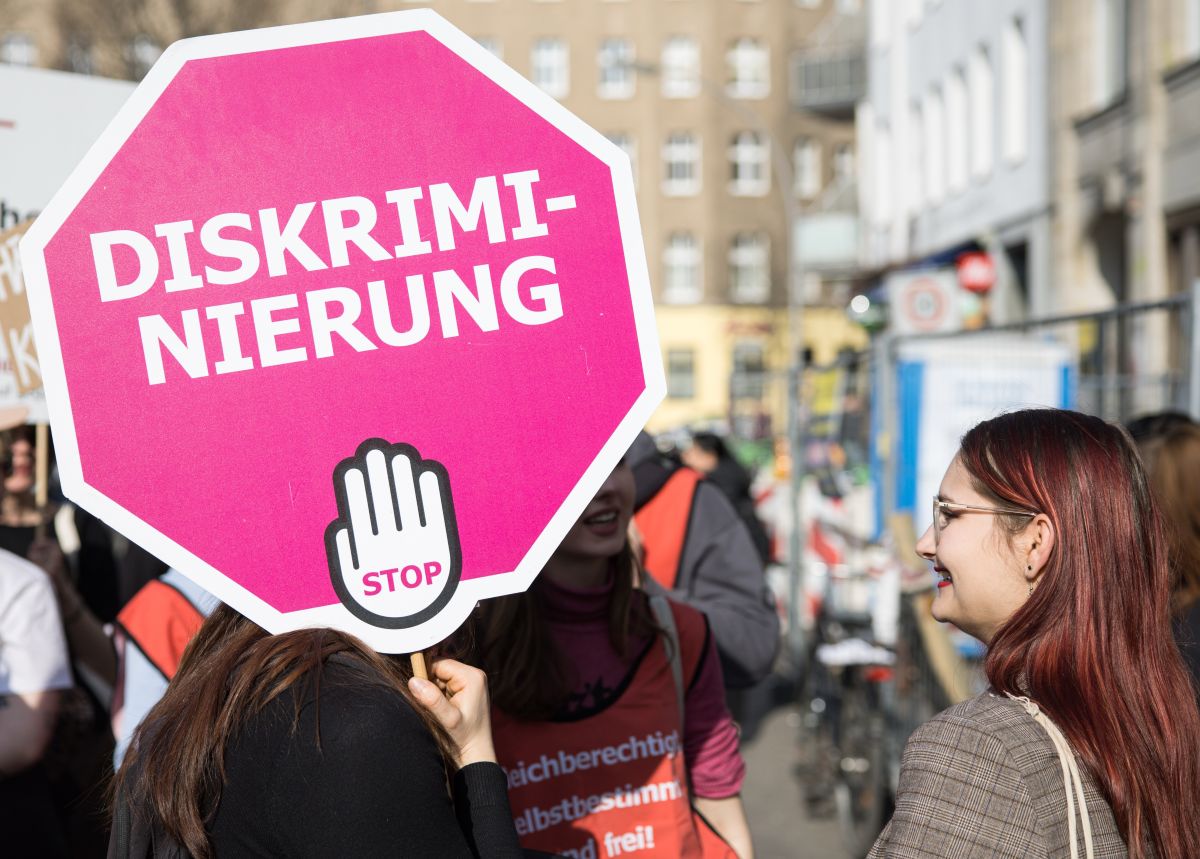
Youva Aoun, who lives in Darmstadt, wrote, “Even if as a French citizen I’m not directly affected, I have an immigration background from northern Africa. I fear that I will end up being targeted by controls and institutional racism even more than is already the case.”
Support for the 'migration turnaround'
While respondents were broadly unanimous in their condemnation of the rhetoric which has sprung up around the question of immigration in Germany, opinions were more evenly split on the government's efforts to reduce migration to the country.
Many respondents welcomed the government’s tougher approach, seeing it either as a political necessity, or as an important measure for stability and fairness in Germany.
“The government has to answer constituents’ concerns,” said a respondent from Mainz, adding that he suspected the actual policies would be less dramatic than the rhetoric.
“These are the right moves by the government,” said Manoj, from Frankfurt am Main. “Germany should not be treated as a place to use free social security...”
Javier Torres agreed: “As a brown Latino immigrant who has followed the immigration process and adapted to German culture, I welcome the new policies. German citizenship shouldn’t be cheapened!”
Others echoed this sentiment.
“Those of us who have played by the rules and integrated have nothing to worry about,” said Eric in Oberfranken.
Space for a nuanced debate?
Even when there was support for the new government’s policies, however, it was tempered by concerns that their presentation left little room for a nuanced view of the pros and cons of immigration.
Shankar Kumar in Berlin sees the current moves as “acceptable and healthy for everyone,” but warns they must be properly thought through. “If they’re just based on targeting a group,” he points out, “they will be chaotic and meaningless.”
Some respondents went further, expressing anger that the important contribution made by immigrants is being overlooked and undervalued.
“I am worried I will be treated a second-class citizen even with a German passport. I don’t hear anything from politicians about how they are going to retain me as someone who pays a lot of taxes," wrote Vitya in Berlin.
READ ALSO: How German ministers want to boost skilled migration and integration
“Foreigners will work when and where most citizens will not,” agreed William Trimmer, based in Großburgwedel, adding that “work is the key to integration.”
Government hypocrisy, or stupidity?
A number of respondents felt that immigrants in the country were being unfairly scapegoated, partly to cover up the failures of integration policies in the country.
“It’s not a great idea to be harsher on immigration when the state has utterly failed integration processes,” wrote Vitya. “As a highly skilled worker, I couldn’t even understand how to apply for the integration courses.
"It is ridiculous for politicians to gaslight the population like this without looking at their own processes first.”
Youva Aoun agrees, calling policies that target immigrants "populism" and "stupid".
He added that "'illegal' migrants are actually the backbone of German society," noting that they fill important roles as nurses, construction workers, cashiers, and farm labourers.
The fear of worse to come
Some respondents, including Myles in Berlin, are worried that they could be directly affected by current government plans.
“I am concerned about some of the hostility toward the 5-year citizenship path," he wrote. "That's a big reason I came to Germany, and I would feel like it was an outrageous bait and switch if they revoke it.”
READ ALSO: 'Slap in the face' - Applicants blast Germany's plan to scrap citizenship reform
Others, including people who disagree completely on whether or not the government is acting wisely, share fears there may be worse to come for foreigners in Germany.
In response to the question, “Are you worried about your future rights in Germany as a foreigner?” Maksym in Berlin said he was more worried about German people voting for the far-right Alternative for Germany (AfD).
“As a German citizen with a migration background, I’m worried about being classified as a second-class citizen if the 2029 elections go south!” wrote Ahmed.
“I feel like what’s being done right now is not being communicated well...everything seems populist," wrote Andrija in Berlin, summing up the overarching mood of the survey respondents.
"That might make us less safe indirectly – via the behaviour of ordinary citizens,” she added.
Thank you to everyone who completed our survey. Although we weren't able to use all the responses, we read them all and they helped inform our article. Please feel free to leave a comment below if you would like to add another opinion to the conversation.
Comments