
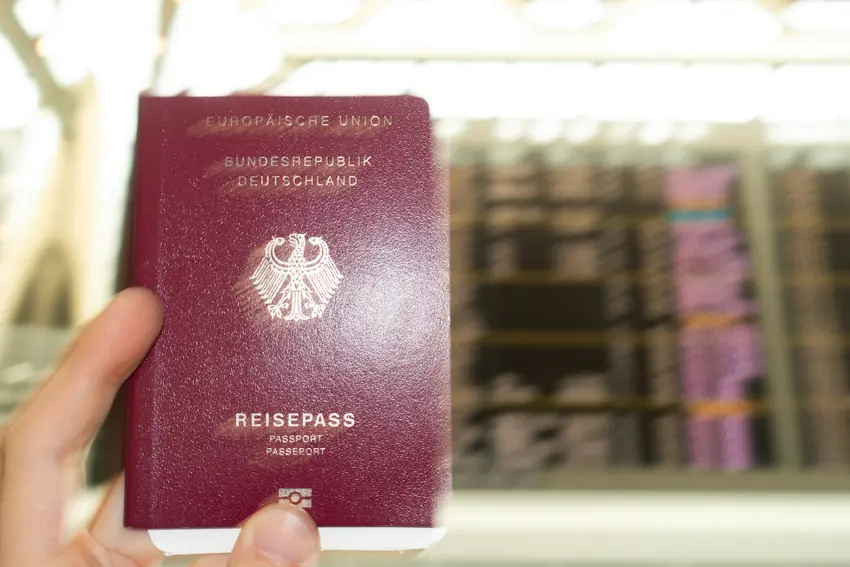
Germany recorded its highest number of naturalisations ever in 2024, with at least 249,901 people granted citizenship, up nearly 50,000 on the year before, according to data from 13 states reported by Welt am Sonntag.
Lower Saxony, Saxony-Anhalt and Schleswig-Holstein did not report data.
The surge follows major reforms to Germany’s citizenship law introduced by the previous SPD-led government, which made naturalisation possible after just five years – and in exceptional cases as little as three.
The previous government also legalised dual citizenship for non-EU citizens.
In many states, Syrians made up the largest proportion of new citizens, followed by Turkish nationals.
In North Rhine-Westphalia alone, more than 24,000 Syrians were naturalised, while the figure was over 9,000 in Bavaria.
The number of Turkish citizens obtaining German nationality also spiked, increasing by over 80 percent in one state. Other groups with notable increases included Russian nationals.
Despite the controversy over fast-track naturalisations, only a handful of people have been granted citizenship this way, the data reveals.
READ ALSO: Who will be most affected by move to end fast-track German citizenship?
In Berlin, 382 people were made citizens under the fast-track programme, while in Rhineland-Palatinate the figure was 20, Baden-Württemberg 16, and Bremen zero.
Take-up may be exceptionally low because requirements to be naturalised this way remain very high, including C1 German and evidence of exceptional professional and personal achievements, which many people struggle to achieve in just three years.
Many states reported that new citizens had lived in Germany far longer than legally required. Baden-Württemberg reported that the average person naturalised in the state had lived in Germany for 14 years.
Still, the CDU-SPD coalition plans to scrap turbo naturalisations. Interior Minister Alexander Dobrindt said the move would eliminate a migration “pull factor”.
TELL US: Are you affected by Germany's plan to scrap fast-track citizenship?
However, the broader reforms – including the five-year timeline and dual citizenship – will stay.
But the Association of German Cities warned that immigration laws are changing too frequently, overburdening local authorities and causing long processing delays.
 Ben McPartland, Editor, The Local Europe

Comments (3)