
Inside Germany is our weekly look at some of the news, talking points and gossip in Germany that you might've missed. It’s published each Saturday and members can receive it directly to their inbox by going to their newsletter preferences or adding their email to the sign-up box in this article.
End of the three year fast-track path to citizenship
Germany's new black-red government had promised to bring changes to the country's immigration policies, and they have wasted very little time in getting to the point. Just over three weeks have passed since the conservative Christian Union (CDU/CSU) and centre-left Social Democrat parties have stepped into their new leading roles in the federal government and already the cabinet has passed two bills set to tighten the country's immigration policies.
The bills, which still need to be passed by the Bundestag before becoming law, were put forward by Interior Minister Alexander Dobrindt (CSU), who had previously pledged to bring forth a "turnaround" in migration.
One of the bills would suspend family reunification for migrants with subsidiary protection status (essentially refugees that were not granted asylum but are lawfully allowed to remain in Germany).
The other would end the three-year fast-track to German citizenship that was introduced last year as part of the sweeping reform of Germany's naturalisation rules.
The good news is that, despite pledges we'd previously heard from conservative leaders, Germany's new federal government wont focus its efforts on scrapping the rest of the naturalisation reforms that were enacted nearly one year ago (on June 27th). So German dual-citizenship will remain an option for non-EU nationals, and the residency requirement will remain at five years as opposed to the previous eight.
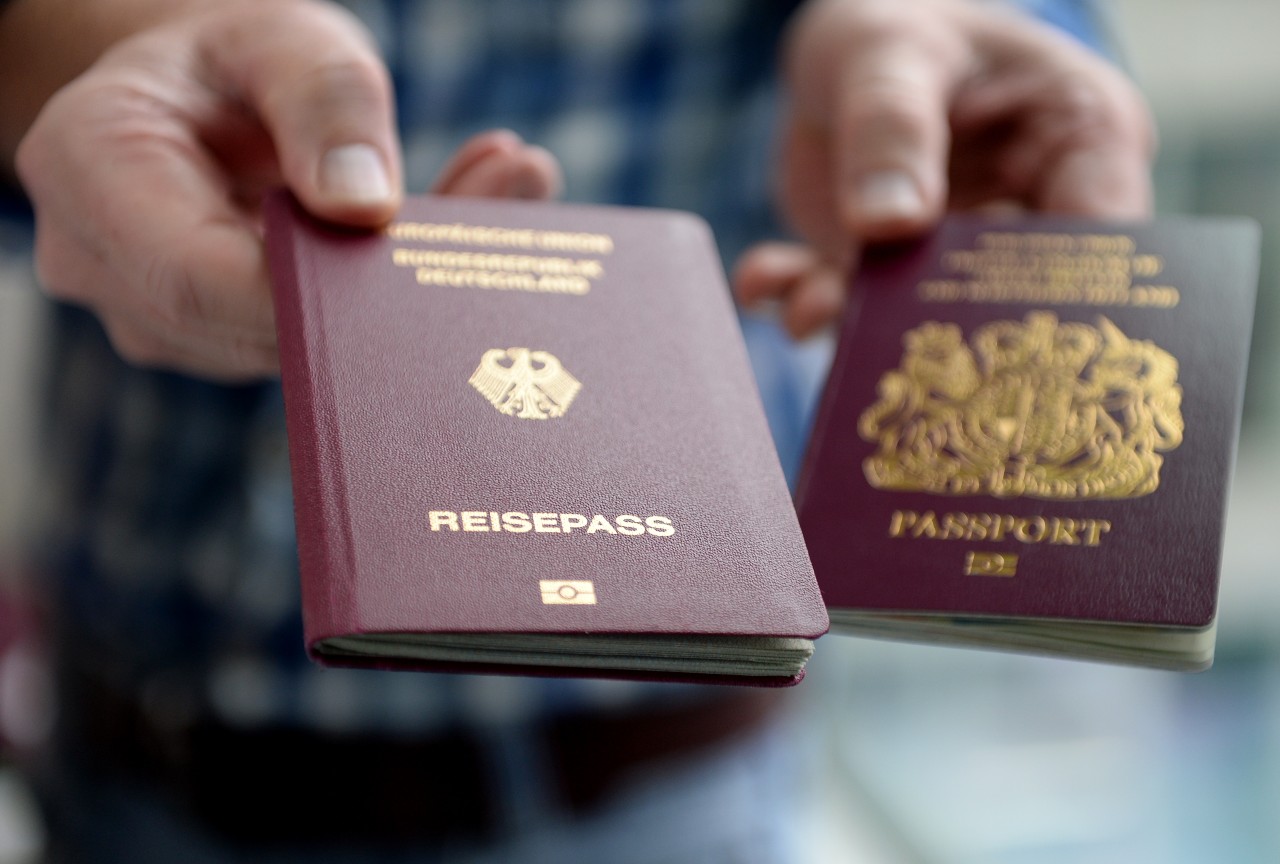
The bad news is that any foreign residents who might have qualified as "highly integrated", and who had been looking forward to naturalising after just three years in the country will now have to wait at least two more, like the rest of us.
As of yet it's unclear how the rule change would affect anyone who is waiting for decision on their pending fast-track citizenship application. But as we wrote on Monday, one migration lawyer in Germany has suggested that applicants in this position might considering bringing forward an Untätigkeitsklage (a legal challenge against the failure to act), as that could force the relevant officials to make a decision on your application before the rule change is established as law.
For now, it's unclear exactly how many people have applied for citizenship via the fast-track. Germany's Statistical Office keeps count of how many people naturalise each year, but when The Local reached out for clarification they said they don't differentiate between "highly integrated" or standard naturalisations.
Have you applied for citizenship through either track, or plan to do so soon? We'd love to hear about your experience in our latest survey. Any comments your willing to share may help us as we prepare future articles on the topic.
Where is this?
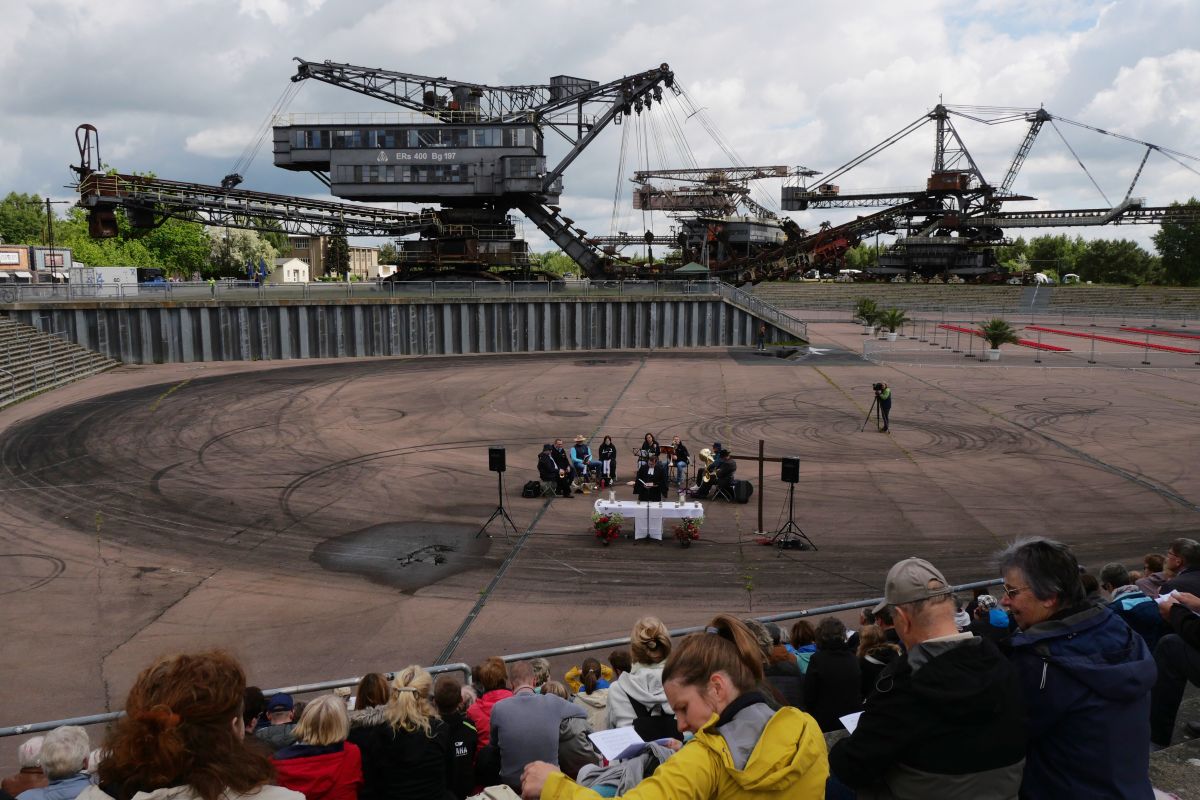
Opencast mining is a big operation, and it's left its mark on various German landscapes, wherever lignite coal or others rocks and minerals have been extracted.
This old mining town saw the closure of it's large mine in 1991, but the large excavator machines you can see in the background of the shot above were left on site, and they have been effectively repurposed as monuments that can be observed, and even climbed on, in a large outdoor museum.
But the space does not only serve as a museum, depicted above, members of a Christian parish from the nearby village of Gräfenhainichen have gathered for a special church service on Ascension Day (or Christi Himmelfahrt), which was observed on Thursday this week.
The photo was taken at Ferropolis, which is set in the retired open-cast mine Golpa Nord at Gremminer See. The site is about two hours southwest of Berlin by car, or about one hour north of Leipzig.
Coming changes
With the sky staying light well into the evening -- and then brightening again far too early in the morning -- it's clear that Summer is just around around the corner. This weekend brings the end of May and the start of June, and also a number of interesting changes for those of us living Germany.
The first notable change starts from the coming Sunday (June 1st) when maternity leave, or Mutterschutz, is to also apply to women who lose a pregnancy due to miscarriage (from the 13th week).
Another notable change comes just a few days later on June 6th when rules around changing electricity providers will change. Our newest contributor, Tom Pugh unpacked what that change means for consumers this week.
READ ALSO: Seven unmissable events happening around Germany in June 2025
The other June update to be aware of is that Whit Monday, on the 9th, will bring yet another three-day weekend to most regular workers. You'll want to make any travel plans now if you're going too.
Comments