
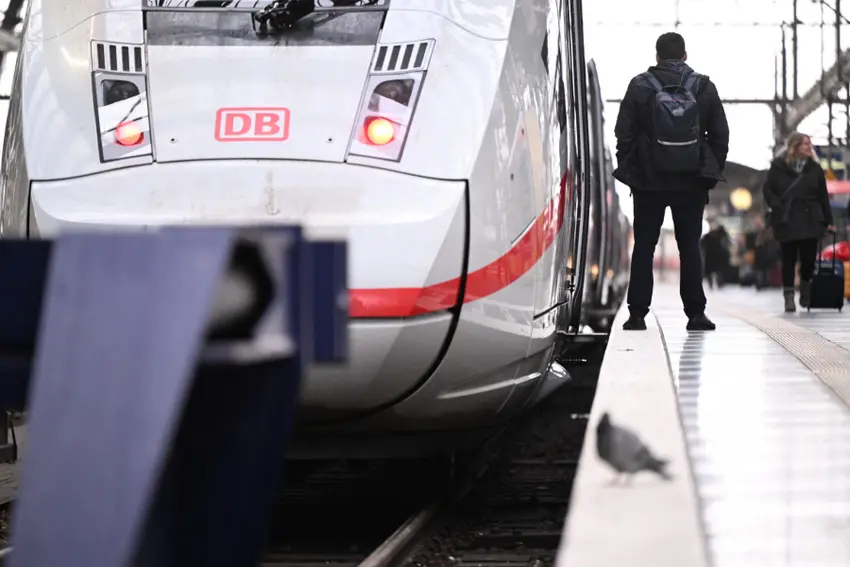
This major artery, linking the capital with cities including Frankfurt, Cologne, and Amsterdam, is one of the most important in the country. But its infrastructure is badly outdated.
Deutsche Bahn (DB) says works to modernise the line will begin later this year, and last until 2027. Passengers should expect disrupted train services, longer journey times, and widespread detours.
The 227-kilometre stretch of high-speed track west of Berlin, used by ICE and Intercity trains, will undergo a “general renovation” from February 2027 until July of that year.
This project – the largest of its kind, according to DB – will involve the complete replacement of tracks, switches, and station upgrades. However, the pain for passengers will start well before that.
From 2025 onwards, several phases of construction and full route closures will be undertaken, beginning with the electrification of alternative routes and building capacity for rerouted trains. This is to help accommodate the heavy load of diverted traffic during the upcoming works, but significant travel delays and diversions are already expected in 2026.
LISTED: The major rail disruption to prepare for in Germany this summer
Which cities are affected?
Passengers travelling between Berlin and Hanover, as well as cities further afield including Cologne, Düsseldorf and even Amsterdam, should expect potential delays, cancellations, or longer travel times.
The construction is set to come in phases. The most significant will be the closure of the Berlin–Hanover high-speed line between October–December 2026, works on the Lehrte–Fallersleben section between February–July 2027, and more closures in autumn 2027.
But it won’t only be long-distance travel: according to the Berliner Zeitung, the Stadtbahn commuter line, which runs through central Berlin, will also be shut down in 2026. This will impact local travel in the Berlin-Brandenburg region, especially if the closure overlaps with the disruption to the high-speed line.
Bus replacement services will be put on, but in some cases roads do not run parallel to the railways, meaning travellers should expect considerably longer journeys.
What does this mean for travellers?
- If you’re planning to travel between Berlin and western Germany between the end of this year and 2027, check timetables before travelling
- Expect delays and bus replacement services, which may make your journey considerably longer
- If you commute into Berlin, you may also be affected, especially when the Berlin Stadtbahn is closed
READ ALSO: 8 of the most beautiful German villages to visit this summer
Comments