

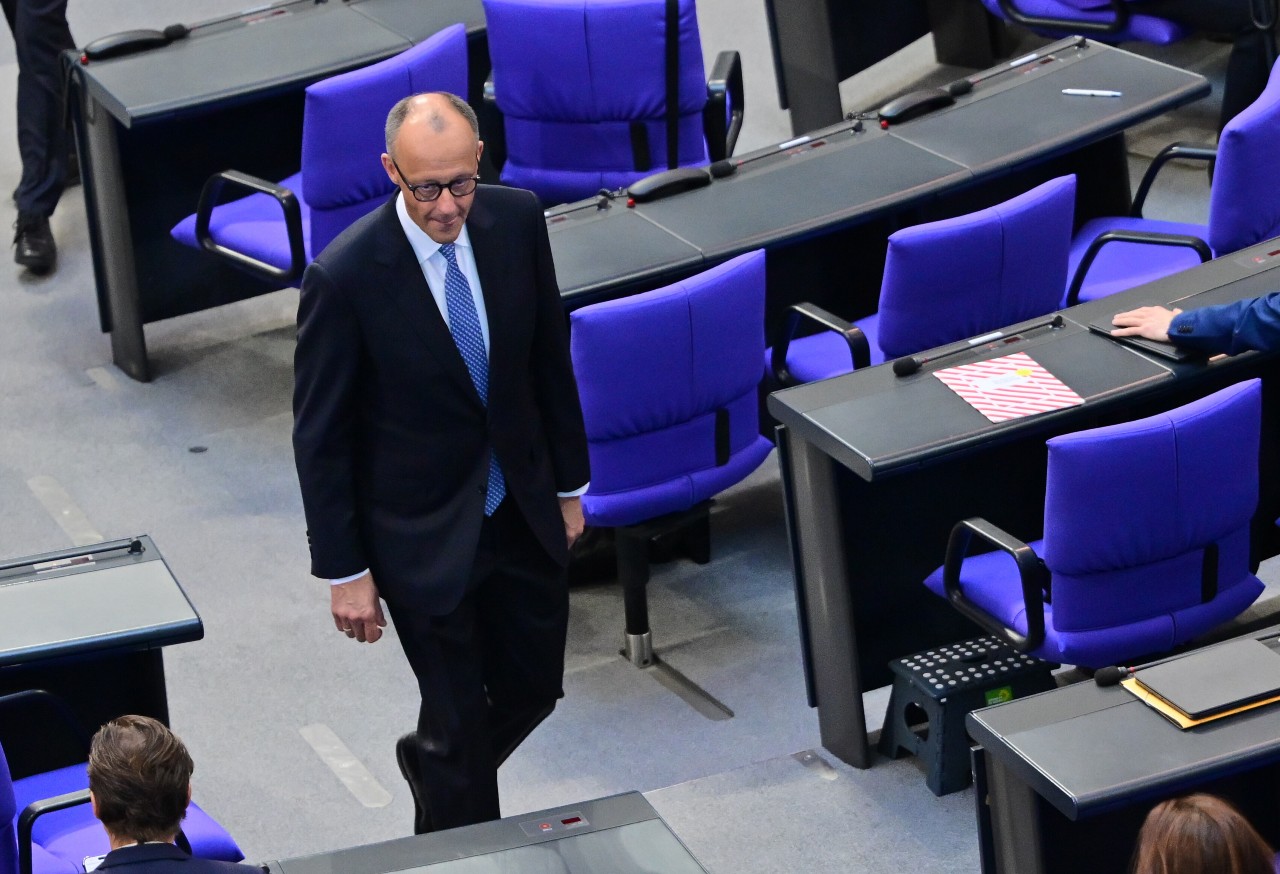
It was initially seen as a formality: having scored a convincing victory for his centre-right alliance in February's election and negotiated a coalition pact with the centre-left SPD, Friedrich Merz looked certain to breeze through a parliamentary vote to be elected Chancellor.
On Tuesday morning, however, a special sitting of the Bundestag went in an unexpected direction.
With the CDU/CSU and SPD holding a combined 328 seats between them, Merz had expected to win a majority of at least 316 of the 630 votes in the lower house of parliament.
But when the votes were counted in the secret ballot, it emerged that he had won the backing of only 310 MPs, with 307 voting against him.
A surprised murmur broke out across the floor of the chamber when the results were read out, and opponents of the new coalition were quick to celebrate.
Writing on X, the leader of the far-right AfD Alice Weidel, said the failed vote showed what a "weak foundation" the new coalition was built on.
READ ALSO: Merz fails to be elected German Chancellor in first parliamentary vote
The shock result of the election has plunged the incoming coalition's plans into chaos. Cabinet ministers had been expected to been sworn in alongside Merz on Tuesday, paving the way for the work of the new government to begin.
Instead, both groups are now pointing fingers at one another, with the Union parties blaming the SPD, and the SPD claiming the dissenting votes came from the Union.
What happens next?
According to Germany's Basic Law, Merz will be given the opportunity to stand for election again as many times as he likes over the next two weeks.
Article 63, which contains the rules for the election of the Chancellor, states: "If the nominee is not elected, the Bundestag may elect a Federal Chancellor with more than half of its members within 14 days of the ballot."
That means that in future votes, the CDU leader will still need to score an absolute majority in order to be elected Chancellor.
News agency AFP reported on Tuesday afternoon that a fresh vote on Merz's chancellorship would be held in the Bundestag at 3:15 pm.
"I hope that tonight we have a Chancellor Friedrich Merz," said CDU general secretary Carsten Linnemann.
In the meantime, leading politicians from all three coalition parties have been holding urgent meetings to take stock of the situation and consider their next steps.
A feverish game of 'whodunnit' is likely happening behind closed doors as the parties try to weed out the culprits who toppled Merz's election hopes on Tuesday.
READ ALSO: Germany's Merz to launch new government in times of turbulence
According to ARD legal expert Frank Bräutigam, however, the anonymous ballot will present a major challenge for Merz as he struggles to find his remaining six votes.
"The fact that the election was secret makes it so difficult to see what actually caused (the loss)," explained Bräutigam. This also makes the outcome of future votes much more difficult to predict.
If Merz fails to get the votes he needs over the next two weeks, the bar will be lowered to allow him to achieve a simple, rather than an absolute, majority. That means he simply has to achieve more votes than any other candidate for Chancellor.
Is there a back-up plan?
At the moment there is not another candidate for Chancellor that stands out at having a shot at besting Merz. However, if he fails several rounds of votes, the selection of an alternative candidate or completely new elections for Chancellor are possibilities.
A new set of elections is already being called for by the far-right AfD.
"Merz should step aside and the way should be cleared for a general election," co-leader Weidel told reporters, calling the result a "good day for Germany".
The party, which has recently been classified as a right-wing extremist group by the domestic intelligence agency, is currently neck-and-neck with the Union in polls.
READ ALSO: Germany's AfD labelled right-wing extremist group in blow to party

But it seems highly unlikely that a new election would be held after the CDU/CSU and SPD have already completed the process of forming a coalition.
Another possibility - although one that appears equally unlikely - is that an alternative candidate to Merz could run for Chancellor.
According to the Basic Law, any candidate can throw their hat in the ring over the next two-week period, and if none achieve an absolute majority, whoever scores a simple majority would win.
So far, however, the most likely outcome is that Merz will either claw back the six additional votes he needs, or win a simple majority in a vote at a later date.
In the meantime, Olaf Scholz and his cabinet will stay in office to hold down the fort as the country taps its fingers and waits for a new government.
With reporting by AFP and DPA
Comments