
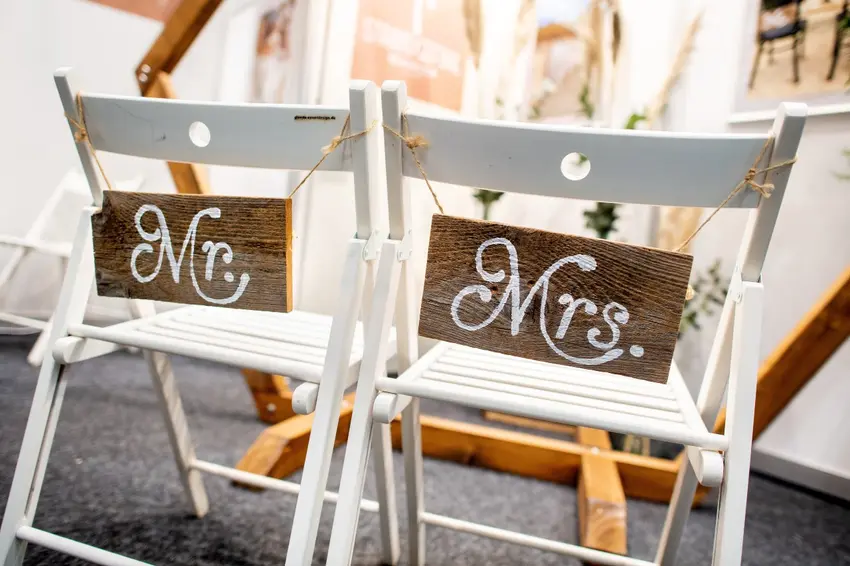
As of May 1st, couples tying the knot in Germany can make a straightforward decision to share a double-barrelled surname for the first time.
The liberalisation of Germany’s Name Change Act will come as good news to many internationals around the country, especially those contemplating marriage and parenthood.
Moving to a new country and culture presents enough challenges without the obligation to give up such a crucial marker of identity. This is especially true for those arriving in Germany from countries where double-barrelled surnames for married couples are a well-established fact of life.
What were the previous rules?
Traditionally, the rules around changing your name in Germany have been relatively restrictive (or “very restrictive”, according to representatives of the recent traffic-light coalition government).
Couples were permitted to continue using their own names, of course - but if they wanted to opt for a married name, or Ehename, it had to be the birth or current surname of just one of the spouses.
The spouse obliged to give up his or (far more commonly) her surname was allowed to use a double-barrelled surname made from the two names, but this wasn’t regarded as the official Ehename and couldn’t be passed on to children.
READ ALSO: Why Germany is changing its complicated rules around double surnames
So what's new?
For couples who want to choose a single married name when they marry, absolutely nothing has changed. But couples who want to create a new, double-barreled surname from their previous surnames can now do so, either with or without a hyphen.
In cases where the two spouses elect to keep their own names after marriage, but don’t specify which of these names should be regarded as the Ehename, any children they have will automatically be given the double-barrelled surname.
Changes have also been made in cases of divorce. Previously, when parents divorced, their children were obliged to continue using the designated Ehename, even when they lived with a parent who used a different surname.
Where a parent reverted to his or her birth name - or had never stopped using it - the law made it theoretically possible for a child to follow suit, but only in exceptional circumstances and when it was judged “necessary for the child’s welfare”. These conditions have now been considerably softened, so that children can more easily follow a change made by one of his or her parents.
READ ALSO: Everything that changes in Germany in May 2025
What happens if my partner and I change our minds?
A rule of thumb in Germany is to try and make the right decision on the first go. Any kind of change is generally complicated and expensive - and names are no exception.
Type “change my name” into a search engine in England and the first words you get include “Want to change your name? We make it easy!” (from the official UK Deed Poll Office). Try the same search in Germany and the words “difficult”, “limited”, and “exceptional circumstances” appear in every line.
According to Germany’s Name Change Act, any change of name requires “an important reason”. Marriage qualifies, as does a joint declaration of custody (and now divorce), but generally any change to a child’s surname should be declared within three months of either event. If the child is already over five, his or her consent will also be required.
READ ALSO: The steps you need to take to get married in Germany
How about first names?
The rules governing first names remain unchanged. In order to acquire a birth certificate, new parents have to visit a Standesamt, where officials check the proposed name (or names) against a list of approved names. If the proposed name is rejected, parents can appeal or submit an alternative. Each new submission incurs an additional fee.
In Germany, first names are required to be recognisable as such. X Æ A-Xii would not have been permitted here. Nor can names have any association with evil (which would have disappointed the parents of seven-year old Lucifer in Scotland) or be a product, surname, place name or brand (with apologies to anyone inspired by Brocklyn, North West, FIFA, or Maybelline).
Comments