
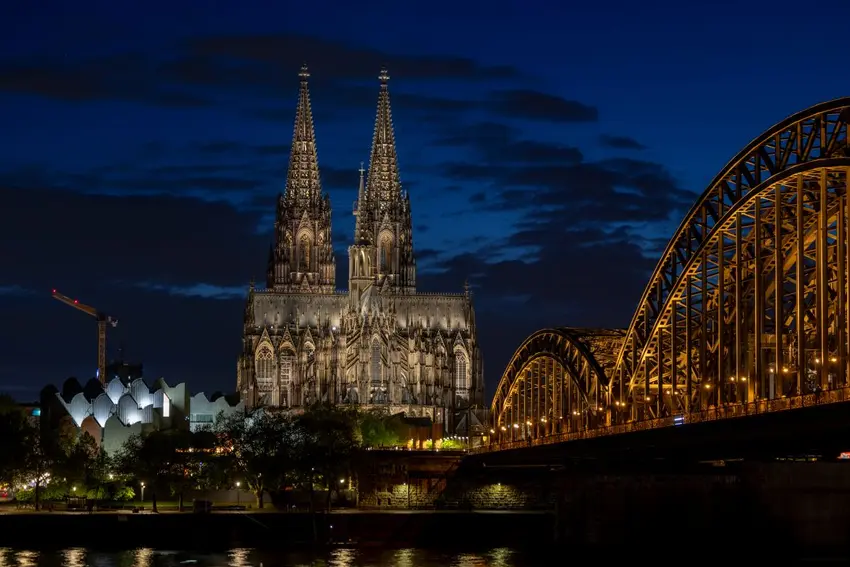
Among the organised religious communities that have an active presence in Germany, the Roman Catholic Church has been established in the country the longest.
With nearly 20 million practising Catholics, according to Statista, it’s also the largest denomination in the Bundesrepublik today.
Where do Germany’s Catholics live?
Overall, Catholics made up around 24 percent of the total German population as of 2023, but at the regional level the proportion varies immensely.
Very generally speaking, southern Germany is thought to be more Catholic whereas parts of the north are thought to be more Protestant.
Statista reports that in the southwestern state of Saarland, nearly half of the local population identifies as Catholic, whereas in the northern state of Saxony-Anhalt only around three-percent of state residents do.
A hint to which states have larger Catholic communities is also found in the public holidays that they celebrate. For example Baden-Württemberg, Bavaria, North Rhine-Westphalia, Rhineland Palatinate and Saarland mark the Catholic holiday of All Saints’ Day on November 1st each year, whereas most other German states mark Reformation Day on October 31st (more on that below).
READ ALSO: How employees in Germany can make the most of public holidays in 2025
Falling membership
Though the Catholic Church remains Germany’s most popular, it has been suffering from a loss of members, with around 400,000 practitioners leaving the Church annually in recent years.
In 1990, there were approximately 28.3 million Catholics in Germany, compared to 19.8 million today.
Germany's church tax (or Kirchensteuer) is among the chief reasons given by those who actively renounce their faith.
In Germany, members of the church are liable for this tax, which is collected by the state and given to the church. Depending on the state, Catholics in Germany pay an additional eight or nine percent in church tax on their income. In 2022, the Catholic Church reportedly took in €6.8 billion in taxes in Germany.
READ ALSO: Everything you need to know about paying taxes in Germany
A brief history of Catholicism in Germany
Christianity was introduced to parts of Germany around 300 AD by the Roman Empire, but it spread more widely from the fifth century when the Franks and other Germanic tribes began to convert.
Saint Boniface, who has become known as the “Apostle of Germany”, was an English Benedictine monk who is credited as having brought Christianity to many Germanic regions. He was killed in Frisia in 754, and his remains were brought to Fulda where a cathedral was erected on his burial site.
The greater German region is thought to have been fully Christianised around the time of Charlemagne’s reign in the eighth and ninth century.
From then, the Roman Catholic Church was the dominant religious (and in many ways also political) force in central Europe. Its authority was not significantly challenged until the German priest and author Martin Luther began publicly questioning aspects of the church – famously by nailing his Ninety-five Theses against corruption on the doors of churches in Wittenberg in Saxony-Anhalt.
Luther rejected the Catholic Church as the sole authority on Christianity, putting higher value in the scripture. His work was translated to German language, making it more accessible to common people and the invention of the printing press around his time allowed his teachings to be spread far and wide.
Ultimately Luther laid the foundation for what would become the Reformation, in which the Catholic Church was split and Protestant Churches were born.
READ ALSO: 12 things you didn't know about Martin Luther
The Reformation was followed by a Counter-Reformation – which brought Catholicism back to parts of Germany such as Bavaria – and religious conflict was at the centre of the Thirty Year’s War which played out primarily in German lands.
Following the war, regions that would become the modern German states of Brandenburg, Bremen, Hamburg, Mecklenburg-Pommerania, Lower Saxony, Saxony, Saxony-Anhalt, Schleswig-Holstein and Thuringia were largely protestant (mainly Lutheran).
Reformation Day, or Reformationstag, marks the day that Luther nailed his theses to the door of a church, is a public holiday in those states today.
Whereas Baden-Württemberg, Bavaria, North Rhine-Westphalia, Rhineland Palatinate and Saarland remained largely Catholic.
Increasingly from the 19th century, political bodies became more secular. In 1870s Prussia, for example, the governing Chancellor enacted laws against Catholics and the church which sparked resistance and a Kulturkampf (cultural struggle) which saw 185 priests imprisoned.
In the early 20th century, the Weimar Republic had no state church and guaranteed freedom of faith and religion.
Then, as Adolf Hitler rose to power, the Catholic Church denounced National Socialism (Nazism). It saw its primary duty as protecting German Catholics, and also denounced racism and murder. Things got more complicated as the Nazis took control of Germany: some Catholic priests made efforts to save Jews from deportation or murder, but some others also supported the Nazi party.
After World War II and the division of Germany into East and West, Catholics in the Eastern states found themselves cut off from the church living under a militantly atheist government.
In West German states, more than 40 percent of the population was Catholic prior to German reunification in 1990.
Catholic holy sites in Germany
Given Germany’s rich Christian history, it’s no surprise that it is home to a number of historical and holy landmarks that have become Catholic pilgrimage sites in their own rite.
Among them are the cathedrals in Aachen, Cologne and Trier. Also in the western region is Eibingen Abbey which was founded by St. Hildegard of Bingen, who in addition to her spiritual work, was a polymath, writer, composer and is credited by some as the founder of scientific natural history in Germany.
Bavaria is also home to a number of Catholic holy sites including Munich’s Frauenkirche, and the Andech’s Monastery, which has functioned since the 10th century.
In the small town of Oberammergau, a Passion Play has been put on every ten years since the 1600s.
The village of Altötting, near the Austrian border, is home to the Chapel of Grace which attracts pilgrims who come to honour the Black Madonna which is believed by some to have healing powers.
Germany and the Pope
With some 20 million active members of the church, the Catholic Pope is of course still an influential figure in the Bundesrepublik.
The Late Pope Francis met with German Chancellor Olaf Scholz at the beginning of 2023 to discuss wars in Ukraine and in Gaza, as well as the refugee crisis.
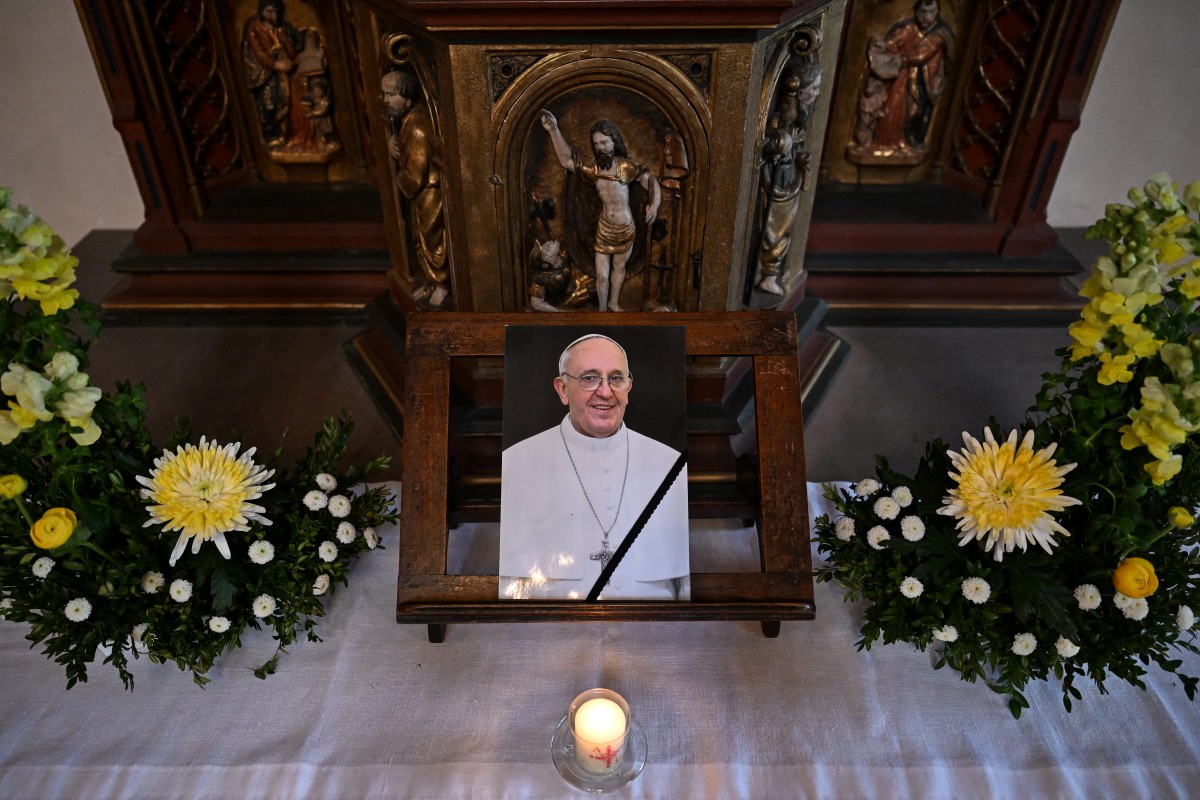
Following the passing of Pope Francis on Easter Monday, many prominent German political leaders shared their condolences. Scholz along with German President Frank-Walter Steinmeier and EU Commission chief Ursula von der Leyen all plan to attend the funeral service.
The next pope is to be picked by the church's College of Cardinals, which consists of 135 cardinals who would be eligible for the position. Three members are from Germany.
This week memorial books have been placed at many of the big catholic churches in Germany in honour of Pope Francis with visitors encouraged to leave their messages and condolences.
Comments