
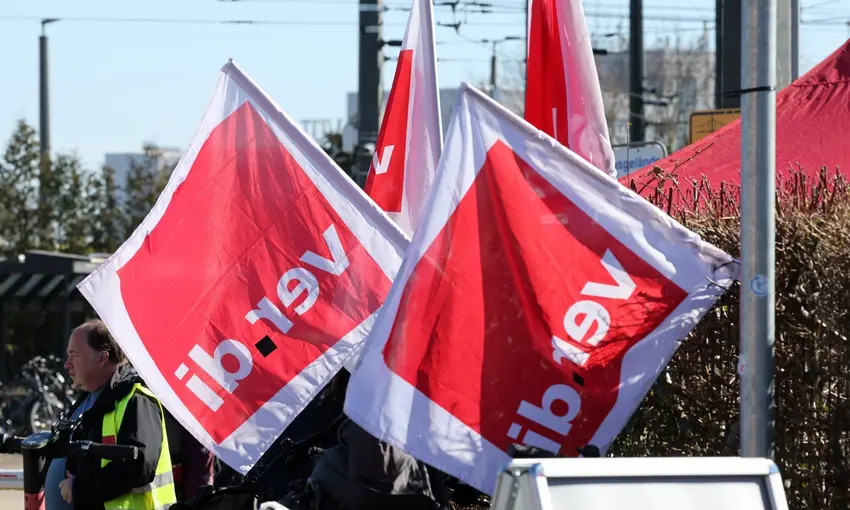
Industrial disputes can be like buses: you might not see one for a very long time, and then several turn up at once.
That's exactly what happened in Germany this year. Back in January, a number of collective agreements expired, so trade unions like Verdi had to simultaneously negotiate a set of new contracts in the public sector.
In the postal service, on Berlin public transport, in regional media outlets and in the wider public sector, workers all faced uncertainty about their future pay and conditions. For residents, this meant uncertainty about whether the buses would run, whether Kitas would open, and whether rubbish would start piling up in the Hinterhof.
Luckily, two major conflicts that had dragged on for months ended amicably this week: on Sunday, a deal was reached for 2.6 million workers in the public sector, and on Monday, for the 16,600 employees of Berlin transport operator BVG.
Here's a look the latest deals and the prospect of future strikes in Germany.
Public sector employees
The biggest deal negotiated this year concerned millions of local and federal government employees. As well as those in administrative offices, this includes workers in daycare centres, care homes, hospitals, schools, leisure centres and on local public transport, as well as in services like waste and sewage disposal.
After an intense battle lasting more than two months, civil servants' union DBB and services union Verdi struck a deal with the government based on the recommendations of an arbitration committee.
The deal included a 5.8 percent pay rise over two years and increased bonuses for shift work, as well as either an increased Christmas bonus or three extra days of holiday per year.
READ ALSO: Five things to know about Germany's public sector pay deal
With the new contract running for 27 months from January 2025, we can now look forward to around two full years of calm: the next set of negotiations won't begin until March 2027.
That said, there are a few workers - including state-employed teachers - who aren't covered by the agreement. This group are due to negotiate their next set of wage increases in autumn.
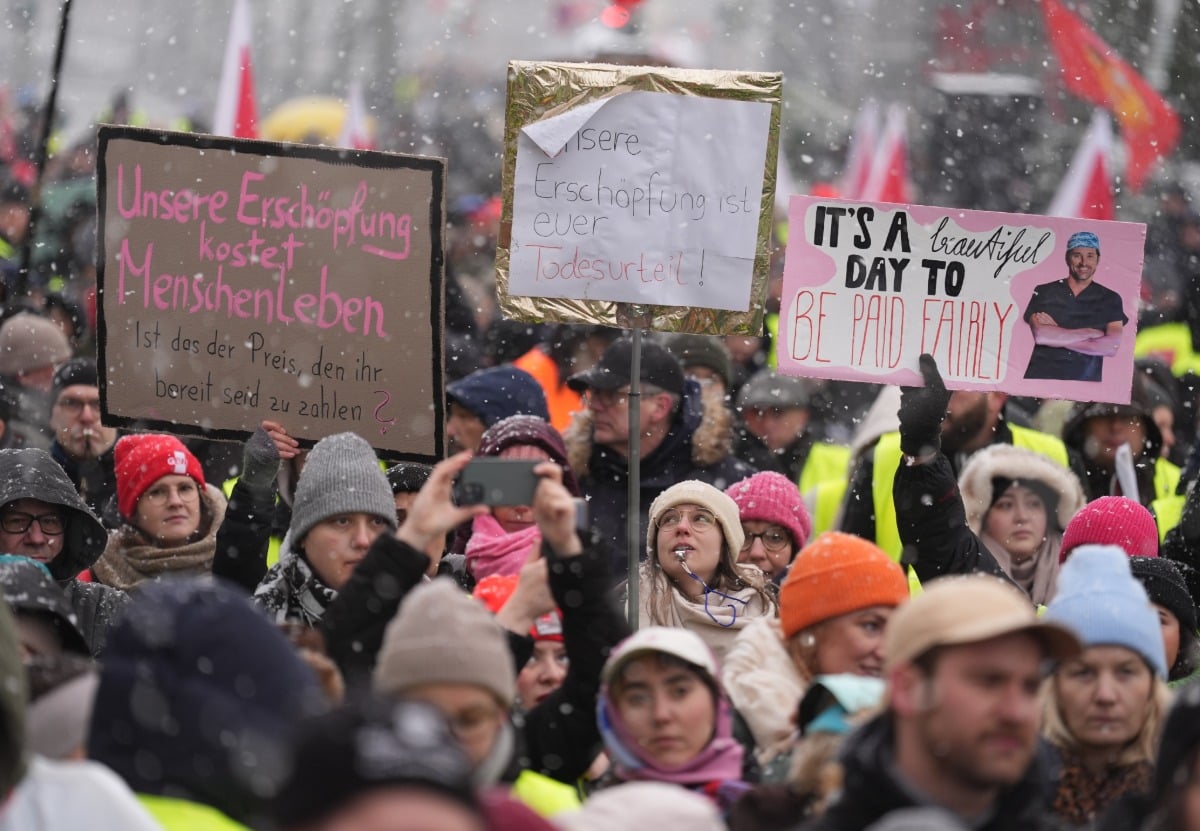
Local transport in Berlin
It took several rounds of negotiations and five sets of warning strikes, but Verdi scored a coup in its BVG negotiations. On Monday, the union and transport operator announced that they had reached a new pay deal, with BVG workers set to get an average of 15 percent more pay over two years.
As well as €430 extra pay per month by June next year, the transport employees will also see a steep rise in bonus for shift work and their end-of-year bonus. By 2027, the two sides are also tasked with putting together proposals for a 35-hour working week.
With Berliners previously staring down the barrel of unlimited strikes, the deal is welcome news for commuters. The two-year term runs until December 31st, 2026, giving residents of the capital around 21 months of respite.
READ ALSO: Berlin averts unlimited transport strikes as BVG cuts deal with union
Deutsche Bahn
Remember the Deutsche Bahn negotiations a few months back? No, us neither. That's probably because the rail operator reached a deal with union EVG within record time, and without a single warning strike.
Back in February, the two sides struck an agreement for 6.5 percent more pay for some 192,000 rail workers employed by DB and its subsidiaries. Starting in April with a €200 one-off payment, employees are set to get a two-percent pay rise in June, followed by 2.5 percent the following year and a further 2 percent the year after.
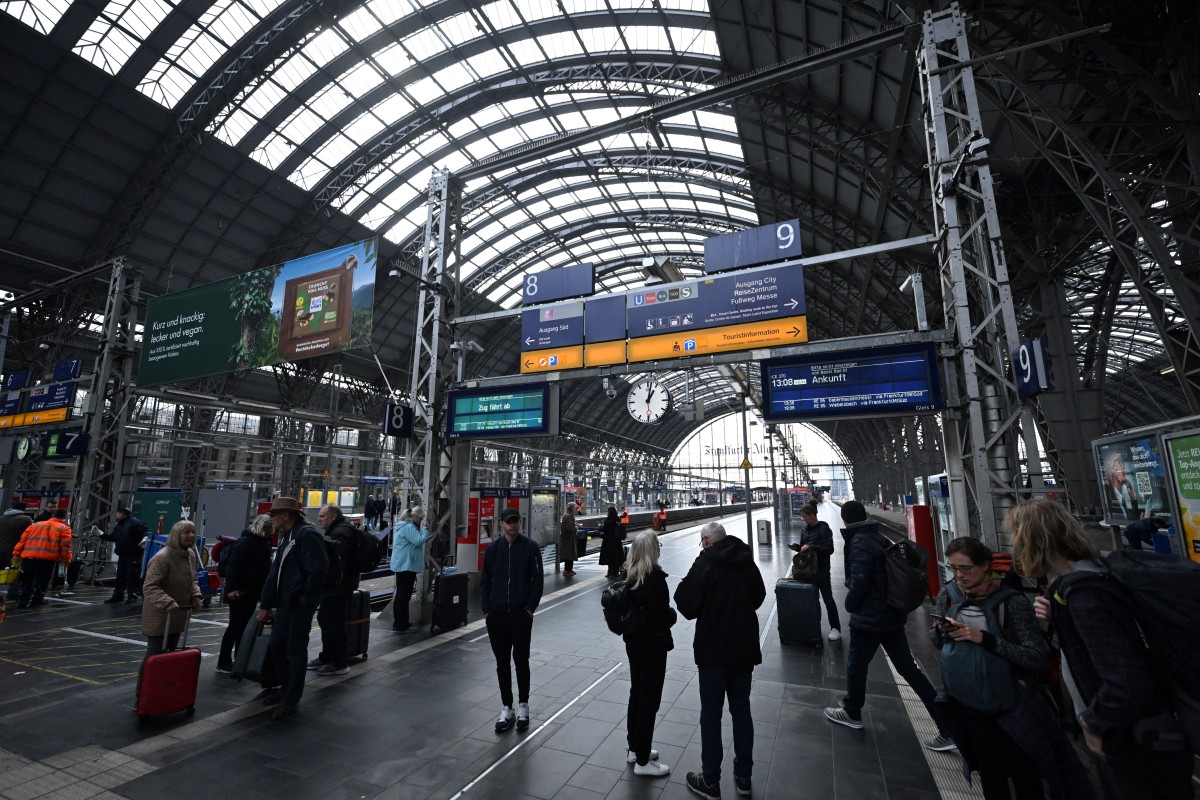
This contract covers an unusually long time span of 33 months, meaning EVG won't be able to reopen negotiations until 2028. However, the train drivers' union GDL - known to be a far harder nut to crack - will be reopening talks on their collective agreement next year.
A so-called peace obligation is in place until February 2026, meaning there's a guaranteed hiatus on strikes until then. After that, don't be surprised if you start to see the words "Warnstreik!" (warning strike) and "Zug fällt aus" (train cancelled) a lot more at train stations around Germany.
READ ALSO: Deutsche Bahn pays out compensation to millions of rail passengers in Germany
Postal service
At the start of the year, Verdi was tasked with thrashing out a deal on behalf of around 170,000 postal and parcel delivery workers in Germany.
Upping the pressure on DHL and Deutsche Post, the union called a series of warning strikes in January and February, leading to delays and disruption in mail delivery.
READ ALSO: German postal service to cut 8,000 jobs
At the start of March, however, the two sides announced that they had reached a deal for a five percent pay increase for workers and an extra day of holiday per year.
This agreement runs until 2027, when a new set of negotiations - and possible strikes - will begin.
What conflicts are still ongoing?
While most of the major industrial disputes appear to be out of the way for now, there is one ongoing battle that could affect life in Germany.
Metalworkers' union IG Metall - the largest in Germany - is currently fighting on behalf of workers in the automotive industry.
As part of its push a 6.5 percent pay rise, the union has called strikes at car dealerships and garages this week. From Tuesday through Thursday, it may be hard for motorists to find a spot for maintenance or repairs of their vehicle.
Though the IG Metall dispute seems relatively small next to the BVG and public sector talks, it could well turn into a bitter conflict. Car owners could well be advised to sort out their maintenance check-ups quickly when garages reopen, because the next strike could come around sooner than you think.
Comments