
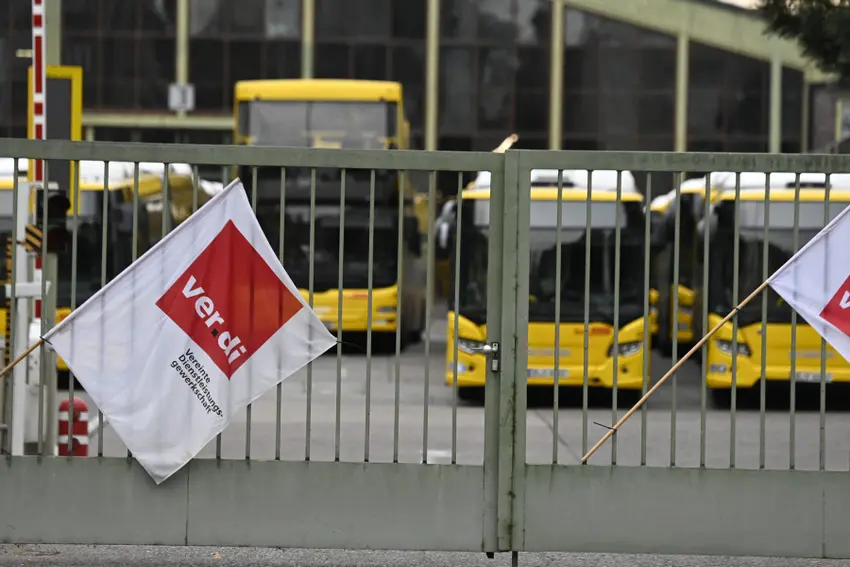
Berlin is set to see a 48-hour transportation strike begin on Wednesday, March 26th, that will bring stop the city’s U-Bahn and tram traffic, along with the majority of its buses.
For residents in Berlin, the announcement could inspire a feeling of déjà vu, as the city had just seen a two-day strike last week during the same days. Employees of Berlin's transport company, Berliner Verkehrsbetrieben (BVG), have engaged in an escalating series of one and two day warning strikes as collective bargaining rounds between the company and the workers' union have dragged on this year.
This strike comes after the sixth round of negotiations between the Verdi trade union and BVG employers.
As with previous strikes transport will stop around 3am with the start of the earliest shifts on Wednesday morning. Operations are expected to begin again two days later, at around the same time, on Friday morning.
How will passengers be affected?
Passengers who've been in Berlin through the previous BVG strikes this year will know the drill by now. All U-Bahn trains and trams will be stopped for the duration of the strike, as will most city buses.
Some bus lines, however, will still be in service. These are bus lines: 106, 114, 118, 133, 161, 168, 175, 179, 204, 218, 234, 263, 275, 316, 318, 320, 326, 334, 349, 358, 363, 380, N12, N23, N35, N39, N53, N61, N63, N69, N84, N91, N95, N97, according to BVG.
Lines 112, 124, 184, 744, 893, N68 and X36 are running with limited services.
EXPLAINED: How Berlin's two-day BVG strike will impact passengers
BVG's public transport ferries and its Muva service are not affected.
Additionally, S-bahn trains (which are operated by Deutsch Bahn) will still be in service.
Why is Berlin seeing so many public transport strikes?
So far, BVG and Verdi have been unable to come to an agreement on wage increases over the coming years. The union is demanding €750 more in monthly wages for BVG employees, a driving service or alternating shift bonus of €300, and a 13th month's salary.
BVG says it has made offers moving in the direction of Verdi's demands. Its last offer amounted to a 13.6 percent wage increase over a period of two years. However, Verdi says the offer is "far removed" from its demands.
According to German media reports, BVG has condemned the coming strike "in the strongest possible terms". Meanwhile Verdi says that responsibility for the continued disruptions lies with the employers and the Berlin Senate, which decides on city budget issues.
Could indefinite strikes be on the horizon?
It certainly looks like it. Though BVG is pushing for the talks to go to mediation, Verdi wants to hold a ballot on indefinite strike action from Wednesday until April 4th. To launch an indefinite strike at least 75 percent of BVG workers in the union would need to reject BVG's latest offer and approve the action.
That means that, if the next strike and following negotiations don't result in a satisfying agreement, Berlin could see indefinite transport strikes in April.
Transport chaos intensified by construction closures
Of course there's never really a convenient time to have a transport strike, but this week's strike comes amidst traffic chaos sparked by construction closures.
The closure of the Ringbahn bridge on the A100 has led to massive traffic jams in western parts of the city. For commuters affected by this closure, even driving a car is not a great alternative to the subway this week. S-Bahn trains also failed to be a good substitute last week as they saw repeated disruptions and major delays.
Comments