
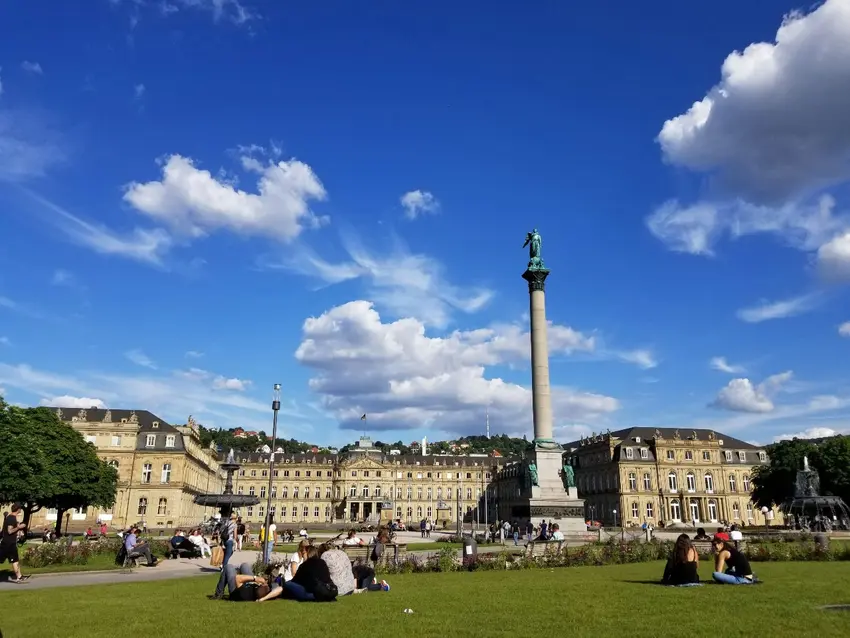
For many new arrivals in Germany, the vibrant city of Stuttgart is an ideal destination. Not too far from the Austrian, Swiss and French borders, the Baden-Württemberg capital has a truly international feel, while its historic charm and beautiful natural surroundings promote a high quality of life.
With major employers like Bosch, HP, Porsche and Mercedez-Benz right on the doorstep, Stuttgart is also a magnet for foreign skilled workers - especially in the tech and engineering sectors.
But problems at the local immigration office mean that life for internationals isn't always that rosy.
Last year, The Local reported on the growing backlogs and severe staff shortages at Stuttgart's immigration office, which were causing major delays to issuing permits and deeply affecting foreigners' lives.
READ ALSO: How German immigration office delays hurt lives of foreign workers
With the introduction of the new citizenship law in June 2024, we thought we'd look at the current situation for those who want to naturalise in the southern city.
Here are some key figures you need to know.
18 months
According to a spokesperson from Stuttgart naturalisation office, this is the average processing time for applications in the city - though recent news reports also cite waiting times of up to two years.
The Baden-Württemberg Ministry of the Interior cites the influx of refugees mainly from Syria back in 2015/2016 becoming eligible for citizenship as one of the main reasons for the backlogs, as well as the coronavirus pandemic.
"Many refugees have already fulfilled the legal requirements for naturalisation since 2021," the ministry states. "This has led to a significant increase in naturalisation applications."
During the pandemic years, the authorities were also unable to carry out in-person interviews to check eligibility for citizenship. These backlogs have had to be cleared in subsequent years.
READ ALSO: Which German cities have the longest waiting times for citizenship?
5,421
This is the number of applications for citizenship Stuttgart received in 2024 - the year in which the German government completed its long-awaited reform of the nationality law.
This reduced residence requirements for naturalisation from eight years to five in ordinary cases, or three in the case of special integration. It also permits the holding of multiple nationalities, so most foreigners no longer have to give up their previous passports when they become German (as long as their home country allows it).
According to the authorities in Baden-Württemberg, the number of applications has risen in the state since the introduction of the new law. This has added to the existing backlogs.
2,494
This was the number of naturalisations that were completed in Stuttgart last year - around 3,000 fewer than the number of applications received.
In 2024, applicants from Syria, Turkey, Iraq, Ukraine and Russia were naturalised most frequently. This was similar to reports we received from other citizenship offices around the country.
8,000
This is the number of applications in Stuttgart that have not yet been processed, according to authorities.
This year and next, the black-green coalition in Baden-Württemberg has set €4.5 million aside to support local authorities in tackling the rise in citizenship applications.
However, local authorities say this is nowhere near enough to erode the current backlogs. According to the Association of Cities and Towns, around €15 million per year would be needed to boost staffing levels enough to cope with the rise in applications statewide.
READ ALSO: What are Germany's leading political parties' immigration and citizenship plans?
327
This was the number of rejected applications in Stuttgart last year.
According the naturalisation office, applicants from Syria, Turkey, Afghanistan, Iraq and Serbia were rejected most often - largely because these are the among the nationalities who are most frequently naturalised.
The most common reason for applications being turned down was financial: unsuccessful applicants were often unable to prove they had enough money for them and their dependents to live on.
Some nationalities also had to wait longer than average for their application to be processed. This was generally the case for people from countries where they were unlikely to have official documents that could help them verify their identity, such as Afghanistan, Somalia and Eritrea.
READ ALSO: The reasons your German citizenship application might be rejected
How can foreigners apply for naturalisation in Stuttgart?
To apply for German citizenship in Stuttgart, head to the naturalisation section of the official city website. Here you can find a link to an online Quick Check tool run by the Bavarian state government, but which is also effective for checking your eligibility in Baden-Württemberg.
If you seem to fulfil all the necessary criteria, then you can download and fill in the naturalisation application form and start gathering the documents you need for your application. A full list of necessary evidence, as well as other forms and declarations, can be found on the Stuttgart city website.
READ ALSO: Requirements, costs and permits: 6 essential articles for German citizenship
Once you have a complete application, post it to the naturalisation office in Stuttgart. After this, it's a question of playing the waiting game. If extra information is needed, you'll be contacted by authorities. Otherwise, you should next hear back when your application is finally accepted.
Comments