
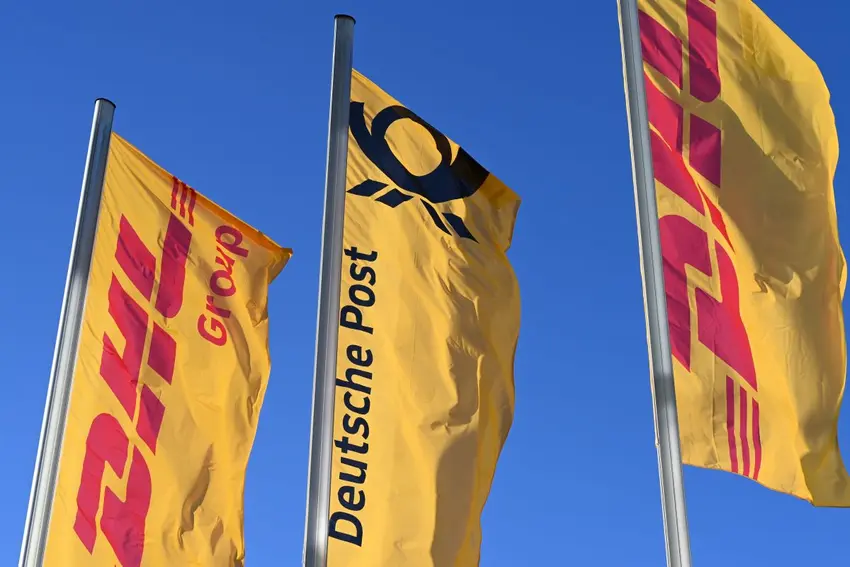
Deutsche Post employees are once against putting pressure on their employers with so-called 'warning' strikes.
Postal workers in selected letter centres around Germany were called out on strike on Tuesday, the Verdi trade union announced.
Work stoppages have been reported at centres in Heilbronn, Mannheim, Freiburg and Offenburg (Baden-Württemberg) as well as in Cologne, Bonn, Hagen and Siegen (North Rhine-Westphalia).
Strike action was also reported in Bavaria at letter centres in Munich, Würzburg, Freising, Nuremberg, Amberg, Regensburg, Rosenheim and Augsburg.
The action is the latest in what has become a series of postal strikes affecting Deutsche Post and DHL.
Various groups of workers engaged in three targeted strikes last week: The first affected big cities, the second affected rural areas and the third affected specific logistics hubs.
Tuesday’s strike affects specific letter centres, which are logistics hubs where paper mail is sorted and then forwarded to delivery bases, from where postmen deliver them.
The consequences of Tuesday’s industrial action aren’t expected to be felt by consumers until Wednesday, because delivery bases are supplied from the letter centres a day in advance. So customers in affected regions can expect to receive less mail on Wednesday.
Why are we seeing back to back postal strikes?
The postal workers’ union is demanding a pay increase of seven percent for the approximately 170,000 employees of the postal service in Germany. In addition, they want three extra days of vacation.
Verdi has justified this demand by suggesting that living costs for employees have increased, as has their workload, as parcel shipping has surged in recent years.
Business representatives, however, have said the demands are not economically viable.
They cite shrinking letter volumes in the digital age, and the high investment costs.
Warning strikes are a common tactic used by German workers' unions to put pressure on employers to meet their demands (often for better pay and/or working conditions).
In an explanation about the postal strikes published on Verdi’s website, the union notes that, “Since the end of January, Deutsche Post has been on strike almost daily nationwide.”
Verdi also writes that strikes are a “last resort”, and adds that current strikes have been called after two rounds of negotiations in which employers refused to meet their demands.
These postal strikes have been announced at the last minute, whereas warning strikes in other industries, like transport, are often announced well in advance.
With the next collective bargaining round for affected postal workers set for February 12th, it’s reasonable to expect that there could be further Deutsche Post strikes leading up to that date – and even more after if an agreement isn’t reached at the next round of negotiations.
"Employers should listen carefully," trade unionist Thomas Großstück warned. "Employees know…what fair pay means."
With reporting by DPA.
Comments