
Ukraine wants to bring back more refugees from Germany
The Ukrainian government wants to step up efforts to ensure the return of war refugees living in Germany.
To this end, so-called "Unity Hubs" are planned in Berlin and later in other locations to support refugees in finding jobs and housing or educational opportunities in Germany or Ukraine.
"A significant number of Ukrainians are seriously considering returning home," Ukrainian Deputy Prime Minister Oleksiy Chernyshov, who prepared the opening of the centres last week during a visit to Berlin, told the German Press Agency (DPA). But he added that Ukrainians who wish to stay in Germany could also be supported at the Unity Hubs in finding jobs or gaining professional qualifications.
Chernyshov heads a Ministry of National Unity founded in December specifically for the return of refugees.
Since the Russian invasion of Ukraine in February 2022, more than 1.1 million Ukrainians have fled to Germany - more than to any other country.
Today, only 32 million people live in the areas controlled by the government in Kiev. At the time of independence after the collapse of the Soviet Union in 1991, there were still 52 million in the whole of Ukraine, according to government figures. The number of Ukrainians living abroad is estimated by the government at 20 to 25 million.
Chernyshov said that in view of the population decline, workers were needed in Ukraine, especially in arms production, the energy sector and reconstruction.
In exchange, returnees would be deferred from military service if they worked in any of these critical industries.
"If you work in a power plant, you are not called up," Chernyshov said. "You have a guarantee."
READ ALSO: Two years later, two Berlin residents from Ukraine on how war affects their lives
Union Verdi not ruling out strikes in public sector
Ahead of the upcoming collective bargaining negotiations in the public sector, chairman of the Verdi services union, Frank Werneke, said he is not ruling out major strike action.
"The employees are highly motivated to stand up for their concerns," he told the Süddeutsche Zeitung. "It is now up to the employers to decide whether a strike is necessary."
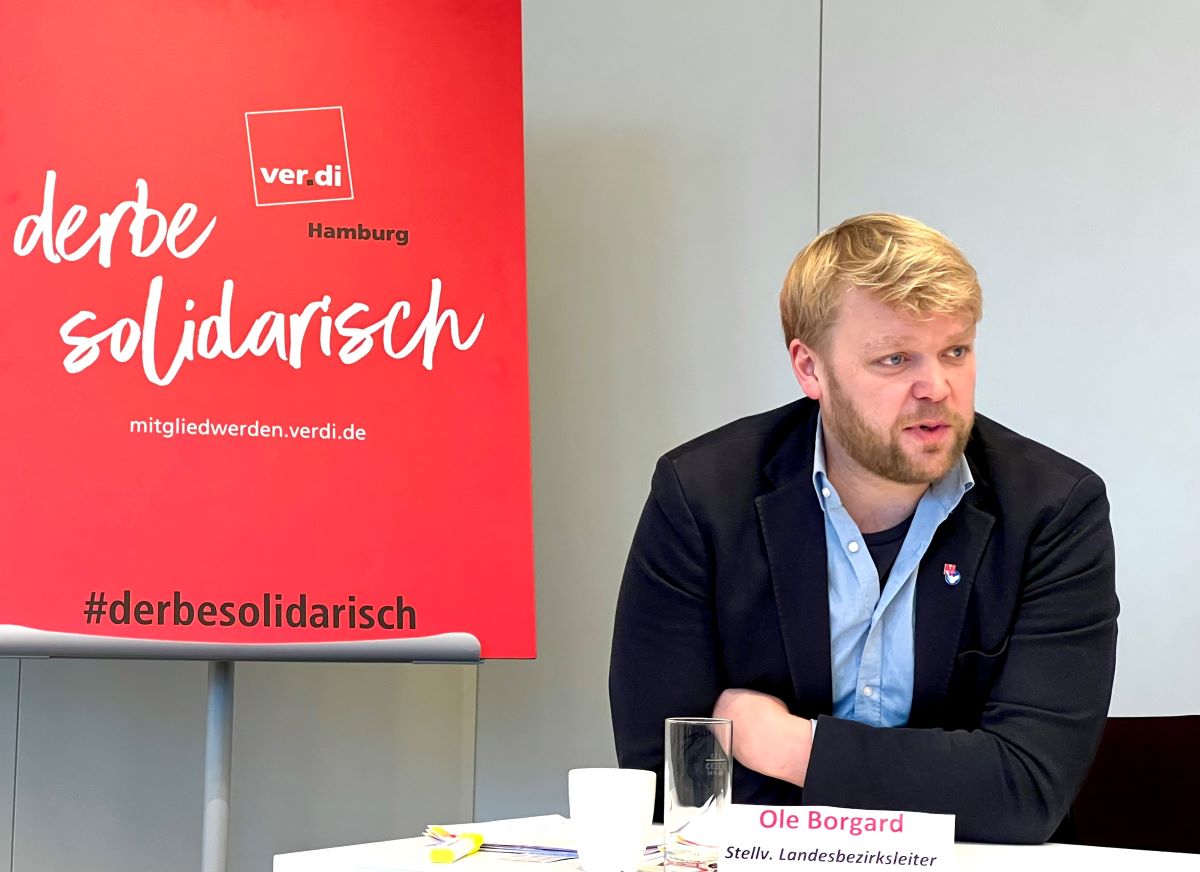
According to Werneke, it is important for employers to present a good offer in the second round of negotiations - around February 17th or 18th - at the latest. That is shortly before the general election on February 23rd.
However, the Verdi boss assured that he did not want to disrupt the election with strikes, for example by calling for industrial action on public transport or Deutsche Post.
"We are keeping an eye on the election and will ensure that it runs smoothly and undisturbed," Werneke said.
Musk raises eyebrows with salute gesture at Trump rally
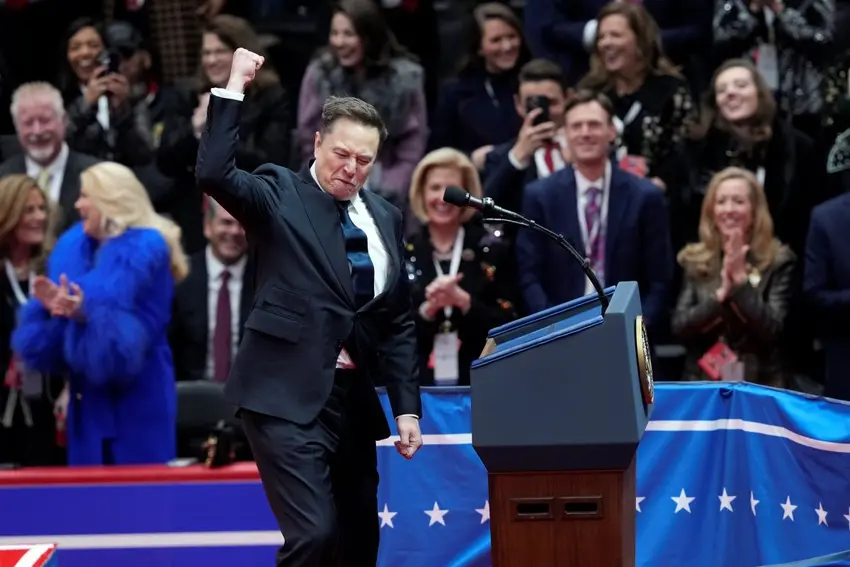
Billionaire Elon Musk sparked controversy Monday after making a gesture at an event celebrating US President Donald Trump's inauguration, with some calling it a "Nazi" or "fascist" movement.
The X, SpaceX and Tesla chief appeared on stage at the Capital One Arena in Washington, where supporters of the newly inaugurated president had gathered for a rally.
Upon thanking the crowd for returning the 78-year-old Republican to the White House, Musk tapped the left side of his chest with his right hand and then extended his arm with his palm open, repeating the gesture for the crowd seated behind him.
Claire Aubin, a historian who specialises in Nazism within the United States, agreed Musk's gesture was a "sieg heil," or Nazi salute.
"My professional opinion is that you're all right, you should believe your eyes," Aubin posted on X, aligning with those who found the gesture was an overt reference to Nazis.
In Germany, the sign is called a Hitlergruß and intentionally making the gesture in here can be charged as an act of hate speech.
Musk, who has posted a dozen times on his social network X since making the gesture, did not immediately react to the controversy.
One attendee at the rally told AFP he thought Musk was making the gesture as a joke.
Elon Musk has ruffled feathers in Europe after targeting UK Prime Minister Keir Starmer and German Chancellor Olaf Scholz as well as backing Germany's far-right AfD in next month's election.
READ ALSO: FACT CHECK - The false claims made during AfD's chat with Musk ahead of German election
German stocks hit new record and Chancellor hopes for 'good' relations with US on day Trump returns
Germany's blue-chip DAX stock index jumped above 21,000 points for the first time Monday ahead of Donald Trump being sworn in for a second term as US president.
The index, which groups the 40 largest publicly-traded companies on the Frankfurt Stock Exchange, hit 21,016.02 points at around 1:40 pm GMT, up about 0.5 percent.
Chancellor Olaf Scholz said Monday he hoped for a "good transatlantic relationship" with Germany's "closest ally" the United States during Donald Trump's second term as president.
"Today President Donald Trump takes office. Congratulations!" Scholz posted on social media platform X. "The US is our closest ally and the aim of our policy is always a good transatlantic relationship. The EU, with 27 members and more than 400 million people, is a strong union."
Job cuts report worries employees at Germany's Commerzbank
Suggestions that German lender Commerzbank was considering cutting thousands of jobs as it fights off an unwanted advance from Italy's UniCredit had unsettled employees, a senior trade union official said Monday.
A plan to significantly reduce the headcount at Germany's second-largest bank would be presented to the works council in the weeks ahead, the Financial Times daily reported on Saturday, citing two sources familiar with the matter.
Frederik Werning, Verdi trade union official and a member of the supervisory board at Germany's second-largest lender, said rumoured redundancies had caused "uncertainty among employees".
The union's "absolute priority" was to "consistently represent and defend employees", Werning said.
Takeover speculation has surrounded Commerzbank since September after Italy's UniCredit revealed that it had acquired 9.5 percent of the German bank, buying parts of the stake directly from the German government.
With reporting by DPA, AFP and Rachel Loxton.
Comments